THE ADVENTURE COLLECTIVE® · Independent discovery and booking for outdoor travel

A two-day, non-technical trek from Marrakech to the summit of Mount Toubkal (4,167 m) via Imlil and Toubkal Refuge. Expect long hiking days, scree sections, mule support and panoramic high-Atlas views.
A two-day, non-technical trek from Marrakech to the summit of Mount Toubkal (4,167 m) via Imlil and Toubkal Refuge. Expect long hiking days, scree sections, mule support and panoramic high-Atlas views.
You set off before dawn from Imlil, the village light thinning as the path pushes upward into a cold, high-air silence. The first day follows mule tracks and stone terraced slopes past the Chamharouch shrine, climbing to the refuge where the late-afternoon sun lights the ridgelines and the air tastes of wood smoke and mint tea.
Verified experiences and guided adventures in the surrounding area.
Operated by Morocco Next · Imlil, Marrakech-Safi
You set off before dawn from Imlil, the village light thinning as the path pushes upward into a cold, high-air silence. The first day follows mule tracks and stone terraced slopes past the Chamharouch shrine, climbing to the refuge where the late-afternoon sun lights the ridgelines and the air tastes of wood smoke and mint tea.
Geology here is granite and schist, sculpted into steep valleys by glacial action in the last ice age; the High Atlas forms a sharp barrier between Morocco’s Atlantic plain and the Sahara’s rain shadow. Culturally, you pass through Berber hamlets where multilingual guides explain communal irrigation and mountain life — hospitality is a practical art here, not a show.
Summit day begins early. The trail narrows to scree and rock, altitude sharpening each step as the ridge dares you onward. The summit at 4,167 m rewards effort with a broad panorama: ridgelines folding into Saharan light and the distant shimmer toward Marrakech.
Practical guidance: allow a full day for the ascent from the refuge (about 3 hours up, 2–3 down), and budget 10–12 hours for the second day’s total walking. Hydrate and layer for rapid temperature swings; wind and loose scree demand steady footwear and poles. The refuge provides simple meals and a bed — bring a warm sleeping liner.
This itinerary is strenuous but non-technical; a local guide and mule support smooth logistics, leaving you to focus on rhythm, footing and the view that makes the climb worthwhile.
challenging.
2 days (approx. 48 hours).
Requires good aerobic fitness and comfort with long uphill sections and altitude exposure; regular hikers with endurance training are well suited.
No technical climbing skills are required for the standard route; however, you must be fit for sustained uphill hiking at altitude.
Symptoms can occur above 3,000 m—ascend slowly, hydrate, sleep low when possible, and communicate any severe symptoms to your guide immediately.
Yes — the itinerary includes an overnight at Toubkal Refuge where simple beds and meals are available.
Yes — mule service is included to carry luggage to the refuge; confirm weight limits with the operator.
The High Atlas is home to Berber communities whose paths and terraces have shaped the mountains for centuries; Toubkal itself has long been a seasonal grazing and pilgrimage landscape.
Stick to established trails to prevent erosion, use local guides to support the community economy, and minimize single-use plastics to reduce waste in fragile alpine environments.
Morocco Next operates guided outdoor trips and adventures with an emphasis on safety, stewardship, and memorable experiences.

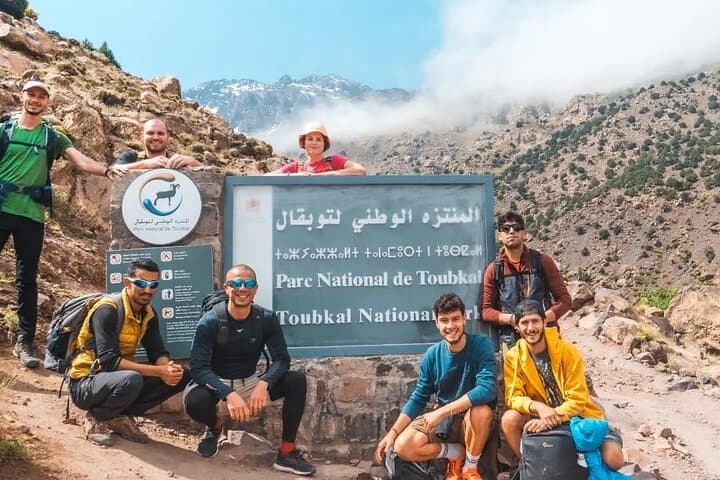
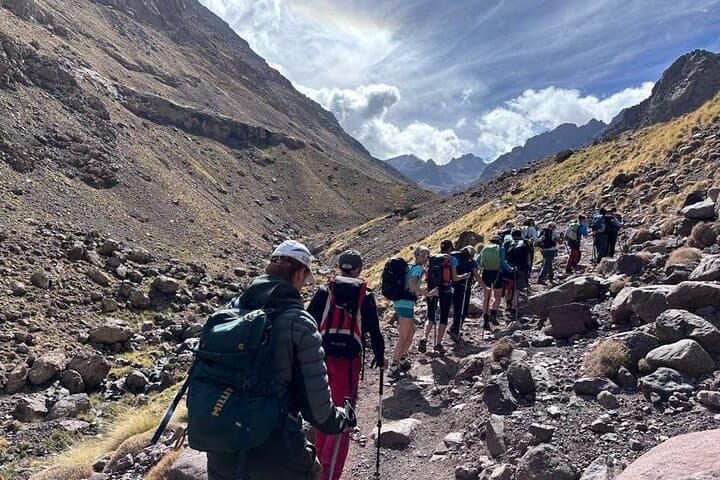

You set off before dawn from Imlil, the village light thinning as the path pushes upward into a cold, high-air silence. The first day follows mule tracks and stone terraced slopes past the Chamharouch shrine, climbing to the refuge where the late-afternoon sun lights the ridgelines and the air tastes of wood smoke and mint tea.
You set off before dawn from Imlil, the village light thinning as the path pushes upward into a cold, high-air silence. The first day follows mule tracks and stone terraced slopes past the Chamharouch shrine, climbing to the refuge where the late-afternoon sun lights the ridgelines and the air tastes of wood smoke and mint tea.
Geology here is granite and schist, sculpted into steep valleys by glacial action in the last ice age; the High Atlas forms a sharp barrier between Morocco’s Atlantic plain and the Sahara’s rain shadow. Culturally, you pass through Berber hamlets where multilingual guides explain communal irrigation and mountain life — hospitality is a practical art here, not a show.
Summit day begins early. The trail narrows to scree and rock, altitude sharpening each step as the ridge dares you onward. The summit at 4,167 m rewards effort with a broad panorama: ridgelines folding into Saharan light and the distant shimmer toward Marrakech.
Practical guidance: allow a full day for the ascent from the refuge (about 3 hours up, 2–3 down), and budget 10–12 hours for the second day’s total walking. Hydrate and layer for rapid temperature swings; wind and loose scree demand steady footwear and poles. The refuge provides simple meals and a bed — bring a warm sleeping liner.
This itinerary is strenuous but non-technical; a local guide and mule support smooth logistics, leaving you to focus on rhythm, footing and the view that makes the climb worthwhile.