THE ADVENTURE COLLECTIVE® · Independent discovery and booking for outdoor travel

Summit North Africa's highest peak in a focused two-day push from Marrakech. This guided trek blends Berber village trails, an overnight refuge, and a pre-dawn ascent to 4,167 m for a sunrise summit experience.
Summit North Africa's highest peak in a focused two-day push from Marrakech. This guided trek blends Berber village trails, an overnight refuge, and a pre-dawn ascent to 4,167 m for a sunrise summit experience.
You leave Marrakech before dawn and the road climbs into the High Atlas, terraces and stone villages sliding past the window as light fractures over granite ridges. By midmorning you step out at Imlil, mules lining the path, smoke from cooking fires drifting through narrow alleys—this is where village life and mountain rhythm meet.
Verified experiences and guided adventures in the surrounding area.
Operated by Excursions Tours Marrakesh · Imlil, Marrakech-Safi
You leave Marrakech before dawn and the road climbs into the High Atlas, terraces and stone villages sliding past the window as light fractures over granite ridges. By midmorning you step out at Imlil, mules lining the path, smoke from cooking fires drifting through narrow alleys—this is where village life and mountain rhythm meet.
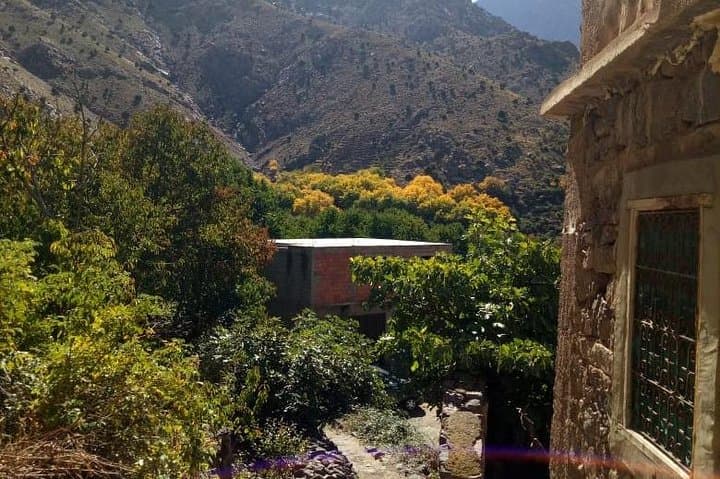
The trail follows mule tracks and loose scree through oak and juniper, passing small Berber hamlets that have stood here for centuries. Geologically, Toubkal is volcanic-sedimentary terrain weathered into steep ridgelines; the summit sits at 4,167 m and gives a raw vantage over serrated peaks and deep valleys. Culturally, guides are from nearby villages and the refuge system is run to support local livelihoods—meals and beds reflect mountain hospitality rather than luxury.
Expect a full-day approach to the refuge on day one, with a second-day pre-dawn push to the summit to catch sunrise above 4,000 m. The ascent is non-technical but steep and exposed in sections; crampons are only needed in late winter/early spring if snow lingers. Weather can swing fast—cold at the top, fierce sun lower down—so timing and layering matter.
Practical advice: prioritize a paced ascent to limit altitude effects, carry at least 2–3 liters of water, and use trekking poles for loose sections. Respect paths and village life—pack out waste and tip guides locally. The reward is a clean, panoramic summit where the High Atlas seems to push you forward and the valleys answer back.
challenging.
2 days.
Good aerobic fitness and experience with full-day hikes at elevation; comfortable with 6–10 hours of hiking in a day
You should be comfortable doing long day hikes (6–10 hours) and have previous multi-hour uphill trekking experience; no technical climbing skills are required.
The normal route is non-technical in summer and autumn; crampons may be necessary in late winter or early spring if snow and ice persist.
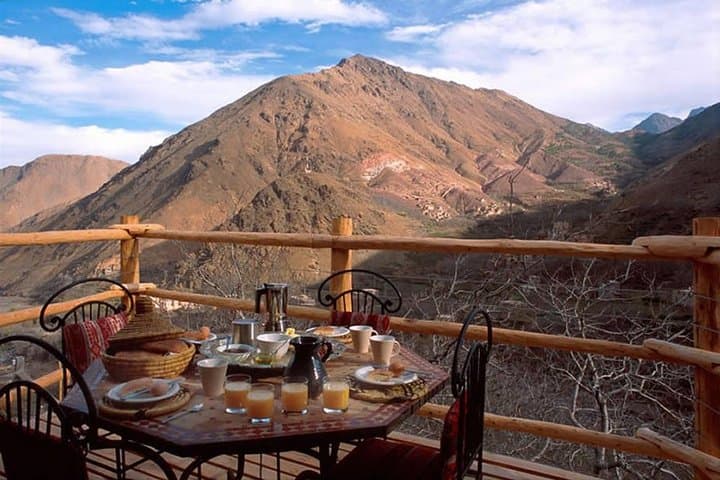
You sleep in the Toubkal refuge (a mountain hut) with shared dormitories and basic meals provided by the local team.
Yes — the standard itinerary includes pickup and drop-off from your hotel or riad in Marrakech and AC transportation to/from Imlil.
The High Atlas has been inhabited by Amazigh (Berber) communities for millennia; mountain routes like Imlil to Toubkal have long connected seasonal pastures and villages.
Trail erosion and litter are growing concerns—stick to established tracks, pack out waste, and support local guides and refuges who invest in trail maintenance.
Excursions Tours Marrakesh operates guided outdoor trips and adventures with an emphasis on safety, stewardship, and memorable experiences.
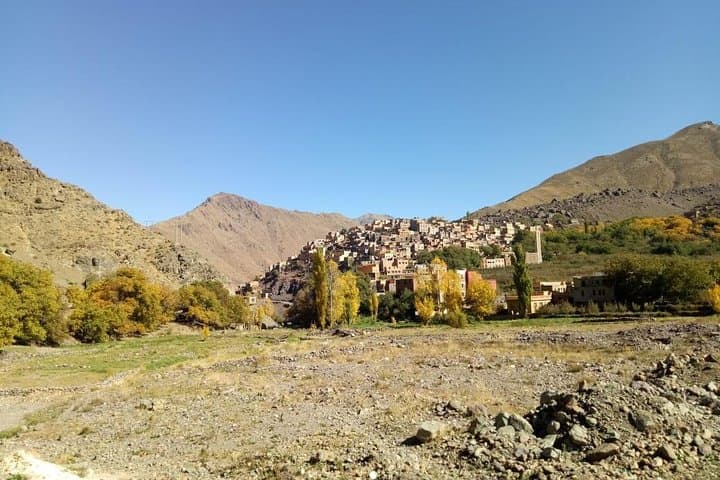
You leave Marrakech before dawn and the road climbs into the High Atlas, terraces and stone villages sliding past the window as light fractures over granite ridges. By midmorning you step out at Imlil, mules lining the path, smoke from cooking fires drifting through narrow alleys—this is where village life and mountain rhythm meet.
You leave Marrakech before dawn and the road climbs into the High Atlas, terraces and stone villages sliding past the window as light fractures over granite ridges. By midmorning you step out at Imlil, mules lining the path, smoke from cooking fires drifting through narrow alleys—this is where village life and mountain rhythm meet.
The trail follows mule tracks and loose scree through oak and juniper, passing small Berber hamlets that have stood here for centuries. Geologically, Toubkal is volcanic-sedimentary terrain weathered into steep ridgelines; the summit sits at 4,167 m and gives a raw vantage over serrated peaks and deep valleys. Culturally, guides are from nearby villages and the refuge system is run to support local livelihoods—meals and beds reflect mountain hospitality rather than luxury.
Expect a full-day approach to the refuge on day one, with a second-day pre-dawn push to the summit to catch sunrise above 4,000 m. The ascent is non-technical but steep and exposed in sections; crampons are only needed in late winter/early spring if snow lingers. Weather can swing fast—cold at the top, fierce sun lower down—so timing and layering matter.
Practical advice: prioritize a paced ascent to limit altitude effects, carry at least 2–3 liters of water, and use trekking poles for loose sections. Respect paths and village life—pack out waste and tip guides locally. The reward is a clean, panoramic summit where the High Atlas seems to push you forward and the valleys answer back.