THE ADVENTURE COLLECTIVE® · Independent discovery and booking for outdoor travel

Two days, two legendary parks: Tarangire’s elephant congregations and Ngorongoro’s volcanic caldera packed with big-five sightings. This compact safari pairs dramatic game drives with practical logistics for travelers short on time.
Two days, two legendary parks: Tarangire’s elephant congregations and Ngorongoro’s volcanic caldera packed with big-five sightings. This compact safari pairs dramatic game drives with practical logistics for travelers short on time.
You step from Arusha’s early light into a 4x4 with dust already clinging to the wheel arches, and the road pushes you out across open plains toward Tarangire. Acacia shadows slide past; the river—lifeblood of the park—dares the herds to gather. On day one the landscape is raw savannah and the largest seasonal concentration of elephants in Tanzania, trunks sweeping, ears fanning like small sails.
Verified experiences and guided adventures in the surrounding area.
Operated by Kanje grand tours · Karatu, Manyara Region
You step from Arusha’s early light into a 4x4 with dust already clinging to the wheel arches, and the road pushes you out across open plains toward Tarangire. Acacia shadows slide past; the river—lifeblood of the park—dares the herds to gather. On day one the landscape is raw savannah and the largest seasonal concentration of elephants in Tanzania, trunks sweeping, ears fanning like small sails.
Tarangire’s soils are old volcanic loess; the park’s baobabs and termite mounds tell a slow geological story of uplift and dry-season congregation. The second day drops you into Ngorongoro’s caldera — a collapsed volcano whose rim frames a green bowl where rhino, buffalo, hippo and predators coexist in unusually dense numbers. Maasai families live around the crater rim; their grazing traditions and the conservation rules that grew from colonial and post-independence policies shape how people and wildlife share this place.
Practically: expect long but smooth drives, game drives from an open-roof 4x4, and hour-long stops for photos and picnic lunches. Layers matter—mornings at the rim can be cool, midday in the crater hot. Binoculars, a charged camera, and water are non-negotiable. Guides time sightings around waterholes and migration patterns; patience often pays more than speed. Park fees and a competent guide are included with organized tours; tipping is customary.
This itinerary compresses two iconic ecosystems into a tight, vehicle-led experience — high on sightings and low on hiking. Plan transfers around Arusha, allow for dust and early starts, and bring curiosity: the crater has a way of making every glance count.
easy.
2 days.
Suitable for most travelers; must be able to climb in/out of a high-clearance safari vehicle and tolerate long vehicle days.
Ngorongoro and Tarangire both host large populations of classic species; while sightings aren’t guaranteed, the itinerary maximizes chances at seeing most of the Big Five.
Expect up to two hours of road transfer the first morning to Tarangire and similar transit between lodges and Ngorongoro—most game viewing occurs in multi-hour game-drive blocks.
Yes—game drives are vehicle-based and suitable for a wide range of ages, though mobility to enter and exit a high vehicle is required.
Carry a valid passport; check Tanzania’s current vaccination recommendations (yellow fever may be required depending on origin) and consult a travel clinic for malaria prophylaxis.
Ngorongoro formed when a volcano collapsed roughly 2–3 million years ago; the crater has supported human-and-wildlife interactions for centuries, including Maasai pastoralism.
Tourism revenue supports conservation and the Maasai communities around the parks; travelers should follow park rules to reduce disturbance and avoid feeding or approaching animals.
Kanje grand tours operates guided outdoor trips and adventures with an emphasis on safety, stewardship, and memorable experiences.

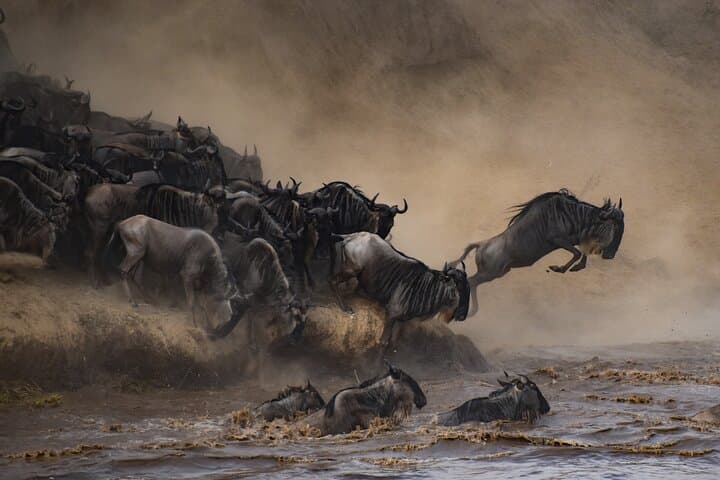


You step from Arusha’s early light into a 4x4 with dust already clinging to the wheel arches, and the road pushes you out across open plains toward Tarangire. Acacia shadows slide past; the river—lifeblood of the park—dares the herds to gather. On day one the landscape is raw savannah and the largest seasonal concentration of elephants in Tanzania, trunks sweeping, ears fanning like small sails.
You step from Arusha’s early light into a 4x4 with dust already clinging to the wheel arches, and the road pushes you out across open plains toward Tarangire. Acacia shadows slide past; the river—lifeblood of the park—dares the herds to gather. On day one the landscape is raw savannah and the largest seasonal concentration of elephants in Tanzania, trunks sweeping, ears fanning like small sails.
Tarangire’s soils are old volcanic loess; the park’s baobabs and termite mounds tell a slow geological story of uplift and dry-season congregation. The second day drops you into Ngorongoro’s caldera — a collapsed volcano whose rim frames a green bowl where rhino, buffalo, hippo and predators coexist in unusually dense numbers. Maasai families live around the crater rim; their grazing traditions and the conservation rules that grew from colonial and post-independence policies shape how people and wildlife share this place.
Practically: expect long but smooth drives, game drives from an open-roof 4x4, and hour-long stops for photos and picnic lunches. Layers matter—mornings at the rim can be cool, midday in the crater hot. Binoculars, a charged camera, and water are non-negotiable. Guides time sightings around waterholes and migration patterns; patience often pays more than speed. Park fees and a competent guide are included with organized tours; tipping is customary.
This itinerary compresses two iconic ecosystems into a tight, vehicle-led experience — high on sightings and low on hiking. Plan transfers around Arusha, allow for dust and early starts, and bring curiosity: the crater has a way of making every glance count.