THE ADVENTURE COLLECTIVE® · Independent discovery and booking for outdoor travel

Spend two compact days tracking elephants among baobabs in Tarangire and descending into Ngorongoro’s iconic crater for dense wildlife viewing. Early starts, patient drives, and expert guiding deliver high-impact sightings in Tanzania’s northern circuit.
Spend two compact days tracking elephants among baobabs in Tarangire and descending into Ngorongoro’s iconic crater for dense wildlife viewing. Early starts, patient drives, and expert guiding deliver high-impact sightings in Tanzania’s northern circuit.
Dawn breaks over a flat savanna and the Land Cruiser hums forward, the horizon cut by baobab silhouettes and the slow, deliberate shapes of elephants moving like ancient sentinels across the plain. On day one you run Tarangire’s tiger-striped tracks—open floodplains, mopane woodlands, and dense baobab stands—where bull elephants gather and the air fills with insect-song.
Verified experiences and guided adventures in the surrounding area.
Operated by Discover Wild Expeditions · Arusha, Arusha Region
Dawn breaks over a flat savanna and the Land Cruiser hums forward, the horizon cut by baobab silhouettes and the slow, deliberate shapes of elephants moving like ancient sentinels across the plain. On day one you run Tarangire’s tiger-striped tracks—open floodplains, mopane woodlands, and dense baobab stands—where bull elephants gather and the air fills with insect-song.
The second morning drops you into Ngorongoro’s bowl: a volcanic caldera whose steep walls cradle grasslands, a soda lake, and high densities of predators and grazers. Geologically, the crater is the collapsed remnant of a volcano and supports ecosystems distinct from the surrounding rift country; culturally, the Maasai have grazed these slopes for generations and Ngorongoro was designated a conservation area in 1959 to balance people and wildlife.
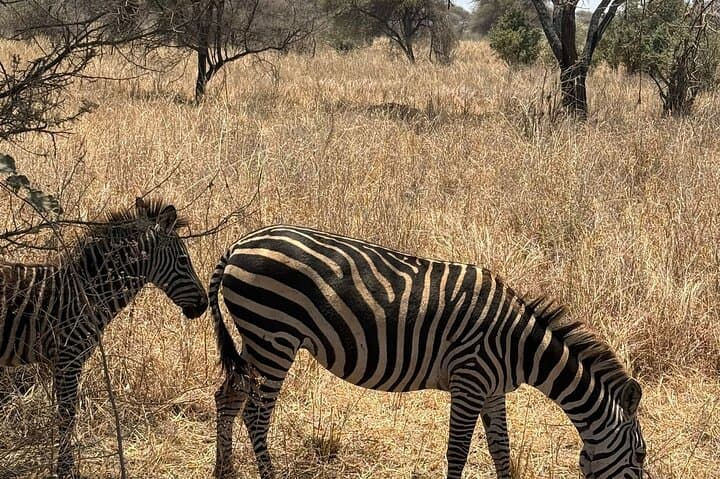
Expect close, patience-rewarded viewing rather than a checklist blitz—lions reclining on ridgelines, zebra cutting through churned earth, and hyraxes sunning on lava rock. The landscape has personality: baobabs stand like grizzled elders, herds seem to negotiate space with a practiced calm, and the crater’s rim will press you up against a view that quiets conversation.
Practicalities: the trip runs across two full days with early starts, bumpy roads, and limited walking. Bring binoculars, a camera with zoom, layers for cold mornings, and enough water for long game drives. Confirm park fees and vehicle pickup points in Arusha, and plan malaria prophylaxis; responsible viewing—keeping distance and avoiding sudden noise—keeps wildlife wild and your photos honest.
moderate.
2 days.
Moderate fitness for long vehicle days and short, sometimes uneven walks at viewpoints; able to handle bumpy rides.
Park fees vary by operator—confirm at booking; some tours include fees while others require payment on arrival or at the park gate.
Common sightings include African elephant, zebra, giraffe, buffalo, and lions; Ngorongoro also has higher chances for cheetah and black rhino, though some species are less frequently seen.
Yes—this region is in a malaria zone; consult a travel clinic for prophylaxis and use insect repellent and bed nets where advised.
The itinerary lists budget lodge or campsite in Karatu/Mto wa Mbu on the first night, with no accommodation supplied after the second day—confirm pickup/drop-off logistics when booking.
The Ngorongoro Conservation Area was established in 1959 to protect habitat while allowing traditional Maasai grazing; the crater itself formed when a large volcano collapsed millennia ago.
Responsible tourism fees and strict park rules fund anti-poaching and community projects; stick to designated roads and avoid feeding or approaching wildlife to minimize impact.
Discover Wild Expeditions operates guided outdoor trips and adventures with an emphasis on safety, stewardship, and memorable experiences.
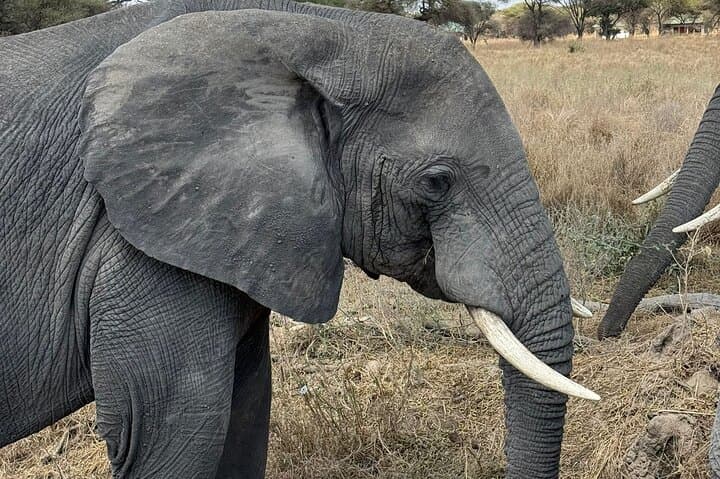
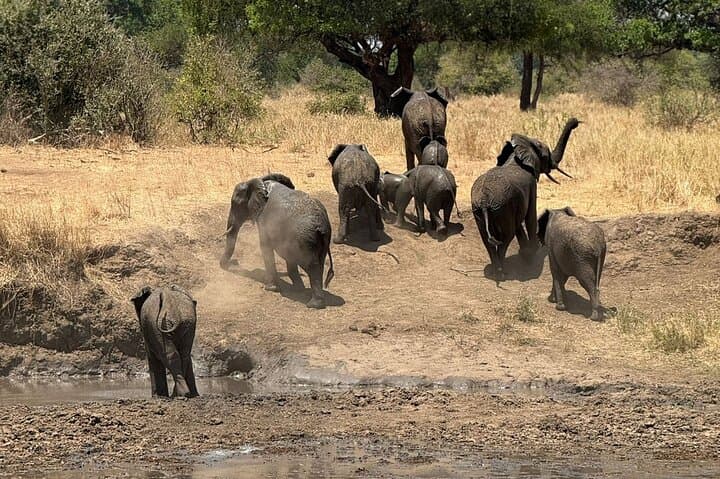
Dawn breaks over a flat savanna and the Land Cruiser hums forward, the horizon cut by baobab silhouettes and the slow, deliberate shapes of elephants moving like ancient sentinels across the plain. On day one you run Tarangire’s tiger-striped tracks—open floodplains, mopane woodlands, and dense baobab stands—where bull elephants gather and the air fills with insect-song.
Dawn breaks over a flat savanna and the Land Cruiser hums forward, the horizon cut by baobab silhouettes and the slow, deliberate shapes of elephants moving like ancient sentinels across the plain. On day one you run Tarangire’s tiger-striped tracks—open floodplains, mopane woodlands, and dense baobab stands—where bull elephants gather and the air fills with insect-song.
The second morning drops you into Ngorongoro’s bowl: a volcanic caldera whose steep walls cradle grasslands, a soda lake, and high densities of predators and grazers. Geologically, the crater is the collapsed remnant of a volcano and supports ecosystems distinct from the surrounding rift country; culturally, the Maasai have grazed these slopes for generations and Ngorongoro was designated a conservation area in 1959 to balance people and wildlife.
Expect close, patience-rewarded viewing rather than a checklist blitz—lions reclining on ridgelines, zebra cutting through churned earth, and hyraxes sunning on lava rock. The landscape has personality: baobabs stand like grizzled elders, herds seem to negotiate space with a practiced calm, and the crater’s rim will press you up against a view that quiets conversation.
Practicalities: the trip runs across two full days with early starts, bumpy roads, and limited walking. Bring binoculars, a camera with zoom, layers for cold mornings, and enough water for long game drives. Confirm park fees and vehicle pickup points in Arusha, and plan malaria prophylaxis; responsible viewing—keeping distance and avoiding sudden noise—keeps wildlife wild and your photos honest.