THE ADVENTURE COLLECTIVE® · Independent discovery and booking for outdoor travel

Spend two days in Konya tracing Rumi’s life, Seljuk architecture, and the hypnotic Sema ceremony. This compact cultural tour blends museum visits, a traditional felt workshop, and an evening with the whirling dervishes.
Spend two days in Konya tracing Rumi’s life, Seljuk architecture, and the hypnotic Sema ceremony. This compact cultural tour blends museum visits, a traditional felt workshop, and an evening with the whirling dervishes.
You arrive in Konya as evening flattens the Anatolian plain and the city’s stonework cools beneath a wide sky. Courtyards open like pages; minarets lean into the wind. The first day moves from the hulking silhouette of a Seljuk caravanserai to the quiet reverence of Mevlana’s mausoleum, where the green-tiled dome marks the heart of Rumi’s legacy.
Verified experiences and guided adventures in the surrounding area.
Operated by Epic Cappadocia · Konya, Konya
You arrive in Konya as evening flattens the Anatolian plain and the city’s stonework cools beneath a wide sky. Courtyards open like pages; minarets lean into the wind. The first day moves from the hulking silhouette of a Seljuk caravanserai to the quiet reverence of Mevlana’s mausoleum, where the green-tiled dome marks the heart of Rumi’s legacy.
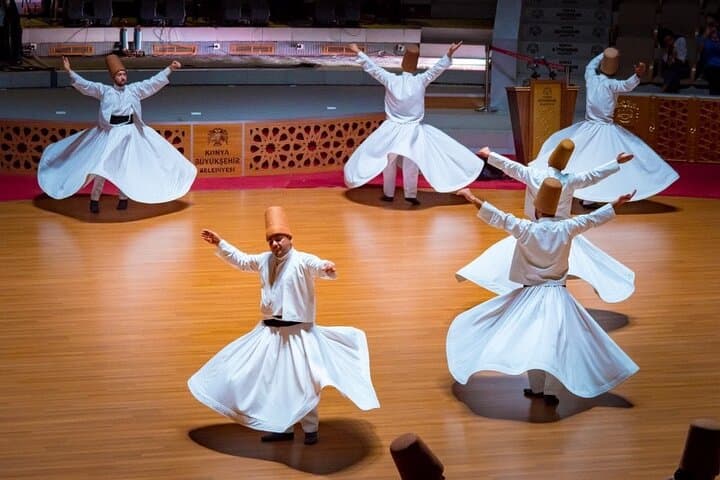
Konya was the 13th-century capital of the Seljuk Sultanate — its monuments speak in carved stone and glazed tiles. The region sits on the Central Anatolian plateau: broad, arid plains that feed the sober palette of city masonry. Local crafts remain alive here; you’ll watch felt masters hammer wool and hear the low drum that underpins the Sema ritual. The whirling dervishes perform the Sema to music and measured motion, a disciplined choreography designed to shift attention toward the infinite.
Practical side: this is a low-impact, urban cultural tour with several short walks between sites, some cobbled courtyards and mosque steps. Expect guided entries to Mevlana Museum and the caravanserai, an evening Sema viewing, and an overnight at a Seljuk-style hotel. Dress modestly for religious sites, bring a refillable water bottle, and keep a light layer for cool night air. Photography rules vary—follow signage and guide instructions in sacred spaces. Timing your visit to catch the Sema in the evening rewards patience with an intense, memorable ritual. With straightforward logistics and deep historical context, this two-day exploration gives a clear window into Rumi’s world and the Seljuk era that shaped Konya.
easy.
2 days.
Suitable for most fitness levels — short to moderate walking and standing during ceremonies and museum visits
Yes — the itinerary includes an evening Sema performance; seating and viewing are arranged as part of the guided program.
The itinerary specifies admission included for the caravanserai and Mevlana Museum; your operator will confirm which sites are covered at booking.
Most museum areas and courtyards are walkable but include steps and uneven surfaces; contact the operator ahead to discuss specific accessibility needs.
This is a private tour with manual confirmation; transport between sites is provided — final pickup point and timing are requested at booking.
Konya became the intellectual and spiritual center of the Seljuk Sultanate in the 13th century and later hosted Rumi, whose Mevlevi order reshaped devotional practices.
Konya’s religious sites balance tourism and worship — stay on marked paths, avoid flash photography in sacred spaces, and limit waste to protect fragile tilework and grounds.
Epic Cappadocia operates guided outdoor trips and adventures with an emphasis on safety, stewardship, and memorable experiences.
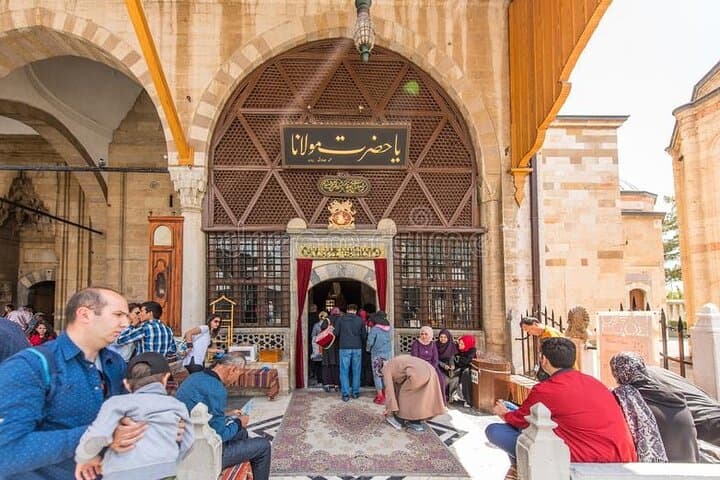
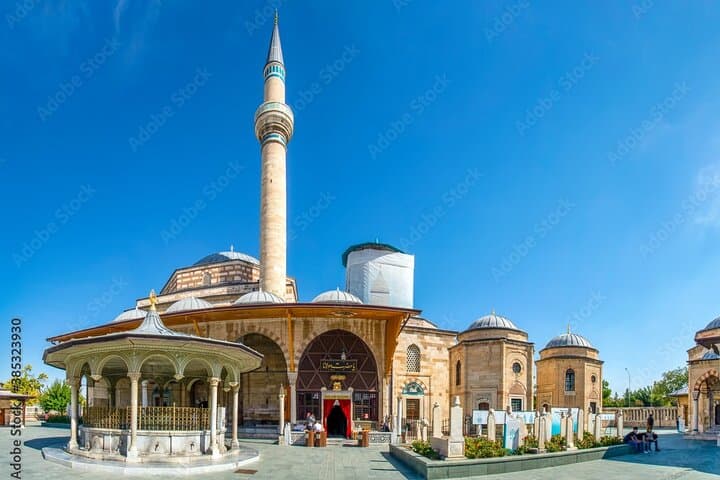
You arrive in Konya as evening flattens the Anatolian plain and the city’s stonework cools beneath a wide sky. Courtyards open like pages; minarets lean into the wind. The first day moves from the hulking silhouette of a Seljuk caravanserai to the quiet reverence of Mevlana’s mausoleum, where the green-tiled dome marks the heart of Rumi’s legacy.
You arrive in Konya as evening flattens the Anatolian plain and the city’s stonework cools beneath a wide sky. Courtyards open like pages; minarets lean into the wind. The first day moves from the hulking silhouette of a Seljuk caravanserai to the quiet reverence of Mevlana’s mausoleum, where the green-tiled dome marks the heart of Rumi’s legacy.
Konya was the 13th-century capital of the Seljuk Sultanate — its monuments speak in carved stone and glazed tiles. The region sits on the Central Anatolian plateau: broad, arid plains that feed the sober palette of city masonry. Local crafts remain alive here; you’ll watch felt masters hammer wool and hear the low drum that underpins the Sema ritual. The whirling dervishes perform the Sema to music and measured motion, a disciplined choreography designed to shift attention toward the infinite.
Practical side: this is a low-impact, urban cultural tour with several short walks between sites, some cobbled courtyards and mosque steps. Expect guided entries to Mevlana Museum and the caravanserai, an evening Sema viewing, and an overnight at a Seljuk-style hotel. Dress modestly for religious sites, bring a refillable water bottle, and keep a light layer for cool night air. Photography rules vary—follow signage and guide instructions in sacred spaces. Timing your visit to catch the Sema in the evening rewards patience with an intense, memorable ritual. With straightforward logistics and deep historical context, this two-day exploration gives a clear window into Rumi’s world and the Seljuk era that shaped Konya.