THE ADVENTURE COLLECTIVE® · Independent discovery and booking for outdoor travel

Drive Iceland’s raw south coast in two days: basalt cliffs, thunderous waterfalls and the shifting ice sculptures of Jökulsárlón. This private tour combines short hikes, a countryside overnight, and a summer amphibian-boat option at the glacier lagoon.
Drive Iceland’s raw south coast in two days: basalt cliffs, thunderous waterfalls and the shifting ice sculptures of Jökulsárlón. This private tour combines short hikes, a countryside overnight, and a summer amphibian-boat option at the glacier lagoon.
A cold wind pushes across the black sand as the first icebergs of the morning grind toward the Atlantic — you stand at Diamond Beach, where crystalline chunks lie like spilled glass on volcanic ground. The tour unfurls along the south coast, moving east from Reykjavík across low lava fields, past the clipped village of Vík, and into the vast, glacier-shaped sweep around Jökulsárlón.
Verified experiences and guided adventures in the surrounding area.
Operated by Diamond Tours Iceland · Reykjavík, Capital Region
A cold wind pushes across the black sand as the first icebergs of the morning grind toward the Atlantic — you stand at Diamond Beach, where crystalline chunks lie like spilled glass on volcanic ground. The tour unfurls along the south coast, moving east from Reykjavík across low lava fields, past the clipped village of Vík, and into the vast, glacier-shaped sweep around Jökulsárlón.
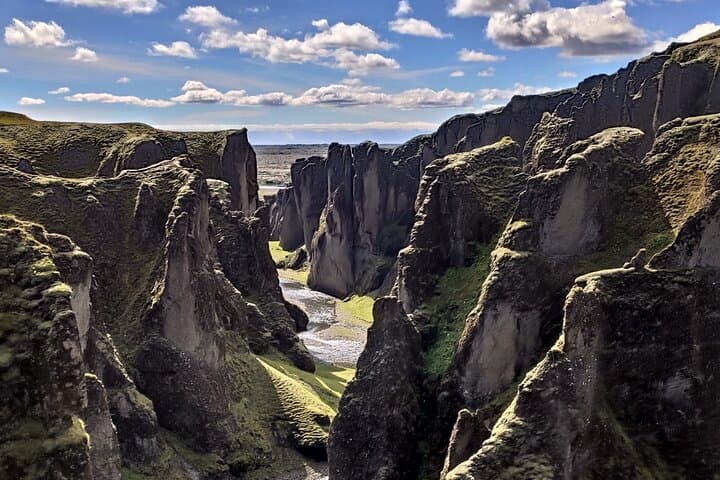
This route traces recent geology: glaciers carving fjords and depositing moraines as they retreat, leaving hexagonal basalt at Svartifoss and the dark headlands of Reynisdrangar. Human history here is compact — fishing villages and turf churches survive a harsh climate — while geological time remains visible in miles of black sand and wandering ice. Dyrhólaey’s promontory was once an island of volcanic origin; Fjaðrárgljúfur is an ancient river-cut canyon you can rim-walk for close views.
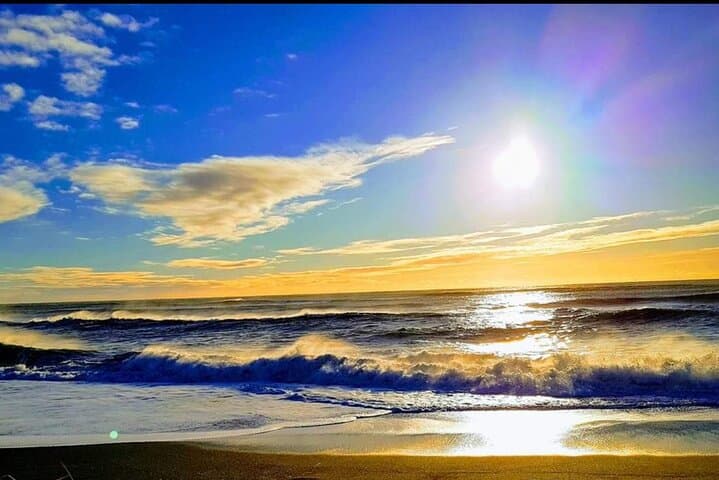
Practical guidance: expect long driving days (Reykjavík–Jökulsárlón ≈ 380 km round trip with stops), short walks at each site (most trails 0.5–3 km, modest elevation). Weather shifts fast — wind, drizzle, and bright sun can swap within an hour. Wear a waterproof outer layer, sturdy boots with grip for wet basalt, and plan for camera batteries to drain in cold. If traveling May–September, the amphibian boat runs from the lagoon; winter visits focus on light and possibly ice-cave options with guides. Respect posted safety zones on black-sand beaches — sneaker waves are real. With a private guide and an overnight countryside stay, this itinerary balances sightseeing and paced exploration of some of Iceland’s most dramatic coastal landscapes.
moderate.
48 hours.
Suitable for travelers who can manage several short walks (up to 3 km) and long vehicle transfers; not recommended for those unable to stand or walk on uneven ground.
Expect roughly 4–5 hours one-way of driving time with standard stops; the tour staggers stops over two days to avoid a single long push.
Amphibian-boat excursions run seasonally (typically May–September); check the itinerary and seasonal notes before booking.
Most walks are short to moderate (0.5–3 km) on uneven ground; basic mobility is sufficient but waterproof footwear is recommended.
Yes, during winter months and clear nights the south coast can offer aurora sightings, but they depend on solar activity and cloud cover.
The south coast reflects rapid geological change; settlements adapted to harsh coastal conditions while glaciers have retreated significantly over the last century.
Stick to marked paths and follow guide directions — fragile black-sand plains and glacial shorelines erode easily and wildlife is sensitive to disturbance.
Diamond Tours Iceland operates guided outdoor trips and adventures with an emphasis on safety, stewardship, and memorable experiences.
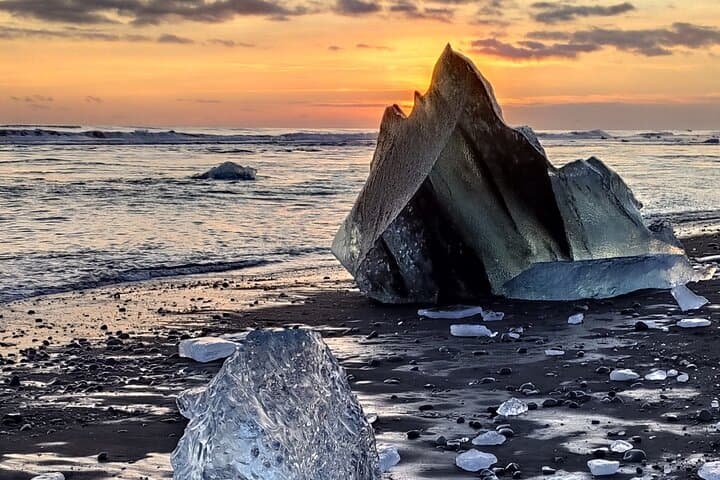
A cold wind pushes across the black sand as the first icebergs of the morning grind toward the Atlantic — you stand at Diamond Beach, where crystalline chunks lie like spilled glass on volcanic ground. The tour unfurls along the south coast, moving east from Reykjavík across low lava fields, past the clipped village of Vík, and into the vast, glacier-shaped sweep around Jökulsárlón.
A cold wind pushes across the black sand as the first icebergs of the morning grind toward the Atlantic — you stand at Diamond Beach, where crystalline chunks lie like spilled glass on volcanic ground. The tour unfurls along the south coast, moving east from Reykjavík across low lava fields, past the clipped village of Vík, and into the vast, glacier-shaped sweep around Jökulsárlón.
This route traces recent geology: glaciers carving fjords and depositing moraines as they retreat, leaving hexagonal basalt at Svartifoss and the dark headlands of Reynisdrangar. Human history here is compact — fishing villages and turf churches survive a harsh climate — while geological time remains visible in miles of black sand and wandering ice. Dyrhólaey’s promontory was once an island of volcanic origin; Fjaðrárgljúfur is an ancient river-cut canyon you can rim-walk for close views.
Practical guidance: expect long driving days (Reykjavík–Jökulsárlón ≈ 380 km round trip with stops), short walks at each site (most trails 0.5–3 km, modest elevation). Weather shifts fast — wind, drizzle, and bright sun can swap within an hour. Wear a waterproof outer layer, sturdy boots with grip for wet basalt, and plan for camera batteries to drain in cold. If traveling May–September, the amphibian boat runs from the lagoon; winter visits focus on light and possibly ice-cave options with guides. Respect posted safety zones on black-sand beaches — sneaker waves are real. With a private guide and an overnight countryside stay, this itinerary balances sightseeing and paced exploration of some of Iceland’s most dramatic coastal landscapes.