THE ADVENTURE COLLECTIVE® · Independent discovery and booking for outdoor travel

A compact, two‑day loop from Bishkek to the south shore of Issyk‑Kul that combines light canyon hikes, an overnight yurt camp on a wild beach, and a traditional eagle‑hunting demonstration. Ideal for travelers short on time who still want authentic steppe experiences.
A compact, two‑day loop from Bishkek to the south shore of Issyk‑Kul that combines light canyon hikes, an overnight yurt camp on a wild beach, and a traditional eagle‑hunting demonstration. Ideal for travelers short on time who still want authentic steppe experiences.
The van eases out of Bishkek as the steppe opens, a broad sweep of grass and distant ridgelines guiding you east toward Issyk-Kul’s southern shore.
Verified experiences and guided adventures in the surrounding area.
Operated by Central Asia Wanderers · Bishkek, Issyk‑Kul Region
The van eases out of Bishkek as the steppe opens, a broad sweep of grass and distant ridgelines guiding you east toward Issyk-Kul’s southern shore.
In less than a day you trade the capital’s bustle for 230 km of roadside panoramas, a stop at the 11th‑century Burana Tower, and a short hike through Kok Moinok’s folded red sandstone. By evening you’re at Bel Tam yurt camp on the lake’s wild beach — a simple yurt, a wood stove, and a sky that makes the stars feel close enough to touch.
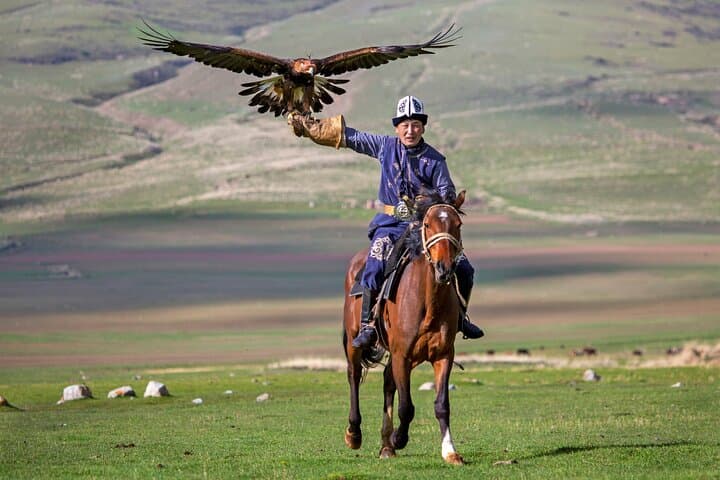
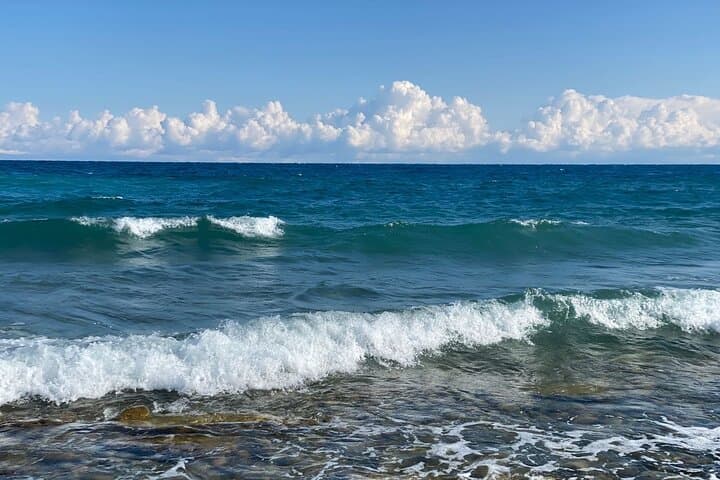
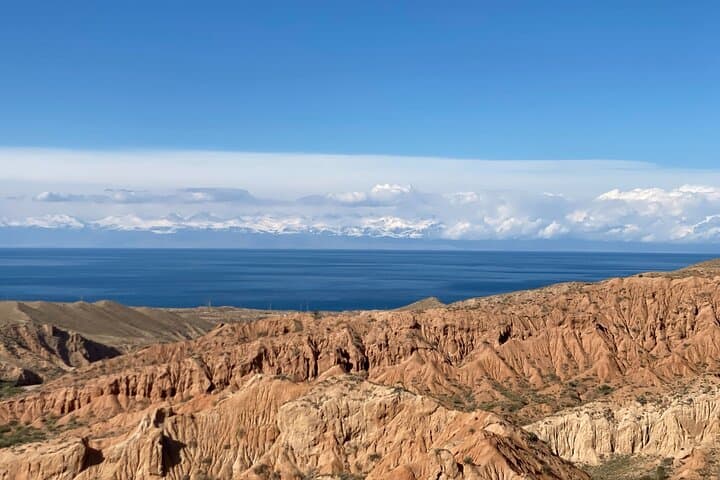
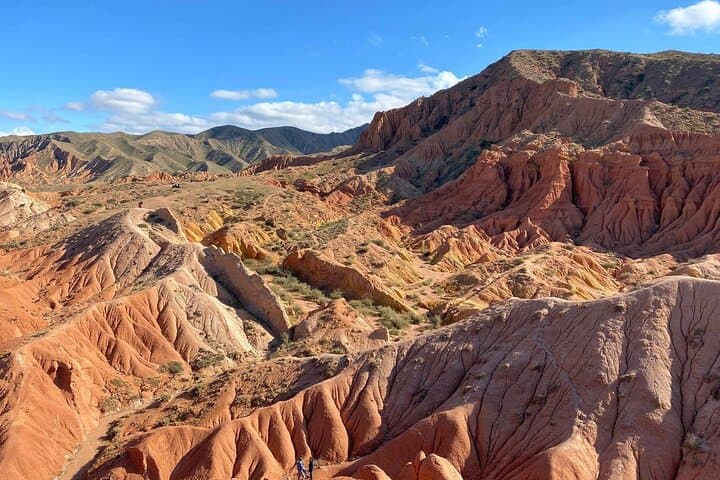
Geology here is blunt and visible: the Tien Shan foothills shed sediment into canyons and bright, wind-sculpted pillars like those at Skazka (Fairy Tale); Issyk‑Kul itself is an endorheic, high‑altitude saline lake sitting at roughly 1,600 m. Culturally, this corridor stitches ancient Silk Road relics (Burana’s minaret and balbals) to living nomadic practices — the berkutchi eagle-hunting demonstration is a direct line to Kazakh and Kyrgyz steppe traditions.
Practical notes: expect light, 30–60 minute hikes with modest elevation change (under ~200 m) and uneven rocky trails. Temperatures swing between sun and wind along the shore; layers and sun protection are essential. The overnight is in a communal yurt camp with basic facilities; bring modest toiletries and a small towel. Hydrate on the road, keep a daypack for hikes and archery sessions, and carry cash for small purchases. Timing a spring–autumn visit reduces crowds and maximizes comfortable hiking and swimming windows. This two‑day loop is compact, scenic, and ideal for travelers wanting a concentrated taste of Kyrgyz steppe life without multi‑day trekking.
easy.
2 days.
Suitable for travelers in regular health who can walk 1–2 hours on uneven terrain and handle short hikes.
The itinerary covers about 230 km; expect roughly 3.5–4.5 hours of driving with stops, depending on road and traffic conditions.
Overnight stays are in traditional yurts with basic comforts — sleeping pads or beds, shared or simple facilities, and communal dining in a large kitchen yurt.
Swimming is common on the south shore in summer; the lake is saline and generally safe, but watch local conditions, wind, and deep drop‑offs near some beaches.
Yes — the tour notes infants are allowed (must sit on laps) and hikes are short; however, parents should supervise near cliffs, water, and during animal demonstrations.
Burana Tower is an 11th‑century minaret from the Karakhanid period and sits among ancient balbals (stone grave markers) that mark nomadic burial traditions.
Issyk‑Kul’s shoreline is sensitive to development and litter; visitors should pack out trash, avoid damaging fragile canyon formations, and follow local guidance to protect cultural sites.
Central Asia Wanderers operates guided outdoor trips and adventures with an emphasis on safety, stewardship, and memorable experiences.
The van eases out of Bishkek as the steppe opens, a broad sweep of grass and distant ridgelines guiding you east toward Issyk-Kul’s southern shore.
The van eases out of Bishkek as the steppe opens, a broad sweep of grass and distant ridgelines guiding you east toward Issyk-Kul’s southern shore.
In less than a day you trade the capital’s bustle for 230 km of roadside panoramas, a stop at the 11th‑century Burana Tower, and a short hike through Kok Moinok’s folded red sandstone. By evening you’re at Bel Tam yurt camp on the lake’s wild beach — a simple yurt, a wood stove, and a sky that makes the stars feel close enough to touch.
Geology here is blunt and visible: the Tien Shan foothills shed sediment into canyons and bright, wind-sculpted pillars like those at Skazka (Fairy Tale); Issyk‑Kul itself is an endorheic, high‑altitude saline lake sitting at roughly 1,600 m. Culturally, this corridor stitches ancient Silk Road relics (Burana’s minaret and balbals) to living nomadic practices — the berkutchi eagle-hunting demonstration is a direct line to Kazakh and Kyrgyz steppe traditions.
Practical notes: expect light, 30–60 minute hikes with modest elevation change (under ~200 m) and uneven rocky trails. Temperatures swing between sun and wind along the shore; layers and sun protection are essential. The overnight is in a communal yurt camp with basic facilities; bring modest toiletries and a small towel. Hydrate on the road, keep a daypack for hikes and archery sessions, and carry cash for small purchases. Timing a spring–autumn visit reduces crowds and maximizes comfortable hiking and swimming windows. This two‑day loop is compact, scenic, and ideal for travelers wanting a concentrated taste of Kyrgyz steppe life without multi‑day trekking.