THE ADVENTURE COLLECTIVE® · Independent discovery and booking for outdoor travel

Spend two days at the southern edge of the Sahara from M'Hamid El Ghizlane: camel walks, 4x4 crossings and a night in a remote sand camp with traditional sand-bread baking and local music. Practical pace, strong local insight and hands-on cultural moments make this a compact desert immersion.
Spend two days at the southern edge of the Sahara from M'Hamid El Ghizlane: camel walks, 4x4 crossings and a night in a remote sand camp with traditional sand-bread baking and local music. Practical pace, strong local insight and hands-on cultural moments make this a compact desert immersion.
Morning light falls across a sweep of golden ridges as the convoy pulls away from M'Hamid and the first camels step into loose sand. The air tastes faintly of rosemary and dust; guides move with a practiced economy, arranging saddles and calling softly to animals that know the desert as home. Over two days this small-scale tour trades paved roads for 4x4 tracks, walking on camelback, and a night in a remote sand camp where the Milky Way becomes the ceiling.
Verified experiences and guided adventures in the surrounding area.
Operated by Dar Nomads · M'Hamid El Ghizlane, Drâa-Tafilalet (Zagora Province)
Morning light falls across a sweep of golden ridges as the convoy pulls away from M'Hamid and the first camels step into loose sand. The air tastes faintly of rosemary and dust; guides move with a practiced economy, arranging saddles and calling softly to animals that know the desert as home. Over two days this small-scale tour trades paved roads for 4x4 tracks, walking on camelback, and a night in a remote sand camp where the Milky Way becomes the ceiling.
The region around M'Hamid El Ghizlane marks the edge of the Sahara and the end of the Drâa valley. Geologically the landscape is wind-sculpted—dune arcs, interdunal flats and occasional palm oases born where groundwater meets sand. Culturally, this is nomad country: the routes here follow old caravan corridors and the camp rituals—sand bread baked in embers, stories by fire, and simple songs—reflect a living desert tradition.
Practically, expect easy-paced walking and short camel treks, with dune climbs of a few hundred vertical meters at most and travel in a 4x4 between sites. Nights get cold in winter; bring layers and a reliable sleeping setup if you plan to sleep under the stars. Hydration and sun protection are non-negotiable—carry at least 2–3 liters, sunscreen, and a brimmed hat. Time activities for sunrise and sunset to see the dunes shift color and avoid midday heat in summer. Guides handle logistics and cooking; travelers can lean into the rhythm of the desert with simple gear and an open mind.
easy.
2 days (approx. 48 hours).
Suitable for travelers in basic physical condition who can mount camels, walk short dune sections and handle uneven sand surfaces.
No—guides provide basic instruction and the camel treks are slow-paced and short, suitable for first-timers.
You can sleep in a private tent supplied by the operator or choose to sleep under the stars with a sleeping bag; bring a warm layer for winter nights.
Meals listed (breakfast, lunch, dinner) are included; drinking water is typically provided but bring additional bottles if you prefer more volume.
Most tours include pickup from M'Hamid guesthouses; confirm your exact pickup point when booking and provide arrival details in advance.
M'Hamid sits at the historic southern gateway of Moroccan trade routes; its camps reflect centuries of nomadic movement and caravan logistics across the Sahara.
Avoid collecting firewood from living acacias, pack out trash, and follow guide instructions to protect fragile dune vegetation and limited water resources.
Dar Nomads operates guided outdoor trips and adventures with an emphasis on safety, stewardship, and memorable experiences.
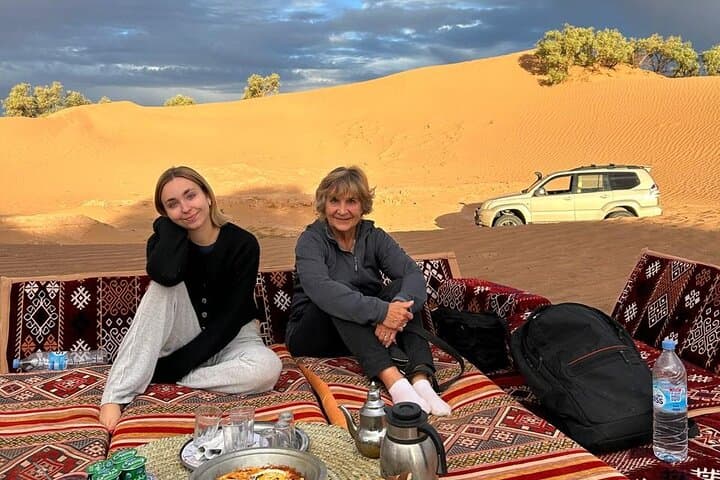
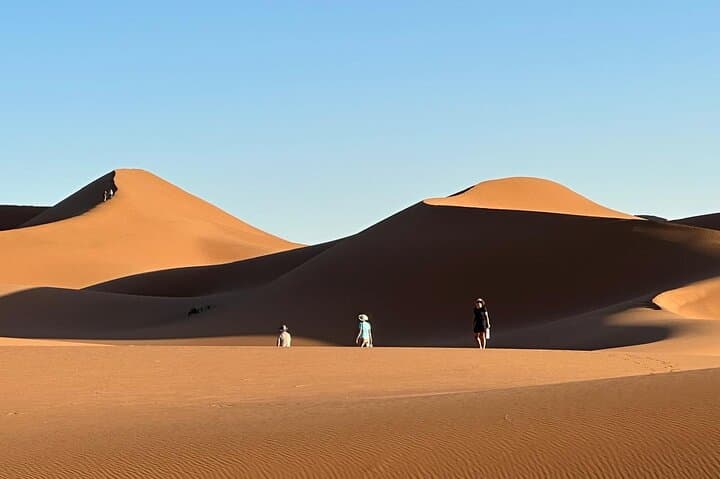
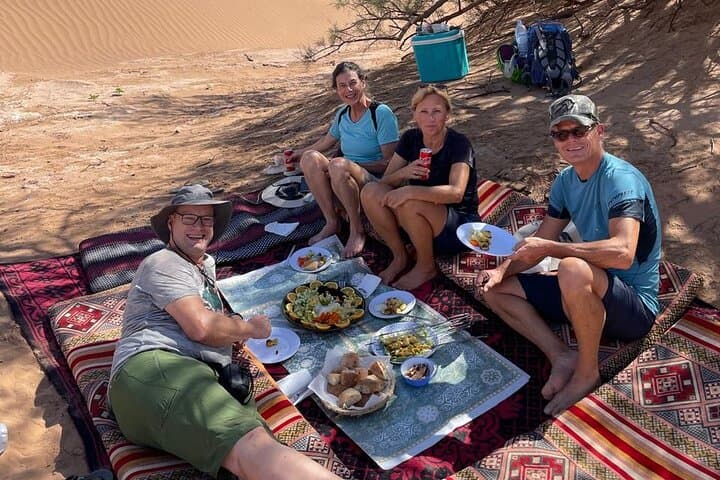
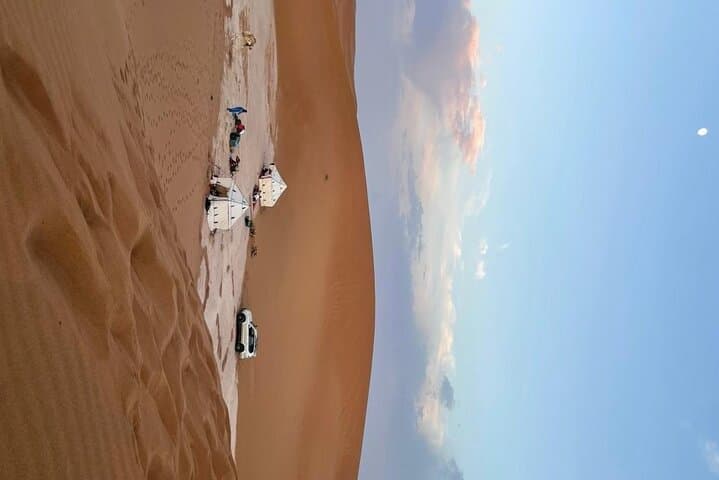
Morning light falls across a sweep of golden ridges as the convoy pulls away from M'Hamid and the first camels step into loose sand. The air tastes faintly of rosemary and dust; guides move with a practiced economy, arranging saddles and calling softly to animals that know the desert as home. Over two days this small-scale tour trades paved roads for 4x4 tracks, walking on camelback, and a night in a remote sand camp where the Milky Way becomes the ceiling.
Morning light falls across a sweep of golden ridges as the convoy pulls away from M'Hamid and the first camels step into loose sand. The air tastes faintly of rosemary and dust; guides move with a practiced economy, arranging saddles and calling softly to animals that know the desert as home. Over two days this small-scale tour trades paved roads for 4x4 tracks, walking on camelback, and a night in a remote sand camp where the Milky Way becomes the ceiling.
The region around M'Hamid El Ghizlane marks the edge of the Sahara and the end of the Drâa valley. Geologically the landscape is wind-sculpted—dune arcs, interdunal flats and occasional palm oases born where groundwater meets sand. Culturally, this is nomad country: the routes here follow old caravan corridors and the camp rituals—sand bread baked in embers, stories by fire, and simple songs—reflect a living desert tradition.
Practically, expect easy-paced walking and short camel treks, with dune climbs of a few hundred vertical meters at most and travel in a 4x4 between sites. Nights get cold in winter; bring layers and a reliable sleeping setup if you plan to sleep under the stars. Hydration and sun protection are non-negotiable—carry at least 2–3 liters, sunscreen, and a brimmed hat. Time activities for sunrise and sunset to see the dunes shift color and avoid midday heat in summer. Guides handle logistics and cooking; travelers can lean into the rhythm of the desert with simple gear and an open mind.