THE ADVENTURE COLLECTIVE® · Independent discovery and booking for outdoor travel

Two days from Marrakech, the Zagora route condenses Sahara atmosphere into an accessible overnight: kasbah-lined valleys, a short camel trek and a night in a nomad tent under brilliant desert stars. Practical for travelers seeking low-effort desert immersion with cultural context.
Two days from Marrakech, the Zagora route condenses Sahara atmosphere into an accessible overnight: kasbah-lined valleys, a short camel trek and a night in a nomad tent under brilliant desert stars. Practical for travelers seeking low-effort desert immersion with cultural context.
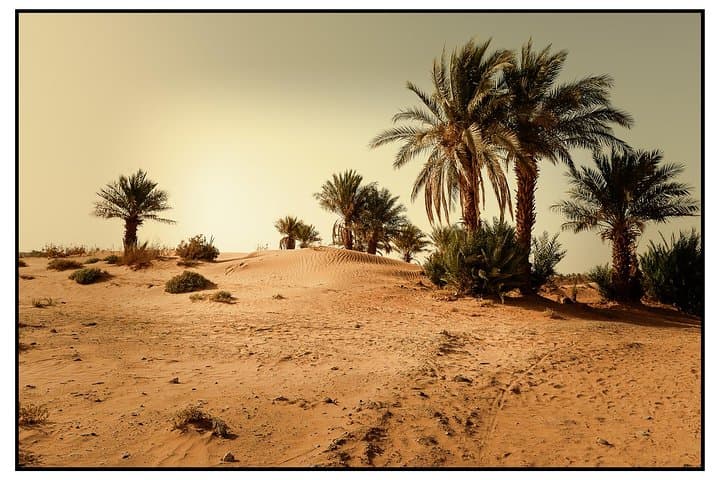
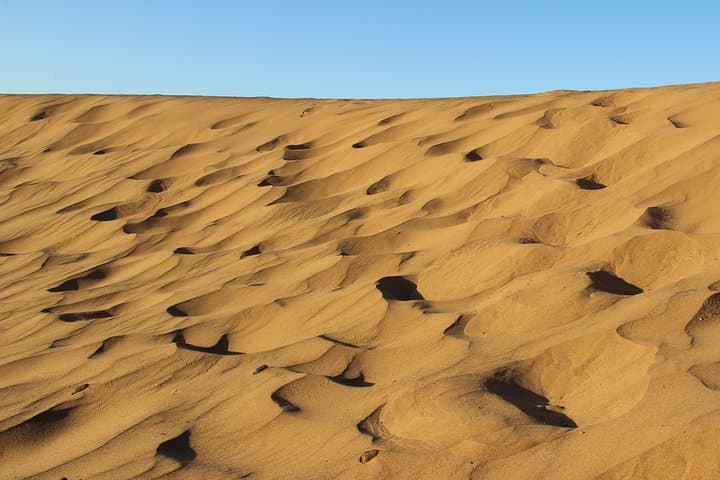
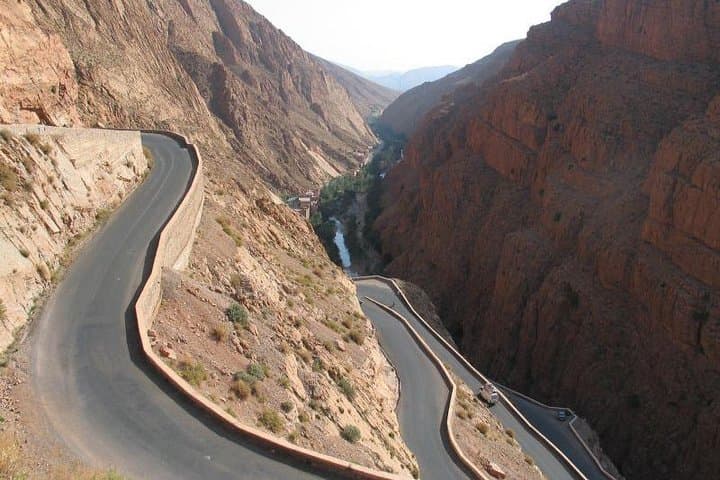
Sun lifts over the High Atlas as your air-conditioned minivan threads red-earth passes and palm-lined valleys toward Zagora. By afternoon the road narrows to ochre plains and the wind begins to shape the sand; camels wait at the dune edge and your guide reads the desert the way a captain reads the sea.
Verified experiences and guided adventures in the surrounding area.
Operated by Trekking in Morocco · Zagora, Drâa-Tafilalet
Sun lifts over the High Atlas as your air-conditioned minivan threads red-earth passes and palm-lined valleys toward Zagora. By afternoon the road narrows to ochre plains and the wind begins to shape the sand; camels wait at the dune edge and your guide reads the desert the way a captain reads the sea.
This route follows centuries-old caravan corridors through the Draa Valley, passing kasbahs and the fortified clay architectures of Ait Benhaddou—a familiar backdrop for films—and arriving at Zagora’s rim of dunes. Geologically the region is an interface between riverine oases and wind-carved erg: ancient riverbeds, alluvial terraces and mobile sand that moves with seasonal winds. Culturally you’re in a Berber landscape where irrigation palm groves, pottery traditions in Tamegroute and clan-built kasbahs map local life.
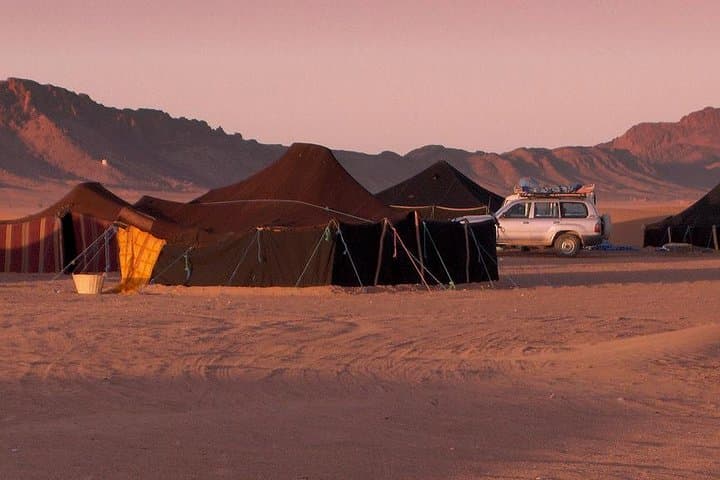
Expect long driving legs (most of the day to reach Zagora), then a short camel trek into dunes to a private nomad-style camp. Nights are clear and cold, days sun-dominant—bring layers. Trails are sandy and undulating; the physical demand is low but pack for sun exposure, dusty conditions and limited facilities. Guides provide dinner, breakfast and basic camp bedding; toilets and showers are usually rudimentary.
Practical notes: travel early to avoid peak heat, carry cash for tips and small purchases, and recharge batteries at stops. Respect local dress codes, conserve water, and stay with your guide on dune routes—sand shifts unexpectedly and the landscape demands attention as much as it rewards.
easy.
2 days.
Light fitness required—able to mount a camel and walk short distances across sand; no sustained hiking or technical exertion.
Expect roughly 6–8 hours of driving each way depending on stops and road conditions; the tour schedules stops at Ait Benhaddou and villages along the Draa Valley.
Yes—camel rides to the desert camp are included; the dune trek is typically 45–90 minutes depending on the camp location and group pace.
Overnight is in nomad-style tents with basic bedding; amenities are simple—electricity and full showers may be limited or shared depending on the camp.
The tour is described as suitable for most fitness levels, but camel riding and uneven sand can be challenging; travelers with serious mobility issues or spinal problems should avoid it.
The Zagora corridor was part of trans-Saharan caravan routes; Ait Benhaddou served as a strategic fortified stop and now doubles as a famous film site.
The Sahara’s fragile soils and scarce water make low-impact travel essential—stay on established routes, pack out waste, and minimize water use at camps.
Trekking in Morocco operates guided outdoor trips and adventures with an emphasis on safety, stewardship, and memorable experiences.
Sun lifts over the High Atlas as your air-conditioned minivan threads red-earth passes and palm-lined valleys toward Zagora. By afternoon the road narrows to ochre plains and the wind begins to shape the sand; camels wait at the dune edge and your guide reads the desert the way a captain reads the sea.
Sun lifts over the High Atlas as your air-conditioned minivan threads red-earth passes and palm-lined valleys toward Zagora. By afternoon the road narrows to ochre plains and the wind begins to shape the sand; camels wait at the dune edge and your guide reads the desert the way a captain reads the sea.
This route follows centuries-old caravan corridors through the Draa Valley, passing kasbahs and the fortified clay architectures of Ait Benhaddou—a familiar backdrop for films—and arriving at Zagora’s rim of dunes. Geologically the region is an interface between riverine oases and wind-carved erg: ancient riverbeds, alluvial terraces and mobile sand that moves with seasonal winds. Culturally you’re in a Berber landscape where irrigation palm groves, pottery traditions in Tamegroute and clan-built kasbahs map local life.
Expect long driving legs (most of the day to reach Zagora), then a short camel trek into dunes to a private nomad-style camp. Nights are clear and cold, days sun-dominant—bring layers. Trails are sandy and undulating; the physical demand is low but pack for sun exposure, dusty conditions and limited facilities. Guides provide dinner, breakfast and basic camp bedding; toilets and showers are usually rudimentary.
Practical notes: travel early to avoid peak heat, carry cash for tips and small purchases, and recharge batteries at stops. Respect local dress codes, conserve water, and stay with your guide on dune routes—sand shifts unexpectedly and the landscape demands attention as much as it rewards.