THE ADVENTURE COLLECTIVE® · Independent discovery and booking for outdoor travel

A concise, two-day sweep from Agadir into Erg Lihoudi that pairs camel rides and a private bivouac with visits to palm groves, kasbahs and Berber villages. Expect long drives, dramatic sunsets over shifting dunes, and comfortable tented nights with hot showers.
A concise, two-day sweep from Agadir into Erg Lihoudi that pairs camel rides and a private bivouac with visits to palm groves, kasbahs and Berber villages. Expect long drives, dramatic sunsets over shifting dunes, and comfortable tented nights with hot showers.
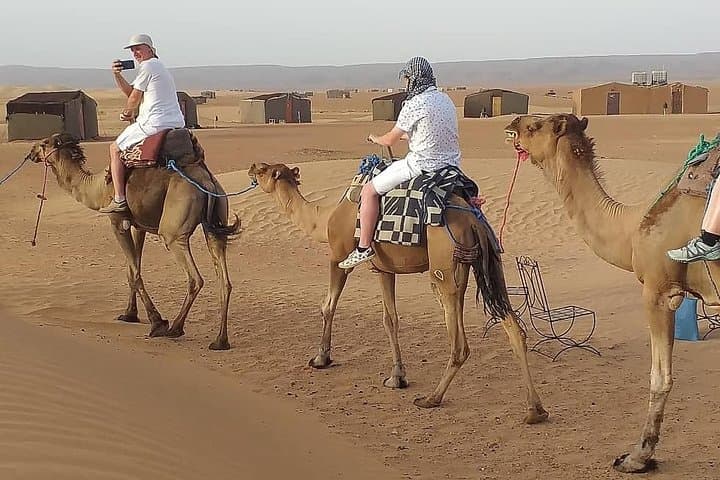
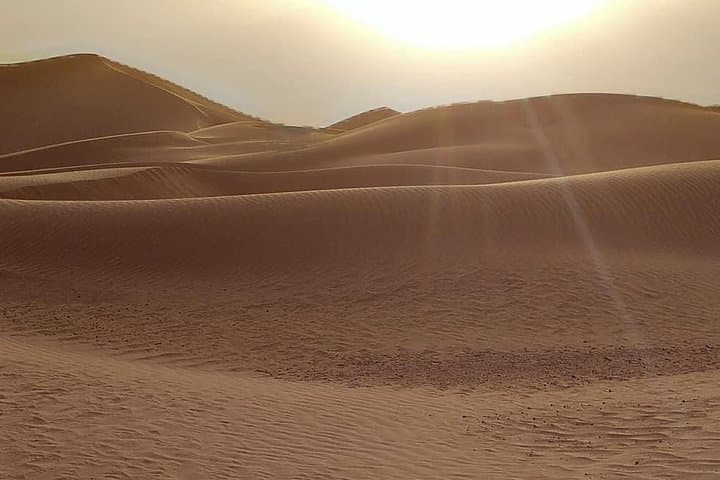
Dusk lowers like a slow hand across the dunes as a convoy pulls off the asphalt and onto desert track. By the time the minivan stops, camel silhouettes are already etched against an orange horizon and the wind is busy reshaping the sand — an active landscape that seems to breathe.
Verified experiences and guided adventures in the surrounding area.
Operated by Agadir Safari · M'Hamid el Ghizlane, Drâa-Tafilalet
Dusk lowers like a slow hand across the dunes as a convoy pulls off the asphalt and onto desert track. By the time the minivan stops, camel silhouettes are already etched against an orange horizon and the wind is busy reshaping the sand — an active landscape that seems to breathe.
Over two days travelers move from coastal Agadir into the eastern reaches of Morocco, encountering palm groves, kasbahs and the broad sweep of Erg Lihoudi. Geologically the erg is a field of mobile sand formed by longshore winds and ancient river sediments; culturally the route threads through Berber villages where saffron tea and weavings speak to generations of desert life. A short visit to a village market and a collective attic over 500 years old gives a sense of continuity before the dunes demand a different pace.
Expect a late-afternoon camel ride, an overnight at a private bivouac with heated shower and modern WC, campfire meals and local music, then a morning walk among ripples of sand. The experience is sensory — the sand will sting in wind and freeze at night — so plan layers and sun protection. Physically it’s moderate: few technical challenges but long bumpy transfers and sandy footing can tire knees and ankles.
Practical tips: time your travel to catch sunrise or sunset on the dunes, carry at least 2–3 liters of water per person per day, and bring a headlamp and closed-toe shoes. The tour balances authentic nomad encounters with a comfortable, private camp setup — raw desert framed by pragmatic comfort.
moderate.
2 days.
Moderate fitness: able to manage several hours of walking on sand and sit through long vehicle transfers.
The route covers several hundred kilometers and includes long stretches on paved roads and desert tracks; plan for multiple hours of transfer time and a mix of smooth and bumpy sections.
Yes — a short camel ride at the dunes is included, typically long enough for sunset viewing and photography (around 20–40 minutes depending on group options).
Tents are private and described as comfortable, with access to hot showers and modern toilets at the camp site; meals and campfire entertainment are provided.
The operator notes accessibility features, but desert surfaces and dune walking can be challenging; check with the provider about specific mobility needs and vehicle arrangements before booking.
This area sits along ancient trade and nomadic routes; kasbahs and palm-grove settlements developed where water and trade intersected between oasis communities.
The mobile dunes are fragile: stick to tracks, minimize campfire impact, and conserve water. Local groups often work with guides to manage visitor impact on oasis agriculture.
Agadir Safari operates guided outdoor trips and adventures with an emphasis on safety, stewardship, and memorable experiences.
Dusk lowers like a slow hand across the dunes as a convoy pulls off the asphalt and onto desert track. By the time the minivan stops, camel silhouettes are already etched against an orange horizon and the wind is busy reshaping the sand — an active landscape that seems to breathe.
Dusk lowers like a slow hand across the dunes as a convoy pulls off the asphalt and onto desert track. By the time the minivan stops, camel silhouettes are already etched against an orange horizon and the wind is busy reshaping the sand — an active landscape that seems to breathe.
Over two days travelers move from coastal Agadir into the eastern reaches of Morocco, encountering palm groves, kasbahs and the broad sweep of Erg Lihoudi. Geologically the erg is a field of mobile sand formed by longshore winds and ancient river sediments; culturally the route threads through Berber villages where saffron tea and weavings speak to generations of desert life. A short visit to a village market and a collective attic over 500 years old gives a sense of continuity before the dunes demand a different pace.
Expect a late-afternoon camel ride, an overnight at a private bivouac with heated shower and modern WC, campfire meals and local music, then a morning walk among ripples of sand. The experience is sensory — the sand will sting in wind and freeze at night — so plan layers and sun protection. Physically it’s moderate: few technical challenges but long bumpy transfers and sandy footing can tire knees and ankles.
Practical tips: time your travel to catch sunrise or sunset on the dunes, carry at least 2–3 liters of water per person per day, and bring a headlamp and closed-toe shoes. The tour balances authentic nomad encounters with a comfortable, private camp setup — raw desert framed by pragmatic comfort.