THE ADVENTURE COLLECTIVE® · Independent discovery and booking for outdoor travel

Cross cedar forests, palm-lined valleys and the Ziz Oasis en route to Erg Chebbi, then spend a night in a Berber camp beneath an expansive desert sky. This compact two-day tour from Fes combines cultural stops, a camel trek and a sunrise over the dunes.
Cross cedar forests, palm-lined valleys and the Ziz Oasis en route to Erg Chebbi, then spend a night in a Berber camp beneath an expansive desert sky. This compact two-day tour from Fes combines cultural stops, a camel trek and a sunrise over the dunes.
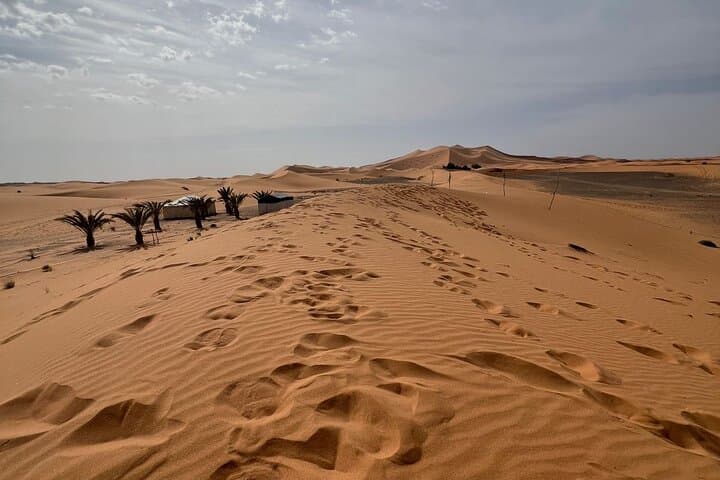
A thin ribbon of asphalt pulls you out of Fes and into a changing world: cedar-scented slopes of the Middle Atlas give way to tile-roofed Berber villages, palm-lined river cuts and, finally, the rising ridges of sand at Erg Chebbi.
Verified experiences and guided adventures in the surrounding area.
Operated by Dima Morocco Tours · Merzouga, Drâa-Tafilalet
A thin ribbon of asphalt pulls you out of Fes and into a changing world: cedar-scented slopes of the Middle Atlas give way to tile-roofed Berber villages, palm-lined river cuts and, finally, the rising ridges of sand at Erg Chebbi.
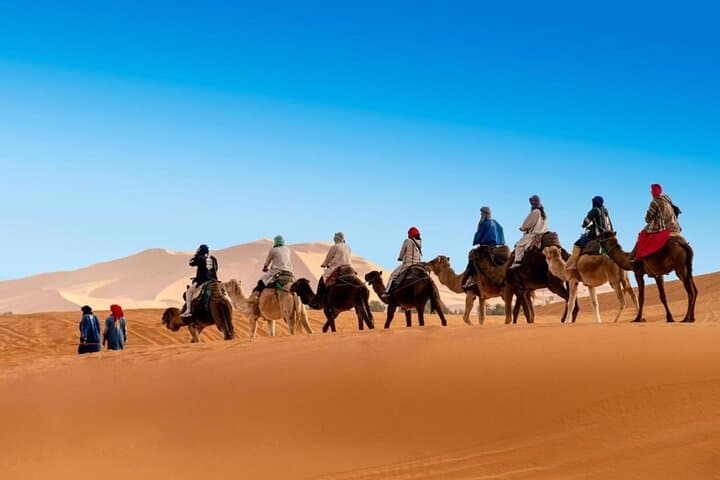
On day one the road is part highway, part history — Ifrane’s alpine-style houses and Azrou’s cedar forest where Barbary macaques break the silence. The terrain tells a geological story: High Atlas erosion fed valleys and alluvial fans, while wind sculpted the soft Sahara sands into the dunes you’ll cross by camel at dusk. Rissani and Erfoud recall caravan routes and a living fossil trade; the people you meet are mainly Amazigh (Berber) communities whose hospitality shapes the trip.
Night falls with a practical grandeur: canvas Berber tents, a woodfire, and a sky that makes the Milky Way feel close enough to touch. Expect simple but comfortable camp facilities, communal meals, and local music around the fire. Sunrise over the dunes is the reward — cool air, shifting light, and a quiet that pushes you forward.
Practical guidance: pack layers (desert days are hot, nights cold), sun protection, and plenty of water. Footing on dunes is soft and uneven; camels are steady but not suited to those with severe back problems. Travel time is long — each transfer is a scenic highway journey — so plan for motion comfort and an early alarm for the sunrise trek.
This two-day loop balances culture, landscape, and an overnight desert camp for first-time Sahara travelers seeking a compact, authentic experience.
moderate.
2 days.
Moderate: suitable for travelers who can handle short walks, a camel ride, and long vehicle transfers.
Yes—pickup from Fes accommodation is standard; the tour covers transfers between Fes and Merzouga over the two days.
Camel treks are typically 45–90 minutes, timed to arrive at the camp before sunset; riding is gentle but not recommended for those with serious back issues.
Camps provide traditional tents, mattresses and communal dining; facilities are basic but clean—expect shared toilets and cold-water washing options.
Yes—families often join, though infants and those with spinal issues should avoid camel rides and check availability of infant seating and accommodations.
This route follows centuries-old caravan corridors; Rissani served as a historic caravan hub connecting Saharan trade routes to the Atlas and Mediterranean.
The Sahara’s dune systems are fragile—stick to marked tracks, avoid littering, and support camps that minimize plastic use and respect traditional land use.
Dima Morocco Tours operates guided outdoor trips and adventures with an emphasis on safety, stewardship, and memorable experiences.

A thin ribbon of asphalt pulls you out of Fes and into a changing world: cedar-scented slopes of the Middle Atlas give way to tile-roofed Berber villages, palm-lined river cuts and, finally, the rising ridges of sand at Erg Chebbi.
A thin ribbon of asphalt pulls you out of Fes and into a changing world: cedar-scented slopes of the Middle Atlas give way to tile-roofed Berber villages, palm-lined river cuts and, finally, the rising ridges of sand at Erg Chebbi.
On day one the road is part highway, part history — Ifrane’s alpine-style houses and Azrou’s cedar forest where Barbary macaques break the silence. The terrain tells a geological story: High Atlas erosion fed valleys and alluvial fans, while wind sculpted the soft Sahara sands into the dunes you’ll cross by camel at dusk. Rissani and Erfoud recall caravan routes and a living fossil trade; the people you meet are mainly Amazigh (Berber) communities whose hospitality shapes the trip.
Night falls with a practical grandeur: canvas Berber tents, a woodfire, and a sky that makes the Milky Way feel close enough to touch. Expect simple but comfortable camp facilities, communal meals, and local music around the fire. Sunrise over the dunes is the reward — cool air, shifting light, and a quiet that pushes you forward.
Practical guidance: pack layers (desert days are hot, nights cold), sun protection, and plenty of water. Footing on dunes is soft and uneven; camels are steady but not suited to those with severe back problems. Travel time is long — each transfer is a scenic highway journey — so plan for motion comfort and an early alarm for the sunrise trek.
This two-day loop balances culture, landscape, and an overnight desert camp for first-time Sahara travelers seeking a compact, authentic experience.