THE ADVENTURE COLLECTIVE® · Independent discovery and booking for outdoor travel

Leave Douz for a 70 km 4x4 transfer into the red-ochre dunes, meet a caravan of dromedaries, and spend two days walking and riding across expansive sandfields with a night under the stars. This private trek mixes simple bivouac camping with nomad hospitality and wood‑fire meals.
Leave Douz for a 70 km 4x4 transfer into the red-ochre dunes, meet a caravan of dromedaries, and spend two days walking and riding across expansive sandfields with a night under the stars. This private trek mixes simple bivouac camping with nomad hospitality and wood‑fire meals.
Morning light carves the dunes into clean ridges as camels shift and the wind scours footprints into a new map. On this two-day trek from Douz, travelers leave paved roads behind for a 70 km 4x4 transfer to the red-ochre dunes at the edge of Djebil National Park, meet a caravan of dromedaries and local guides, and walk and ride through open sand until a fire and a simple tent mark the night.
Verified experiences and guided adventures in the surrounding area.
Operated by Djerba-Sahara · Douz, Kebili
Morning light carves the dunes into clean ridges as camels shift and the wind scours footprints into a new map. On this two-day trek from Douz, travelers leave paved roads behind for a 70 km 4x4 transfer to the red-ochre dunes at the edge of Djebil National Park, meet a caravan of dromedaries and local guides, and walk and ride through open sand until a fire and a simple tent mark the night.
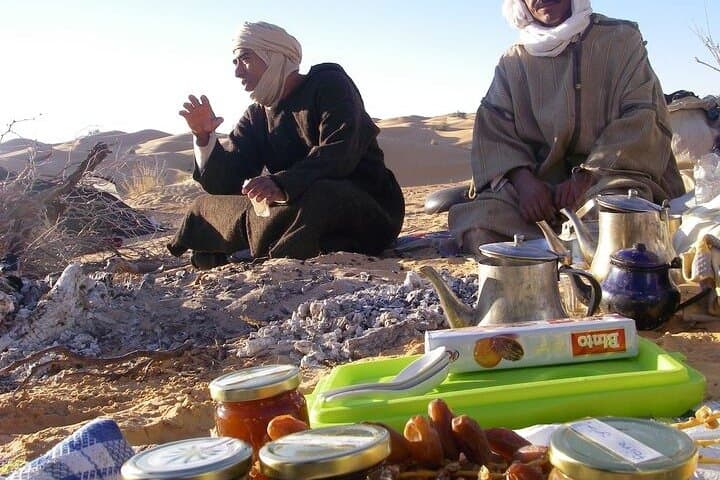
The region is the southern gateway to Tunisia’s Sahara; geology here is recent Pleistocene sand swept into large erg fields with crescentic dunes that change shape with each wind. Douz has long been a caravan hub and today’s itinerary echoes that trade-route history—meals cooked over wood fires, songs shared by camel drivers, and a bivouac under an intense starfield.
Expect 3–5 hours of walking in soft sand each day (sand makes short distances feel longer), brief communal meal stops, and at least one night in a provided Quechua tent after a sunset camp setup. Elevation changes are modest but repeated dune climbs are physically demanding. Bring layered clothing for hot days and cold nights, sun protection, and a hydration plan: the desert will push your limits if you underestimate it.
Practical notes: the tour is private with instant confirmation, not recommended for pregnant travelers or those with serious back issues, and includes all meals and transport. Timing your walk for early morning and late afternoon avoids the hottest sun, and leaving electronics in protective cases prevents sand damage. For those seeking an immersive, low-tech desert experience, this trek balances cultural exchange with pared-back overnight camping.
moderate.
2 days (approx. 48 hours).
Moderate fitness — able to walk 3–5 hours in soft sand and manage repeated dune ascents.
Walking on dunes is deceptively tiring—expect 3–5 hours of mixed walking and riding per day with frequent short breaks; moderate fitness is recommended.
Participants sleep in individual Quechua tents at a prepared bivouac; bedding beyond a simple tent and sleeping liner is typically not provided, so check with the operator for extras.
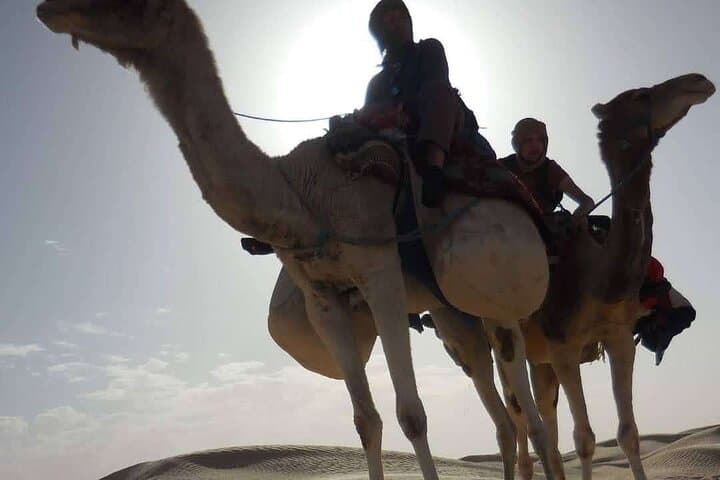
Infants may ride, but the tour is not recommended for travelers with spinal injuries or pregnant guests due to camel motion and camp conditions.
Meals are provided with typical local dishes; notify the operator of dietary restrictions before booking so substitutions can be arranged when possible.
Douz has been a crossroads for trans-Saharan caravans for centuries; the region’s nomadic culture still shapes rhythms of travel and hospitality.
The fragile dune ecosystems recover slowly from tracks and fires—stay on established paths where possible, pack out waste, and respect local grazing areas.
Djerba-Sahara operates guided outdoor trips and adventures with an emphasis on safety, stewardship, and memorable experiences.
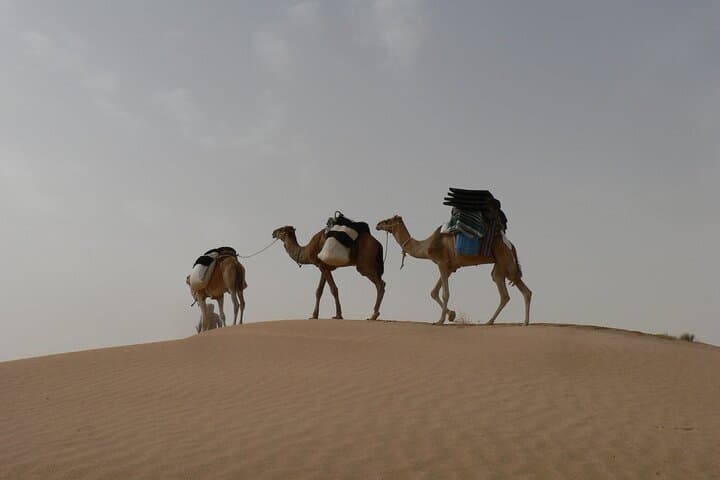
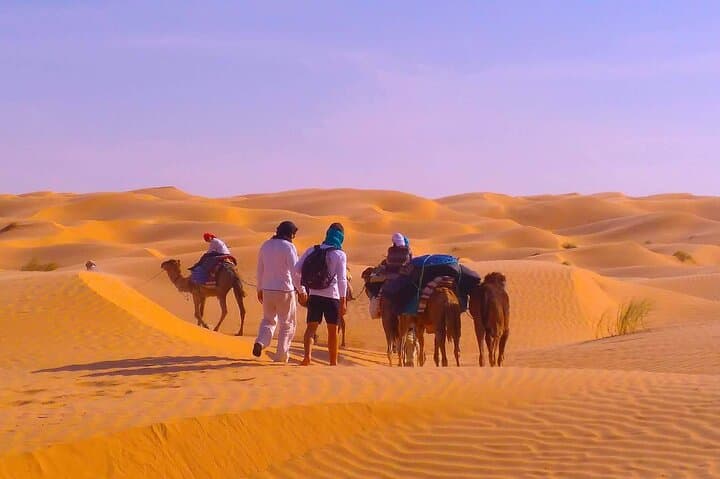
Morning light carves the dunes into clean ridges as camels shift and the wind scours footprints into a new map. On this two-day trek from Douz, travelers leave paved roads behind for a 70 km 4x4 transfer to the red-ochre dunes at the edge of Djebil National Park, meet a caravan of dromedaries and local guides, and walk and ride through open sand until a fire and a simple tent mark the night.
Morning light carves the dunes into clean ridges as camels shift and the wind scours footprints into a new map. On this two-day trek from Douz, travelers leave paved roads behind for a 70 km 4x4 transfer to the red-ochre dunes at the edge of Djebil National Park, meet a caravan of dromedaries and local guides, and walk and ride through open sand until a fire and a simple tent mark the night.
The region is the southern gateway to Tunisia’s Sahara; geology here is recent Pleistocene sand swept into large erg fields with crescentic dunes that change shape with each wind. Douz has long been a caravan hub and today’s itinerary echoes that trade-route history—meals cooked over wood fires, songs shared by camel drivers, and a bivouac under an intense starfield.
Expect 3–5 hours of walking in soft sand each day (sand makes short distances feel longer), brief communal meal stops, and at least one night in a provided Quechua tent after a sunset camp setup. Elevation changes are modest but repeated dune climbs are physically demanding. Bring layered clothing for hot days and cold nights, sun protection, and a hydration plan: the desert will push your limits if you underestimate it.
Practical notes: the tour is private with instant confirmation, not recommended for pregnant travelers or those with serious back issues, and includes all meals and transport. Timing your walk for early morning and late afternoon avoids the hottest sun, and leaving electronics in protective cases prevents sand damage. For those seeking an immersive, low-tech desert experience, this trek balances cultural exchange with pared-back overnight camping.