THE ADVENTURE COLLECTIVE® · Independent discovery and booking for outdoor travel

A fast-paced 48-hour sweep from Marrakech over the High Atlas to the towering Erg Chebbi dunes. Expect dramatic mountain roads, a UNESCO kasbah, sunset camel rides and an overnight in a desert camp.
A fast-paced 48-hour sweep from Marrakech over the High Atlas to the towering Erg Chebbi dunes. Expect dramatic mountain roads, a UNESCO kasbah, sunset camel rides and an overnight in a desert camp.
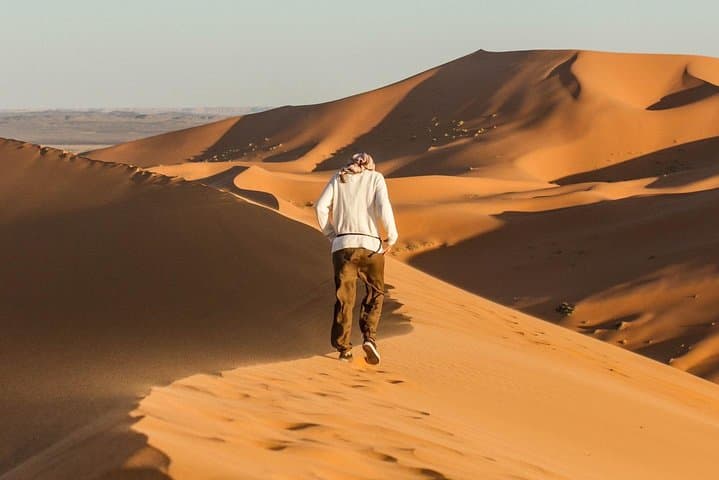
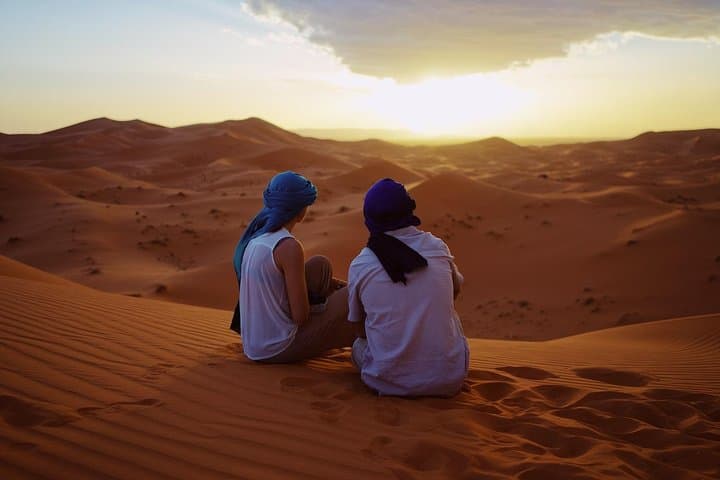
You depart Marrakech before dawn and the city’s ochre walls blur into olive groves as the road climbs the Tizi n'Tichka pass. At 2,260 meters the air thins, the Atlas Mountains flatten into a patchwork of Berber villages, and the van threads stone switchbacks where kasbahs sit like low watchtowers. By late afternoon the landscape softens into ochre sand: the Erg Chebbi dunes rise ahead, their ridgelines catching a slow, molten sunset.
Verified experiences and guided adventures in the surrounding area.
Operated by Oubadi Travel Agency · Merzouga, Drâa-Tafilalet
You depart Marrakech before dawn and the city’s ochre walls blur into olive groves as the road climbs the Tizi n'Tichka pass. At 2,260 meters the air thins, the Atlas Mountains flatten into a patchwork of Berber villages, and the van threads stone switchbacks where kasbahs sit like low watchtowers. By late afternoon the landscape softens into ochre sand: the Erg Chebbi dunes rise ahead, their ridgelines catching a slow, molten sunset.
This shortcut through Morocco’s history stitches together Roman-era caravan routes, the fortified ksars of Ait Ben Haddou (a UNESCO World Heritage site), and cinema-ready valleys around Ouarzazate. Geologically you move from folded metamorphic rock in the High Atlas to wind-sculpted sand seas; Erg Chebbi’s crescent dunes can reach 120–150 meters in places and shift with seasonal winds.
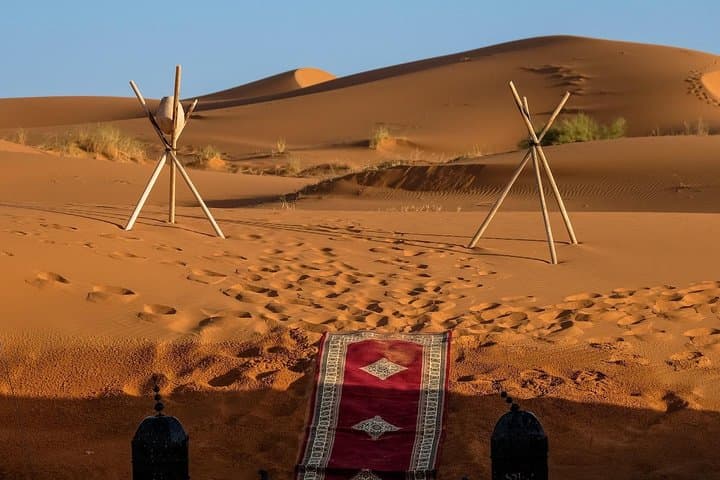
Culturally the route crosses Berber settlements where local hospitality and tagine dinners are part of the daily rhythm; camels remain practical transport and ceremonial icons. The overnight camp at Merzouga puts you on the edge of the dunes—expect sleeping tents with basic comforts, a sunset camel ride and a sunrise walk along crestlines.
Practical guidance: the tour covers roughly 500–600 km round-trip with long stretches of driving—bring layered clothing for hot days and cold desert nights, at least 2–3 liters of water per person, sun protection, and a small daypack for dune walks. The camel trek is short but involves mounting from a low saddle; travelers with serious back or heart conditions should avoid the ride. Carry cash for small purchases, and time your trip in spring or autumn to avoid extreme heat. With basic preparation, this compressed desert circuit offers a vivid slice of Moroccan terrain and culture in 48 hours.
moderate.
2 days (48 hours).
Suitable for travelers with moderate fitness: long periods in a vehicle, short dune hikes and camel mounting require basic mobility.
Yes—private transportation includes hotel pick-up and drop-off in Marrakech as part of the tour.
Typical camel transfers to and from the camp are 30–60 minutes each way, timed for sunset and sunrise.
Camps are private tented accommodations with basic bedding, a shared toilet area, a communal dinner and often local music; luxury options vary by operator.
Travelers with severe spinal, heart conditions or pregnant guests are advised not to ride camels or undertake the dune crossings—consult the operator before booking.
The route follows trans-Saharan trade corridors; Ait Ben Haddou is a fortified ksar that grew wealthy from caravan trade and later became a film location.
Erg Chebbi’s dunes are fragile—stick to established paths, avoid disturbing flora and fauna, and carry out all non-biodegradable waste.
Oubadi Travel Agency operates guided outdoor trips and adventures with an emphasis on safety, stewardship, and memorable experiences.
You depart Marrakech before dawn and the city’s ochre walls blur into olive groves as the road climbs the Tizi n'Tichka pass. At 2,260 meters the air thins, the Atlas Mountains flatten into a patchwork of Berber villages, and the van threads stone switchbacks where kasbahs sit like low watchtowers. By late afternoon the landscape softens into ochre sand: the Erg Chebbi dunes rise ahead, their ridgelines catching a slow, molten sunset.
You depart Marrakech before dawn and the city’s ochre walls blur into olive groves as the road climbs the Tizi n'Tichka pass. At 2,260 meters the air thins, the Atlas Mountains flatten into a patchwork of Berber villages, and the van threads stone switchbacks where kasbahs sit like low watchtowers. By late afternoon the landscape softens into ochre sand: the Erg Chebbi dunes rise ahead, their ridgelines catching a slow, molten sunset.
This shortcut through Morocco’s history stitches together Roman-era caravan routes, the fortified ksars of Ait Ben Haddou (a UNESCO World Heritage site), and cinema-ready valleys around Ouarzazate. Geologically you move from folded metamorphic rock in the High Atlas to wind-sculpted sand seas; Erg Chebbi’s crescent dunes can reach 120–150 meters in places and shift with seasonal winds.
Culturally the route crosses Berber settlements where local hospitality and tagine dinners are part of the daily rhythm; camels remain practical transport and ceremonial icons. The overnight camp at Merzouga puts you on the edge of the dunes—expect sleeping tents with basic comforts, a sunset camel ride and a sunrise walk along crestlines.
Practical guidance: the tour covers roughly 500–600 km round-trip with long stretches of driving—bring layered clothing for hot days and cold desert nights, at least 2–3 liters of water per person, sun protection, and a small daypack for dune walks. The camel trek is short but involves mounting from a low saddle; travelers with serious back or heart conditions should avoid the ride. Carry cash for small purchases, and time your trip in spring or autumn to avoid extreme heat. With basic preparation, this compressed desert circuit offers a vivid slice of Moroccan terrain and culture in 48 hours.