THE ADVENTURE COLLECTIVE® · Independent discovery and booking for outdoor travel

A compact, wildlife-rich safari that combines Tarangire's baobab plains with the dramatic ecology of Ngorongoro Crater. Two days of focused game drives, early starts, and close encounters with iconic East African species.
A compact, wildlife-rich safari that combines Tarangire's baobab plains with the dramatic ecology of Ngorongoro Crater. Two days of focused game drives, early starts, and close encounters with iconic East African species.
Dust lifts around a lone baobab as a line of elephants crosses the Tarangire plain, the morning light turning their backs to bronze. The first day of this two-day safari moves with that steady pace: long hours in a pop-top 4x4, windows down for birdsong and the click of a camera, an afternoon game drive that tracks elephants and feeding herds toward the permanent waters.
Verified experiences and guided adventures in the surrounding area.
Operated by Mbuni Tours And Safari · Arusha, Arusha Region
Dust lifts around a lone baobab as a line of elephants crosses the Tarangire plain, the morning light turning their backs to bronze. The first day of this two-day safari moves with that steady pace: long hours in a pop-top 4x4, windows down for birdsong and the click of a camera, an afternoon game drive that tracks elephants and feeding herds toward the permanent waters.
Tarangire National Park covers roughly 2,850 sq km and is known for its river system and huge baobab-studded floodplains; during the dry months animals concentrate here and sightings intensify. The next morning the route climbs to Ngorongoro, a volcanic caldera collapsed some 2–3 million years ago. The crater is roughly 19 km across, about 600–700 m deep; its rim sits near 2,300 m above sea level while the crater floor drops toward 1,800 m, creating a microcosm of habitats where hippos, lions, elephants, and even rare black rhino can be found.
This brief but focused itinerary blends geology, wildlife viewing, and Maasai cultural presence around the conservation area. Expect early pickups, full-day game drives, and a picnic by a crater lake before the steep ascent out of Ngorongoro.
Practical pointers: bring layered clothing for cool mornings and hot middays, binoculars and a telephoto lens for wildlife, sun protection, and copies of travel documents for park permits. Drives between parks are several hours; motion sickness remedies and reusable water bottles make long game drives more comfortable. Respect park rules, stay in the vehicle, and plan on early starts to catch wildlife at their most active.
easy.
2 days.
Low fitness requirements; mostly seated game drives with short walks at viewpoints. Expect bumpy roads and early starts.
Park fees vary by operator and are often added separately; check your booking details and carry local currency or confirm payment methods beforehand.
Tarangire is typically a 2–3 hour drive from Arusha; Ngorongoro access involves several hours of driving and a steep descent into the crater, so expect full travel days.
Common sightings include large elephant herds in Tarangire, lion, buffalo, zebra, wildebeest, hippos at crater lakes, and a wide variety of birds; rarer species like black rhino are possible but not guaranteed.
The tour is generally suitable for most fitness levels with minimal walking, but long vehicle hours and uneven terrain may be challenging for very young children or guests with mobility issues.
Ngorongoro formed when an ancient volcano collapsed millions of years ago; the conservation area also supports Maasai pastoral communities whose grazing practices coexist with wildlife management.
Both parks operate under strict visitor rules to limit disturbance; responsible tourism supports anti-poaching, local communities, and habitat protection—follow guide instructions and minimize waste.
Mbuni Tours And Safari operates guided outdoor trips and adventures with an emphasis on safety, stewardship, and memorable experiences.

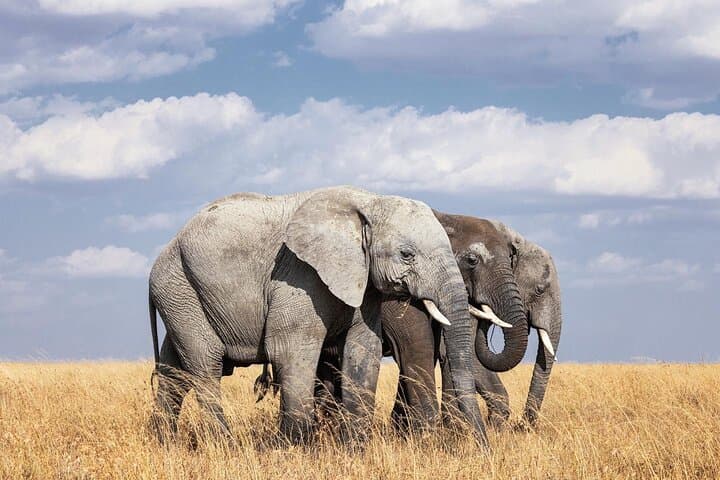
Dust lifts around a lone baobab as a line of elephants crosses the Tarangire plain, the morning light turning their backs to bronze. The first day of this two-day safari moves with that steady pace: long hours in a pop-top 4x4, windows down for birdsong and the click of a camera, an afternoon game drive that tracks elephants and feeding herds toward the permanent waters.
Dust lifts around a lone baobab as a line of elephants crosses the Tarangire plain, the morning light turning their backs to bronze. The first day of this two-day safari moves with that steady pace: long hours in a pop-top 4x4, windows down for birdsong and the click of a camera, an afternoon game drive that tracks elephants and feeding herds toward the permanent waters.
Tarangire National Park covers roughly 2,850 sq km and is known for its river system and huge baobab-studded floodplains; during the dry months animals concentrate here and sightings intensify. The next morning the route climbs to Ngorongoro, a volcanic caldera collapsed some 2–3 million years ago. The crater is roughly 19 km across, about 600–700 m deep; its rim sits near 2,300 m above sea level while the crater floor drops toward 1,800 m, creating a microcosm of habitats where hippos, lions, elephants, and even rare black rhino can be found.
This brief but focused itinerary blends geology, wildlife viewing, and Maasai cultural presence around the conservation area. Expect early pickups, full-day game drives, and a picnic by a crater lake before the steep ascent out of Ngorongoro.
Practical pointers: bring layered clothing for cool mornings and hot middays, binoculars and a telephoto lens for wildlife, sun protection, and copies of travel documents for park permits. Drives between parks are several hours; motion sickness remedies and reusable water bottles make long game drives more comfortable. Respect park rules, stay in the vehicle, and plan on early starts to catch wildlife at their most active.