THE ADVENTURE COLLECTIVE® · Independent discovery and booking for outdoor travel

A compact two-day circuit from Nairobi that pairs Hell's Gate cycling and gorges with a Naivasha boat ride and Lake Nakuru game drives. Expect flamingos, hippos, rhinos and Rift Valley panoramas across manageable driving distances.
A compact two-day circuit from Nairobi that pairs Hell's Gate cycling and gorges with a Naivasha boat ride and Lake Nakuru game drives. Expect flamingos, hippos, rhinos and Rift Valley panoramas across manageable driving distances.
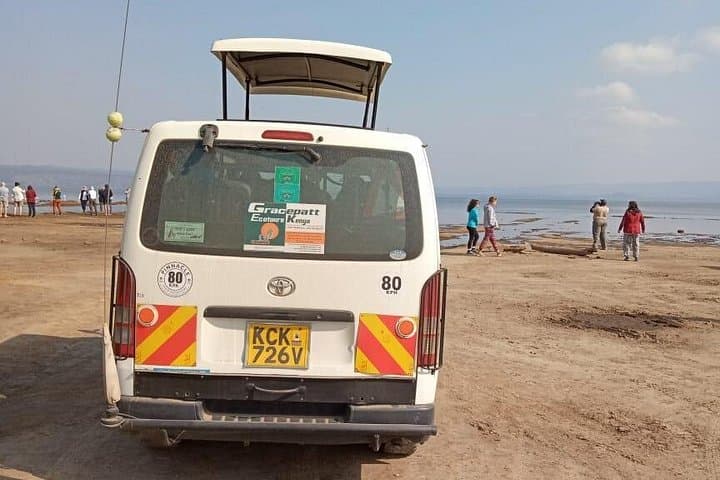
You leave Nairobi before dawn, the city silhouette shrinking as the road climbs the escarpment and the Rift Valley spills open ahead. Acacia crowns and stony ridgelines frame a long, low lake; flamingo-pink edges the water where algal shoals feed the birds. On day one you trade the van for pedals in Hell's Gate, then slow to a boat's pace on Lake Naivasha with hippos surfacing like dark islands.
Verified experiences and guided adventures in the surrounding area.
Operated by Gracepatt Ecotours Kenya · Nairobi, Nairobi County
You leave Nairobi before dawn, the city silhouette shrinking as the road climbs the escarpment and the Rift Valley spills open ahead. Acacia crowns and stony ridgelines frame a long, low lake; flamingo-pink edges the water where algal shoals feed the birds. On day one you trade the van for pedals in Hell's Gate, then slow to a boat's pace on Lake Naivasha with hippos surfacing like dark islands.
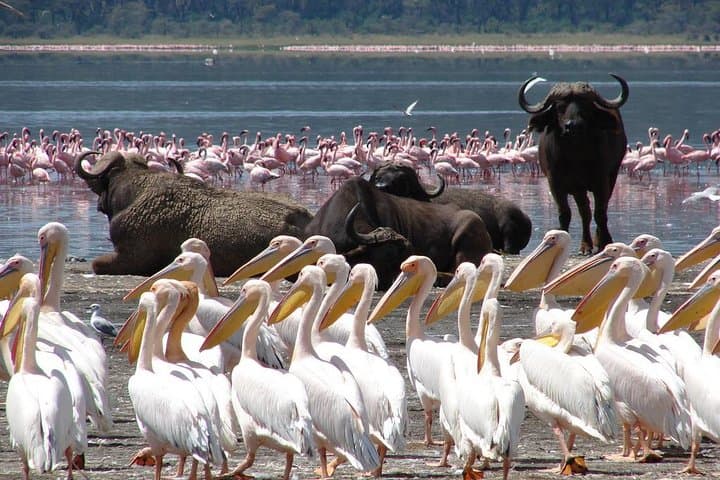
Geology shapes everything here: the Great Rift Valley is an active graben—steep escarpments, volcanic plugs and narrow gorges carved into red basalt. Lake Nakuru is a shallow alkaline lake whose nutrient balance attracts vast flocks of flamingos and supports a patchwork of acacia woodland and scrub where rhino and giraffe browse. Maasai communities around Naivasha keep pastoral traditions visible along the roadside.
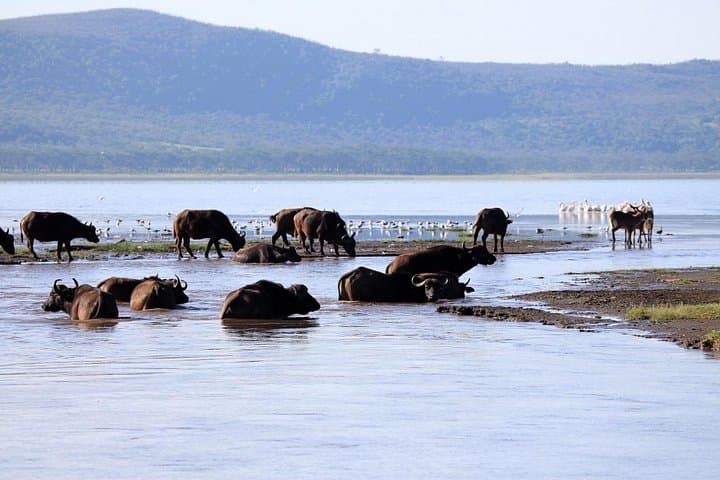
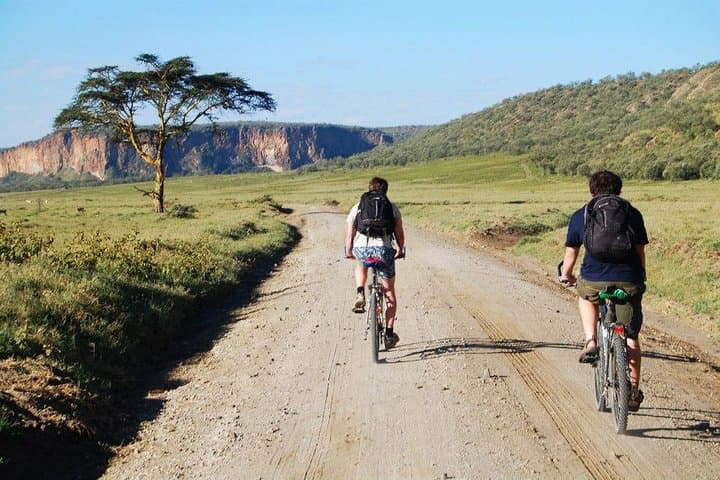
Expect hands-on wildlife viewing: game drives in Nakuru target rhino, buffalo, lions and the lakeside flamingo congregations; Hell's Gate offers 8–15 km cycling loops and hour-long gorge walks; Naivasha's boat trip focuses on hippos, fish eagles and waterfowl. Distances are practical—Nairobi to Naivasha ~90 km (1.5–2 hours), Naivasha to Nakuru ~80 km (~1.5 hours). Elevations hover around 1,800–1,900 m, so days are cool in mornings.
Practical notes: start early for the best light and wildlife activity, carry 2–3 liters of water, sun protection and insect repellent. Bring sturdy shoes for short hikes and a helmet for cycling. Respect park rules, keep distances from hippos and rhino, and budget time for local market stops or a Maasai village visit.
moderate.
2 days.
Moderate fitness: comfortable walking, short hikes and 1–2 hour cycling loops; not technically demanding but requires stamina for full days.
Expect about 1.5–2 hours from Nairobi to Naivasha (~90 km) and roughly 1–1.5 hours between Naivasha and Nakuru (~80 km), depending on traffic and stops.
Yes—there are gentle 8–15 km loops on relatively flat terrain; basic cycling competence and a helmet are recommended.
Lake Nakuru often hosts large flamingo flocks, but their numbers fluctuate with water chemistry and food availability; sightings are common but not guaranteed.
Yes when operated by experienced boat crews—boats keep a safe distance and guides know hippo behavior; follow crew instructions at all times.
The Rift Valley corridor shaped human settlement patterns for millennia; Maasai pastoralists and colonial-era lake fisheries both left cultural imprints on Naivasha and Nakuru.
Both Naivasha and Nakuru face pressures from agriculture, invasive plants and tourism; support responsible operators, avoid single-use plastics and follow park rules to reduce impact.
Gracepatt Ecotours Kenya operates guided outdoor trips and adventures with an emphasis on safety, stewardship, and memorable experiences.
You leave Nairobi before dawn, the city silhouette shrinking as the road climbs the escarpment and the Rift Valley spills open ahead. Acacia crowns and stony ridgelines frame a long, low lake; flamingo-pink edges the water where algal shoals feed the birds. On day one you trade the van for pedals in Hell's Gate, then slow to a boat's pace on Lake Naivasha with hippos surfacing like dark islands.
You leave Nairobi before dawn, the city silhouette shrinking as the road climbs the escarpment and the Rift Valley spills open ahead. Acacia crowns and stony ridgelines frame a long, low lake; flamingo-pink edges the water where algal shoals feed the birds. On day one you trade the van for pedals in Hell's Gate, then slow to a boat's pace on Lake Naivasha with hippos surfacing like dark islands.
Geology shapes everything here: the Great Rift Valley is an active graben—steep escarpments, volcanic plugs and narrow gorges carved into red basalt. Lake Nakuru is a shallow alkaline lake whose nutrient balance attracts vast flocks of flamingos and supports a patchwork of acacia woodland and scrub where rhino and giraffe browse. Maasai communities around Naivasha keep pastoral traditions visible along the roadside.
Expect hands-on wildlife viewing: game drives in Nakuru target rhino, buffalo, lions and the lakeside flamingo congregations; Hell's Gate offers 8–15 km cycling loops and hour-long gorge walks; Naivasha's boat trip focuses on hippos, fish eagles and waterfowl. Distances are practical—Nairobi to Naivasha ~90 km (1.5–2 hours), Naivasha to Nakuru ~80 km (~1.5 hours). Elevations hover around 1,800–1,900 m, so days are cool in mornings.
Practical notes: start early for the best light and wildlife activity, carry 2–3 liters of water, sun protection and insect repellent. Bring sturdy shoes for short hikes and a helmet for cycling. Respect park rules, keep distances from hippos and rhino, and budget time for local market stops or a Maasai village visit.