THE ADVENTURE COLLECTIVE® · Independent discovery and booking for outdoor travel

Two days of concentrated history and landscape: Roman aqueducts, a mountain Berber village and the vast ruins of Sbeïtla, with visits to Kairouan, El Jem and Sousse. Perfect for travelers wanting a hands-on survey of Tunisia’s ancient layers without backcountry logistics.
Two days of concentrated history and landscape: Roman aqueducts, a mountain Berber village and the vast ruins of Sbeïtla, with visits to Kairouan, El Jem and Sousse. Perfect for travelers wanting a hands-on survey of Tunisia’s ancient layers without backcountry logistics.
You step out of the coastal light of Hammamet and the landscape changes in a single hour: olive groves thin, scrubby hills rise and stone ruins begin to peer over low ridgelines. On this compact two-day loop you move through Tunisia’s layered past — Roman aqueducts, Berber high villages and an imperial mosque — with long drives between each archaeological page.
Verified experiences and guided adventures in the surrounding area.
Operated by Caravane du sahara · Hammamet, Nabeul
You step out of the coastal light of Hammamet and the landscape changes in a single hour: olive groves thin, scrubby hills rise and stone ruins begin to peer over low ridgelines. On this compact two-day loop you move through Tunisia’s layered past — Roman aqueducts, Berber high villages and an imperial mosque — with long drives between each archaeological page.
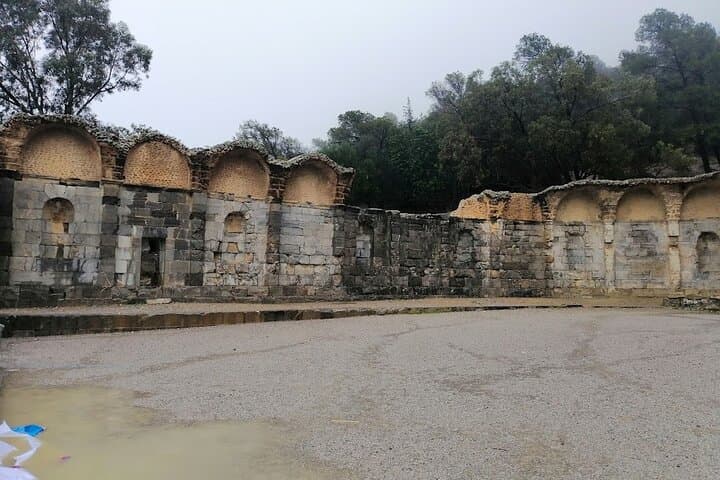
The first day follows the Roman water temple at Zaghouan, the source that once fed Carthage, then west toward Makthar’s terraces and the stair-run village of Kesra, perched above valleys where limestone ribs show the country’s folded geology. Sbeïtla (ancient Sufetula) dominates the afternoon: a large Roman forum, bath complexes and a Capitol that give a clear sense of urban planning in North Africa.
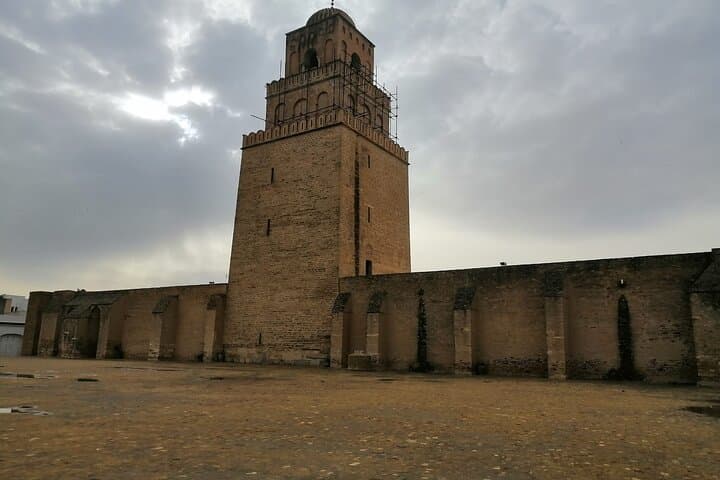
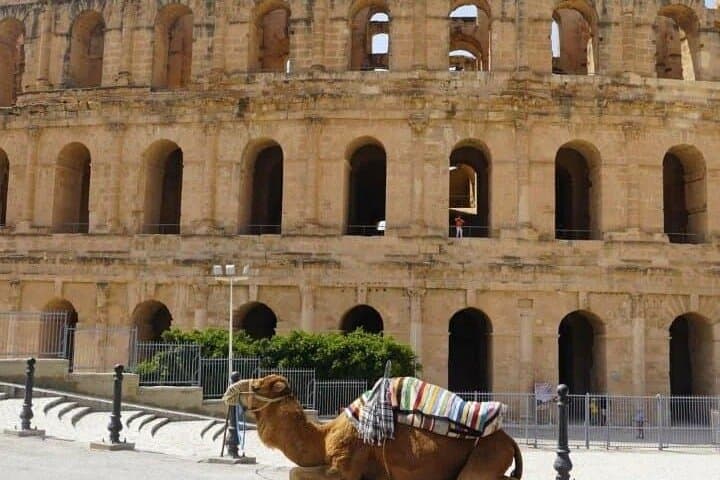
Day two turns to Kairouan’s Great Mosque — founded in the 7th–9th centuries and a focal point of Islamic scholarship — then to El Jem’s 3rd-century amphitheatre and Sousse’s medina and ribat along the coast. Expect mostly paved roads, some short uneven walking on archaeological sites and stairways in hill villages; total driving spreads across the two days and can include several hours on the road.
Practical edge: carry sun protection, at least 2 liters of water, conservative clothing for mosque visits and comfortable, grippy shoes for ruins. Early starts avoid midday heat and give better light for photos. Guides typically include hotel pickup in Hammamet and half-board lodging adjacent to Sbeïtla’s ruins, making this a focused, accessible immersion into Tunisia’s Roman and Berber heritage.
easy.
2 days.
Suitable for most travelers who can manage several short walks (15–45 minutes) on uneven terrain and climb stairs in hill villages.
Many tours include site visits but not always official entrance fees; confirm with the operator before booking.
Yes — the itinerary includes one night in a 4-star hotel near the Sbeïtla ruins with half-board (breakfast and dinner).
Most operators can handle common dietary needs if notified in advance via booking questions; specify requirements when reserving.
The provider notes stroller access is possible, but some archaeological areas have stairs and uneven ground—carriers may be easier on certain sections.
This route traces layers from Roman urban planning (Sufetula/Sbeïtla and El Jem) through Berber highland settlements to the early Islamic capital of Kairouan, founded in the 7th century.
These archaeological sites are vulnerable to erosion and visitor wear; stay on marked paths, avoid touching mosaics and follow guide directions to minimize impact.
Caravane du sahara operates guided outdoor trips and adventures with an emphasis on safety, stewardship, and memorable experiences.
You step out of the coastal light of Hammamet and the landscape changes in a single hour: olive groves thin, scrubby hills rise and stone ruins begin to peer over low ridgelines. On this compact two-day loop you move through Tunisia’s layered past — Roman aqueducts, Berber high villages and an imperial mosque — with long drives between each archaeological page.
You step out of the coastal light of Hammamet and the landscape changes in a single hour: olive groves thin, scrubby hills rise and stone ruins begin to peer over low ridgelines. On this compact two-day loop you move through Tunisia’s layered past — Roman aqueducts, Berber high villages and an imperial mosque — with long drives between each archaeological page.
The first day follows the Roman water temple at Zaghouan, the source that once fed Carthage, then west toward Makthar’s terraces and the stair-run village of Kesra, perched above valleys where limestone ribs show the country’s folded geology. Sbeïtla (ancient Sufetula) dominates the afternoon: a large Roman forum, bath complexes and a Capitol that give a clear sense of urban planning in North Africa.
Day two turns to Kairouan’s Great Mosque — founded in the 7th–9th centuries and a focal point of Islamic scholarship — then to El Jem’s 3rd-century amphitheatre and Sousse’s medina and ribat along the coast. Expect mostly paved roads, some short uneven walking on archaeological sites and stairways in hill villages; total driving spreads across the two days and can include several hours on the road.
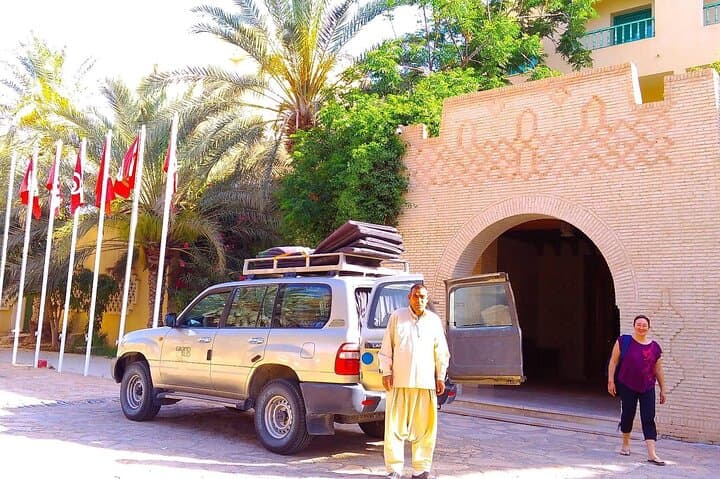
Practical edge: carry sun protection, at least 2 liters of water, conservative clothing for mosque visits and comfortable, grippy shoes for ruins. Early starts avoid midday heat and give better light for photos. Guides typically include hotel pickup in Hammamet and half-board lodging adjacent to Sbeïtla’s ruins, making this a focused, accessible immersion into Tunisia’s Roman and Berber heritage.