THE ADVENTURE COLLECTIVE® · Independent discovery and booking for outdoor travel

A compact, private two-day road trip from Athens that pairs Delphi’s oracle and museum with the cliff-top monasteries of Meteora. Expect long drives, uphill walks, and extraordinary views across Greece’s central highlands.
A compact, private two-day road trip from Athens that pairs Delphi’s oracle and museum with the cliff-top monasteries of Meteora. Expect long drives, uphill walks, and extraordinary views across Greece’s central highlands.
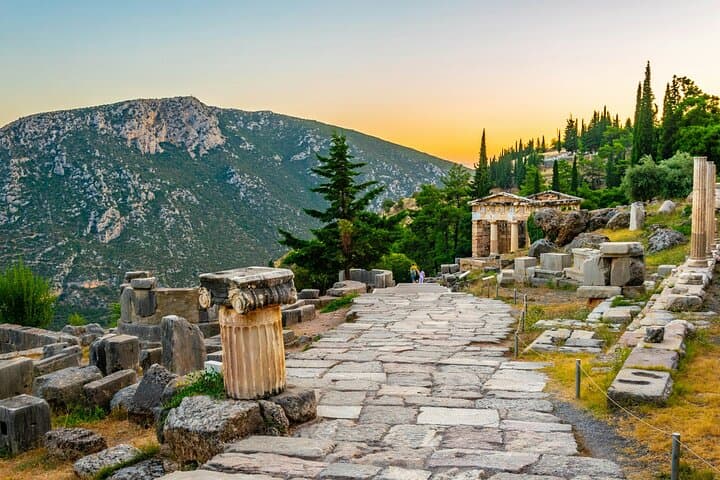
You leave Athens before dawn and the plain blinks awake around you: fields slide by, olive groves lean into the road, and the highway climbs toward the spine of central Greece. By midmorning you’re standing where the ancients once sought counsel — Delphi’s stone terraces rising like a hillside archive, the theater and Temple of Apollo punctuating a view that still draws the eye to the valley below.
Verified experiences and guided adventures in the surrounding area.
Operated by Enjoy Tours Greece · Athens, Attica
You leave Athens before dawn and the plain blinks awake around you: fields slide by, olive groves lean into the road, and the highway climbs toward the spine of central Greece. By midmorning you’re standing where the ancients once sought counsel — Delphi’s stone terraces rising like a hillside archive, the theater and Temple of Apollo punctuating a view that still draws the eye to the valley below.
Delphi’s marble and ruined columns speak to a Greek world of ritual and politics; the archaeological museum keeps bronze and stone icons such as the Charioteer. Geologically, the site sits on folded limestone slates of Mount Parnassus, where springs and caves fed cult practice. After a stop in Arachova to sip local formaela cheese and sample mountain air, the road bends northwest toward Meteora.
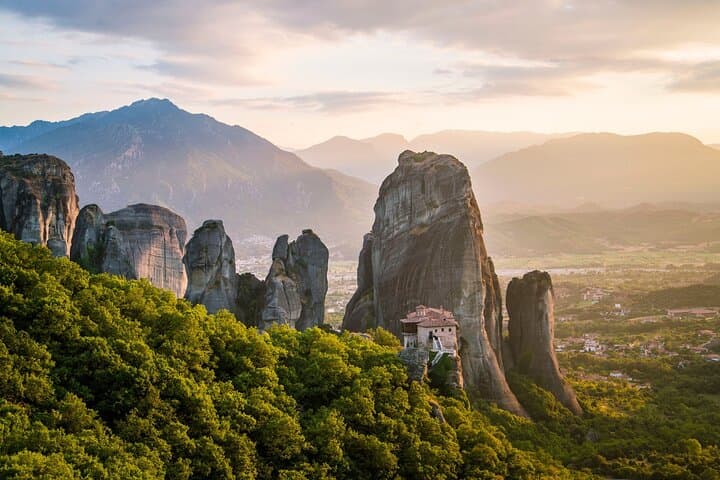
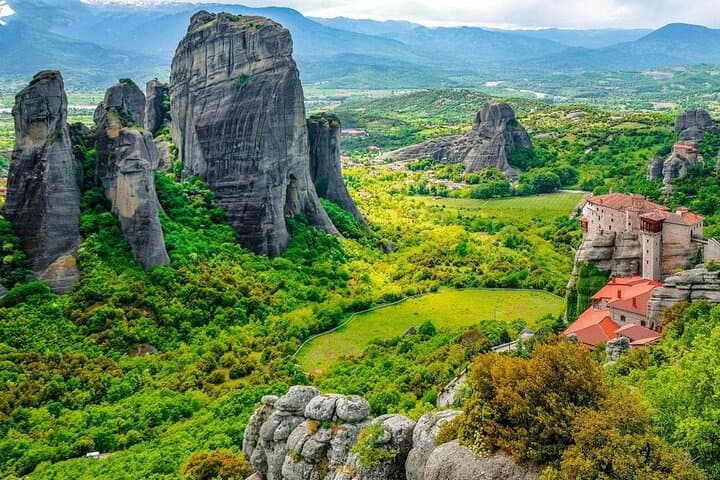
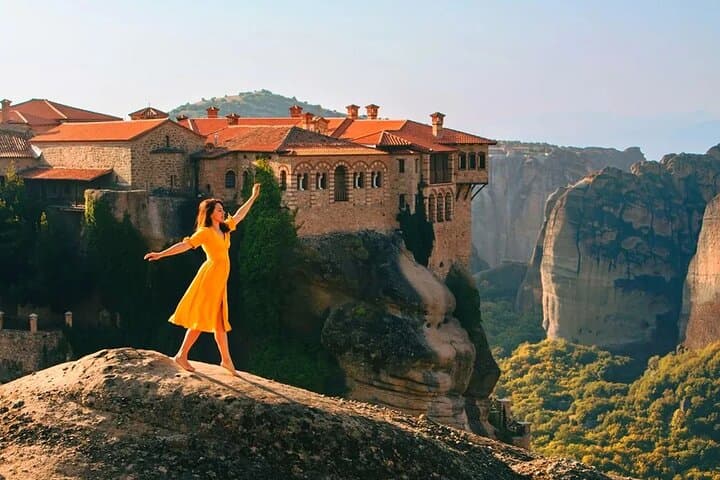
Meteora imposes itself in another register: towering sandstone pillars carved by wind and water, cliffs that dared monks to build isolated communities in the 14th–16th centuries. The monasteries perch on summits reached by centuries of stairs and narrow paths; frescoes inside tell lives of devotion, while the rocks host raptors that circle like custodians.
Practical guidance: this private two-day trip involves long driving stretches (Athens–Delphi ~2.5 hours; Delphi–Meteora ~3.5–4 hours). Expect uphill walks at archaeological sites and dozens of stairs at Meteora; comfortable walking shoes and a small daypack make a big difference. Bring water, sunscreen, and modest clothing for monastery visits. Time visits to avoid midafternoon crowds and give yourself sunset light over the pinnacles — the rocks hold their color best late in the day.
moderate.
2 days (full days, ~48 hours total).
Light to moderate fitness: able to walk uneven surfaces, climb stairs, and handle several hours on foot in a day.
This tour’s itinerary notes admission as not applicable; confirm with the operator whether entry fees are included or paid on-site.
Delphi involves uphill walking across terraces (roughly 800–1,200 m of paths); Meteora requires climbing multiple stone stairways to reach monastery entrances.
Many monasteries involve steep steps and narrow passages; accessibility is limited — inquire about specific monastery options before booking.
The operator offers hotel or port pickup and drop-off — provide arrival details at booking so logistics can be coordinated.
Delphi was considered the world’s center in antiquity as home to Apollo’s oracle; Meteora’s monasteries were founded by ascetics in the 14th–16th centuries seeking solitude atop sandstone pillars; Thermopylae marks the 480 BC stand of King Leonidas.
Both sites balance heavy visitation with active conservation; stick to marked paths, avoid feeding wildlife, and follow monastery rules to reduce wear on fragile frescoes and trails.
Enjoy Tours Greece operates guided outdoor trips and adventures with an emphasis on safety, stewardship, and memorable experiences.
You leave Athens before dawn and the plain blinks awake around you: fields slide by, olive groves lean into the road, and the highway climbs toward the spine of central Greece. By midmorning you’re standing where the ancients once sought counsel — Delphi’s stone terraces rising like a hillside archive, the theater and Temple of Apollo punctuating a view that still draws the eye to the valley below.
You leave Athens before dawn and the plain blinks awake around you: fields slide by, olive groves lean into the road, and the highway climbs toward the spine of central Greece. By midmorning you’re standing where the ancients once sought counsel — Delphi’s stone terraces rising like a hillside archive, the theater and Temple of Apollo punctuating a view that still draws the eye to the valley below.
Delphi’s marble and ruined columns speak to a Greek world of ritual and politics; the archaeological museum keeps bronze and stone icons such as the Charioteer. Geologically, the site sits on folded limestone slates of Mount Parnassus, where springs and caves fed cult practice. After a stop in Arachova to sip local formaela cheese and sample mountain air, the road bends northwest toward Meteora.
Meteora imposes itself in another register: towering sandstone pillars carved by wind and water, cliffs that dared monks to build isolated communities in the 14th–16th centuries. The monasteries perch on summits reached by centuries of stairs and narrow paths; frescoes inside tell lives of devotion, while the rocks host raptors that circle like custodians.
Practical guidance: this private two-day trip involves long driving stretches (Athens–Delphi ~2.5 hours; Delphi–Meteora ~3.5–4 hours). Expect uphill walks at archaeological sites and dozens of stairs at Meteora; comfortable walking shoes and a small daypack make a big difference. Bring water, sunscreen, and modest clothing for monastery visits. Time visits to avoid midafternoon crowds and give yourself sunset light over the pinnacles — the rocks hold their color best late in the day.