THE ADVENTURE COLLECTIVE® · Independent discovery and booking for outdoor travel

A compact two-day private tour from Tbilisi that links Georgia’s cliffside cave cities, a renovated fortress, mineral springs and a wartime-era town. Ideal for travelers seeking history, dramatic geology and manageable walks without a group crowd.
A compact two-day private tour from Tbilisi that links Georgia’s cliffside cave cities, a renovated fortress, mineral springs and a wartime-era town. Ideal for travelers seeking history, dramatic geology and manageable walks without a group crowd.
Morning light slices the Mtkvari valley as a private car pulls out of Tbilisi toward rock-cut cities and medieval fortresses. On this two-day loop, the landscape shifts from cultivated plains to serrated canyons; caves and cliff-face monasteries appear like carved chapters in stone.
Verified experiences and guided adventures in the surrounding area.
Operated by Hey Geo · Tbilisi, Tbilisi
Morning light slices the Mtkvari valley as a private car pulls out of Tbilisi toward rock-cut cities and medieval fortresses. On this two-day loop, the landscape shifts from cultivated plains to serrated canyons; caves and cliff-face monasteries appear like carved chapters in stone.
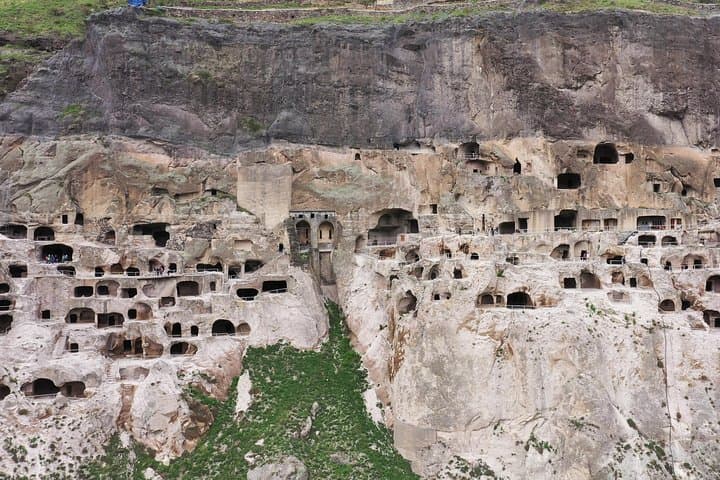
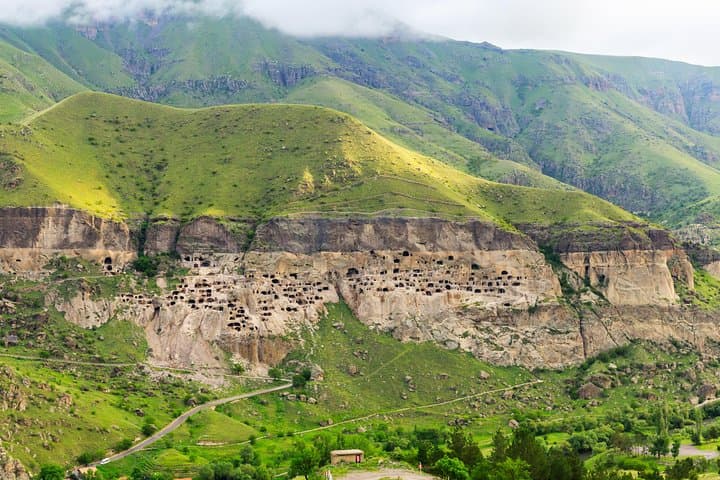
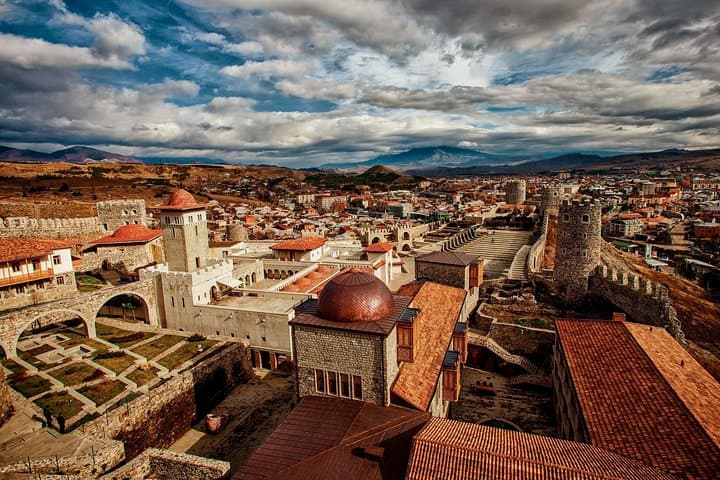
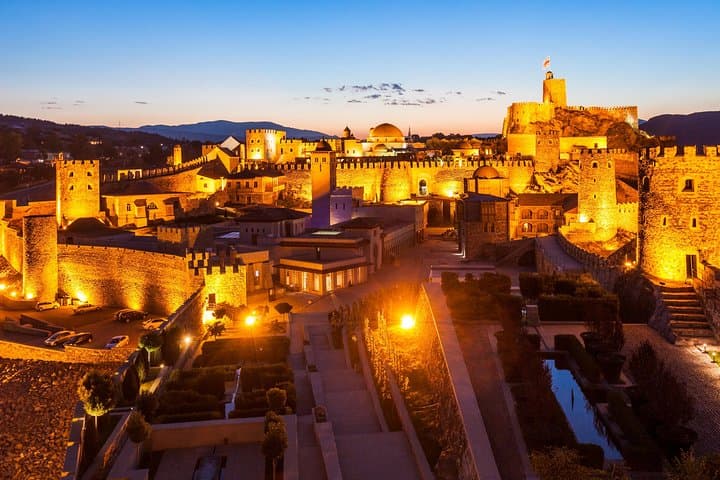
Vardzia and Uplistsikhe are the itinerary’s anchors: cave towns that grew as defensive and religious centers between the 6th and 12th centuries. Vardzia’s frescoed chapels, stairwells and tunnels cling to the river gorge, while Uplistsikhe’s sun temples and market spaces open to broad views along the Mtkvari. Akhaltsikhe’s Rabati fortress shows later layers — Ottoman, Georgian and Soviet-era restorations — and Borjomi adds a green counterpoint with mineral springs and a cable-car view into the national park. Gori’s compact fortress and Stalin Museum supply a modern historical pivot.
Geology here is dramatic: volcanic bedrock and river incision created the caves and steep terraces; expect crumbly steps and uneven carved stone. Culturally, the route traces Georgia’s crossroads of empires — Byzantine, Mongol, Ottoman and Russian — visible in churches, mosques and fortress walls.
Practical guidance: travel by private vehicle; admissions are modest at each site and some involve walking on uneven surfaces. Pack sturdy shoes, a light layer for canyon winds, and water. Aim for early departures to avoid midday heat and to capture softer light inside cave churches. Because this is private and compact, it’s adaptable — allow time for short hikes, photography stops, and a sampling of Borjomi mineral water.
easy.
2 days (approximately 48 hours).
Suitable for most travelers with basic mobility; involves walking on uneven surfaces and short climbs.
Yes — the tour is private and includes door-to-door transportation by car from Tbilisi.
Admissions are modest but generally not included; bring cash as some sites require payment on arrival.
The tour is rated easy, but some cave areas have steep stairs and uneven surfaces; assess mobility before booking.
As a private tour, the schedule is typically flexible—talk to the operator about prioritizing specific sites or pacing.
The cave towns developed across centuries as defensive, religious and trade centers; Vardzia rose in the 12th century under Queen Tamar while Uplistsikhe dates to pre-Christian times.
Borjomi-Kharagauli National Park protects regional biodiversity; stick to marked trails and avoid removing artifacts from archaeological sites.
Hey Geo operates guided outdoor trips and adventures with an emphasis on safety, stewardship, and memorable experiences.
Morning light slices the Mtkvari valley as a private car pulls out of Tbilisi toward rock-cut cities and medieval fortresses. On this two-day loop, the landscape shifts from cultivated plains to serrated canyons; caves and cliff-face monasteries appear like carved chapters in stone.
Morning light slices the Mtkvari valley as a private car pulls out of Tbilisi toward rock-cut cities and medieval fortresses. On this two-day loop, the landscape shifts from cultivated plains to serrated canyons; caves and cliff-face monasteries appear like carved chapters in stone.
Vardzia and Uplistsikhe are the itinerary’s anchors: cave towns that grew as defensive and religious centers between the 6th and 12th centuries. Vardzia’s frescoed chapels, stairwells and tunnels cling to the river gorge, while Uplistsikhe’s sun temples and market spaces open to broad views along the Mtkvari. Akhaltsikhe’s Rabati fortress shows later layers — Ottoman, Georgian and Soviet-era restorations — and Borjomi adds a green counterpoint with mineral springs and a cable-car view into the national park. Gori’s compact fortress and Stalin Museum supply a modern historical pivot.
Geology here is dramatic: volcanic bedrock and river incision created the caves and steep terraces; expect crumbly steps and uneven carved stone. Culturally, the route traces Georgia’s crossroads of empires — Byzantine, Mongol, Ottoman and Russian — visible in churches, mosques and fortress walls.
Practical guidance: travel by private vehicle; admissions are modest at each site and some involve walking on uneven surfaces. Pack sturdy shoes, a light layer for canyon winds, and water. Aim for early departures to avoid midday heat and to capture softer light inside cave churches. Because this is private and compact, it’s adaptable — allow time for short hikes, photography stops, and a sampling of Borjomi mineral water.