THE ADVENTURE COLLECTIVE® · Independent discovery and booking for outdoor travel

A compact private loop from Chengdu that combines the 78‑meter Leshan Giant Buddha with hiking and temple culture on Mt. Emei. Expect river views, temple stairs, cable‑car options and bold macaques along the trails.
A compact private loop from Chengdu that combines the 78‑meter Leshan Giant Buddha with hiking and temple culture on Mt. Emei. Expect river views, temple stairs, cable‑car options and bold macaques along the trails.
Before dawn your private vehicle slips out of Chengdu and the Sichuan basin opens up into river valleys and folded hills. By midmorning the road drops to the confluence of three rivers and the Leshan Giant Buddha appears carved into the cliff face — a 78‑meter seated figure watching barges on the Minjiang.
Verified experiences and guided adventures in the surrounding area.
Operated by SilkRoadTrips · Leshan, Sichuan
Before dawn your private vehicle slips out of Chengdu and the Sichuan basin opens up into river valleys and folded hills. By midmorning the road drops to the confluence of three rivers and the Leshan Giant Buddha appears carved into the cliff face — a 78‑meter seated figure watching barges on the Minjiang.
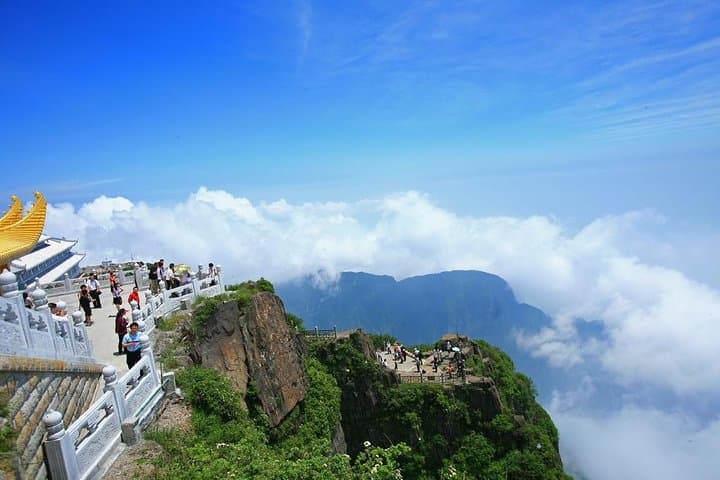
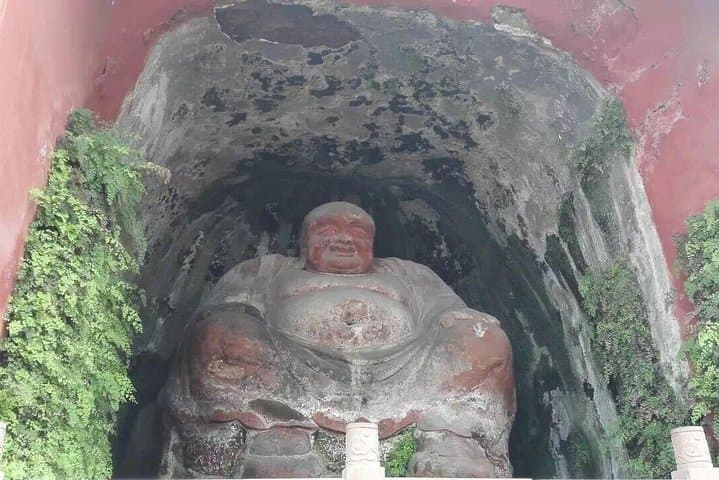
This two‑day loop pairs hard cultural lines with high forest: Leshan’s 8th‑century Tang‑era colossus at the junction of the Minjiang, Dadu and Qingyi rivers, then Mt. Emei — one of China’s Four Sacred Buddhist Mountains — rising in stages from subtropical foothills to the Golden Summit at 3,099 m. Geology shifts from river‑smoothed red sandstone at Leshan to granite domes and steep, mossed steps on Emei. Baoguo Monastery and smaller temple complexes anchor the area’s living Buddhist practice; bronze bells and incense offer a contained, human counterpoint to the landscape’s scale.
On the trail you’ll choose routes that range from moderate temple walks to steeper ascents; expect sections of stone stair, muddy trails after rain, and cable‑car options that cut steep climbs. Monkeys are bold around the mid‑elevation temples — don’t feed them. Practical notes: travel time is roughly two hours Chengdu→Leshan, one hour Leshan→Emei by vehicle; hiking distances depend on route (typical day routes 6–12 km with up to ~1,200 m elevation gain if you aim for the summit). Carry passport and train info, wear sturdy shoes, layer for quick temperature shifts, and plan spring or autumn for clearer views and lighter crowds.
moderate.
2 days.
Suitable for travelers in fair to good shape; must be able to walk several hours on uneven trails and climb stairs.
The private vehicle transfer is about two hours each way, depending on traffic and exact pickup location in Chengdu.
No — there are shorter temple walks and cable‑car options; summit routes are longer and involve steep stone stair sections.
This private tour lists admissions, accommodations and some meals as included, but confirm specific inclusions with the operator before booking.
Spring and autumn typically offer the best visibility and milder temperatures; summer brings rain and winter can be cold and foggy at higher elevations.
The Leshan Giant Buddha was carved during the Tang Dynasty (8th century) to calm river currents; Mount Emei has been a Buddhist pilgrimage site for centuries with temples clustered along its slopes.
Park authorities manage visitor numbers at key temples and maintain trails; avoid feeding wildlife, stay on marked paths and bring out all waste to protect fragile forest zones.
SilkRoadTrips operates guided outdoor trips and adventures with an emphasis on safety, stewardship, and memorable experiences.
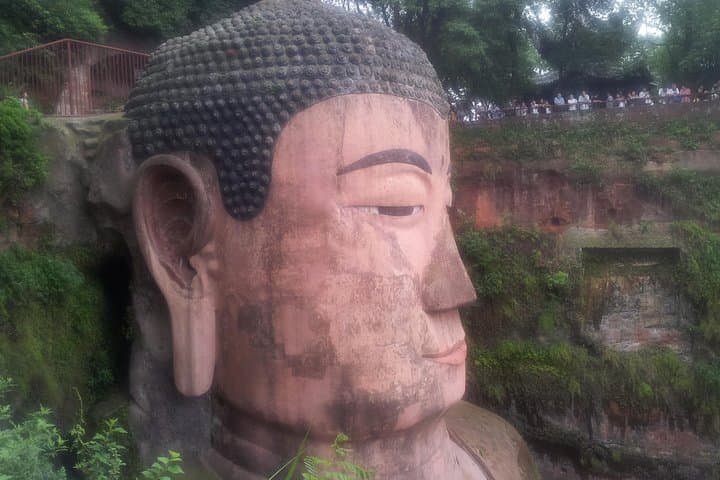
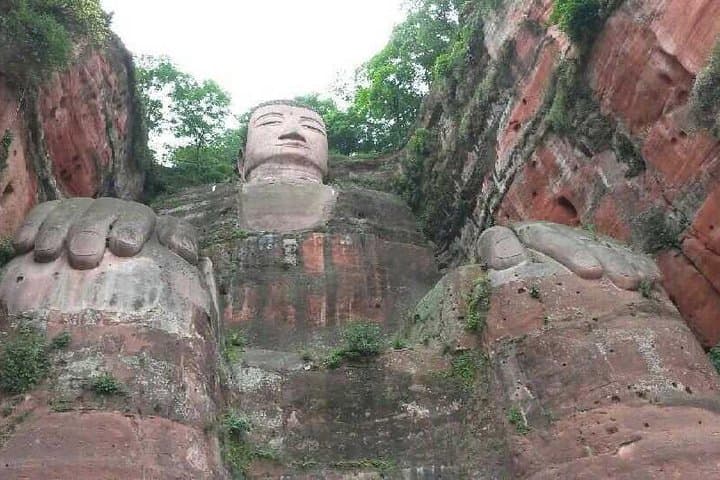
Before dawn your private vehicle slips out of Chengdu and the Sichuan basin opens up into river valleys and folded hills. By midmorning the road drops to the confluence of three rivers and the Leshan Giant Buddha appears carved into the cliff face — a 78‑meter seated figure watching barges on the Minjiang.
Before dawn your private vehicle slips out of Chengdu and the Sichuan basin opens up into river valleys and folded hills. By midmorning the road drops to the confluence of three rivers and the Leshan Giant Buddha appears carved into the cliff face — a 78‑meter seated figure watching barges on the Minjiang.
This two‑day loop pairs hard cultural lines with high forest: Leshan’s 8th‑century Tang‑era colossus at the junction of the Minjiang, Dadu and Qingyi rivers, then Mt. Emei — one of China’s Four Sacred Buddhist Mountains — rising in stages from subtropical foothills to the Golden Summit at 3,099 m. Geology shifts from river‑smoothed red sandstone at Leshan to granite domes and steep, mossed steps on Emei. Baoguo Monastery and smaller temple complexes anchor the area’s living Buddhist practice; bronze bells and incense offer a contained, human counterpoint to the landscape’s scale.
On the trail you’ll choose routes that range from moderate temple walks to steeper ascents; expect sections of stone stair, muddy trails after rain, and cable‑car options that cut steep climbs. Monkeys are bold around the mid‑elevation temples — don’t feed them. Practical notes: travel time is roughly two hours Chengdu→Leshan, one hour Leshan→Emei by vehicle; hiking distances depend on route (typical day routes 6–12 km with up to ~1,200 m elevation gain if you aim for the summit). Carry passport and train info, wear sturdy shoes, layer for quick temperature shifts, and plan spring or autumn for clearer views and lighter crowds.