THE ADVENTURE COLLECTIVE® · Independent discovery and booking for outdoor travel

Two days of private transport connect Athens to Delphi’s mountaintop oracle, the engineering spectacle of the Corinth Canal, and the Bronze Age stronghold of Mycenae. Expect short hikes on uneven stone, striking viewpoints and concentrated history.
Two days of private transport connect Athens to Delphi’s mountaintop oracle, the engineering spectacle of the Corinth Canal, and the Bronze Age stronghold of Mycenae. Expect short hikes on uneven stone, striking viewpoints and concentrated history.
You step out of the private vehicle and the air changes: cooler, thin and mineral-rich around Delphi, where the slope of Mount Parnassus leans into the sky and the ruins stare back across terraces of olive trees and cultivated hills.
Verified experiences and guided adventures in the surrounding area.
Operated by Olive Sea Travel · Delphi, Central Greece
You step out of the private vehicle and the air changes: cooler, thin and mineral-rich around Delphi, where the slope of Mount Parnassus leans into the sky and the ruins stare back across terraces of olive trees and cultivated hills.
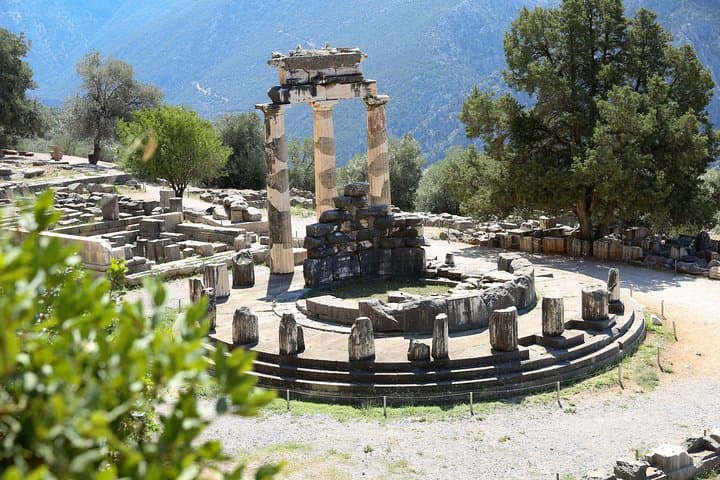
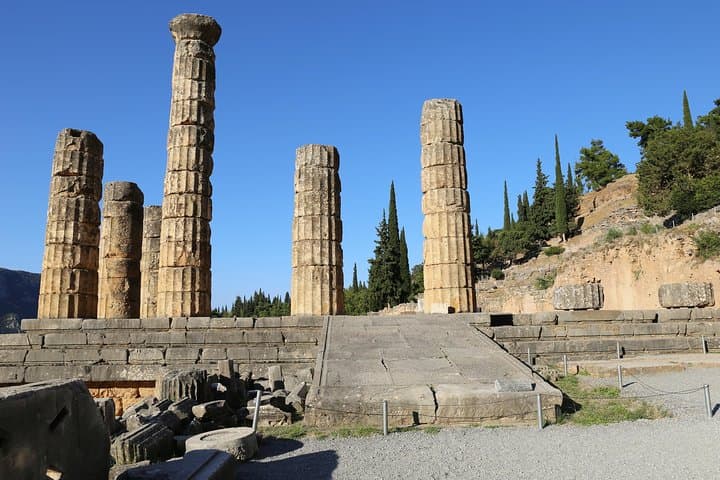
On day one the route climbs toward Delphi (≈700 m elevation), a site whose stone seats and ruined columns still hold the echo of Apollo's oracle. Mount Parnassus, a limestone massif that rises to 2,457 m, looms above—its ridgelines shaping local weather and shepherd trails. Nearby Hosios Loukas offers a sharp counterpoint: 11th–12th century Byzantine mosaics that catch light like small, deliberate suns.
Day two moves south to the narrow, engineering drama of the Corinth Canal (6.4 km long) and the ruins of Ancient Corinth, where a Doric temple and Roman agora speak to centuries of commerce and faith. The day closes at Mycenae—cyclopean walls, the Lions Gate and tholos tombs dating back to the late Bronze Age—sites that place you inside Homeric landscape and strategy.
Practical edge: expect uneven ancient paving, stairs at several sites and short uphill sections (Acrocorinth rises to roughly 575 m). Distances are covered by private transport; walking time at each ruin ranges from 30–90 minutes. Bring sturdy footwear, sun protection and a small daypack for water and layers. If you want in-depth archaeological interpretation inside museums or at the main sites, plan to hire a licensed guide for those segments.
moderate.
2 days (approx. 8–10 hours/day).
Light-to-moderate fitness for walking on uneven ground and short climbs; comfortable with stairs.
Admissions are typically not included in this private tour price; check booking details and have tickets/fees ready at each site.
Drivers provide transport and local knowledge but are not licensed site guides; hire an archaeologist guide if you want in-depth on-site interpretation.
Expect 30–90 minutes of walking at major sites with uneven paving and steps; Acrocorinth includes a short climb to viewpoints.
Transport is wheelchair accessible per supplier notes, but many archaeological areas have stairs and rough surfaces—contact the operator in advance to assess on-site access options.
Delphi served as the pan-Hellenic oracle dedicated to Apollo; Mycenae was a Bronze Age citadel central to Homeric epics, while Corinth bridged mainland and Peloponnese trade routes for millennia.
These archaeological landscapes are vulnerable to erosion and visitor wear—stick to marked paths, avoid touching fragile masonry and support local conservation fees where charged.
Olive Sea Travel operates guided outdoor trips and adventures with an emphasis on safety, stewardship, and memorable experiences.
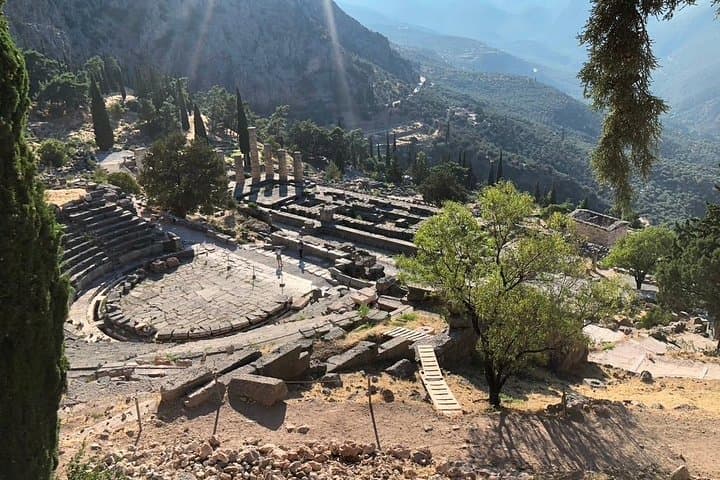
You step out of the private vehicle and the air changes: cooler, thin and mineral-rich around Delphi, where the slope of Mount Parnassus leans into the sky and the ruins stare back across terraces of olive trees and cultivated hills.
You step out of the private vehicle and the air changes: cooler, thin and mineral-rich around Delphi, where the slope of Mount Parnassus leans into the sky and the ruins stare back across terraces of olive trees and cultivated hills.
On day one the route climbs toward Delphi (≈700 m elevation), a site whose stone seats and ruined columns still hold the echo of Apollo's oracle. Mount Parnassus, a limestone massif that rises to 2,457 m, looms above—its ridgelines shaping local weather and shepherd trails. Nearby Hosios Loukas offers a sharp counterpoint: 11th–12th century Byzantine mosaics that catch light like small, deliberate suns.
Day two moves south to the narrow, engineering drama of the Corinth Canal (6.4 km long) and the ruins of Ancient Corinth, where a Doric temple and Roman agora speak to centuries of commerce and faith. The day closes at Mycenae—cyclopean walls, the Lions Gate and tholos tombs dating back to the late Bronze Age—sites that place you inside Homeric landscape and strategy.
Practical edge: expect uneven ancient paving, stairs at several sites and short uphill sections (Acrocorinth rises to roughly 575 m). Distances are covered by private transport; walking time at each ruin ranges from 30–90 minutes. Bring sturdy footwear, sun protection and a small daypack for water and layers. If you want in-depth archaeological interpretation inside museums or at the main sites, plan to hire a licensed guide for those segments.