THE ADVENTURE COLLECTIVE® · Independent discovery and booking for outdoor travel

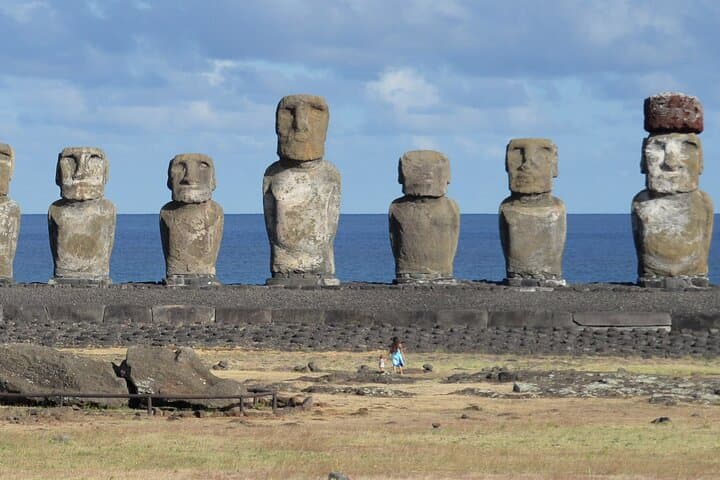
Spend two days with a private guide traversing Rapa Nui’s volcanic ridges and ceremonial platforms. This guided itinerary times visits for the best light and smallest crowds at moai sites like Rano Raraku and Ahu Tongariki.
Spend two days with a private guide traversing Rapa Nui’s volcanic ridges and ceremonial platforms. This guided itinerary times visits for the best light and smallest crowds at moai sites like Rano Raraku and Ahu Tongariki.
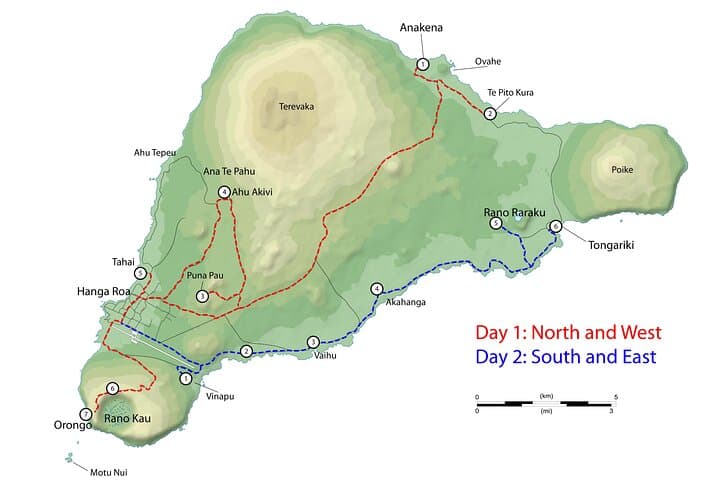
Salt-licked wind pushes across low cliffs as a private minivan eases out of Hanga Roa, the Atlantic-blue Pacific stretching beyond the road. Over two days, the island reveals its oldest work: row after row of carved moai, quarry scars that scar the volcanic slopes, and cliff-edged ceremonial villages where the ocean seems to keep watch.
Verified experiences and guided adventures in the surrounding area.
Operated by Easter Island Travel · Hanga Roa, Valparaíso Region
Salt-licked wind pushes across low cliffs as a private minivan eases out of Hanga Roa, the Atlantic-blue Pacific stretching beyond the road. Over two days, the island reveals its oldest work: row after row of carved moai, quarry scars that scar the volcanic slopes, and cliff-edged ceremonial villages where the ocean seems to keep watch.
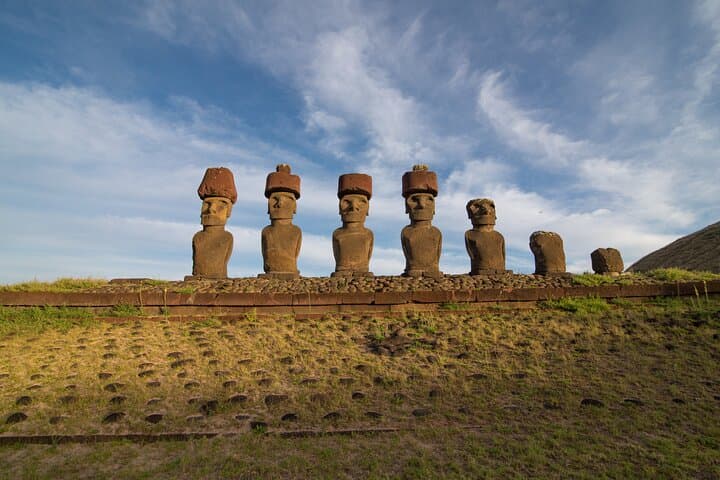
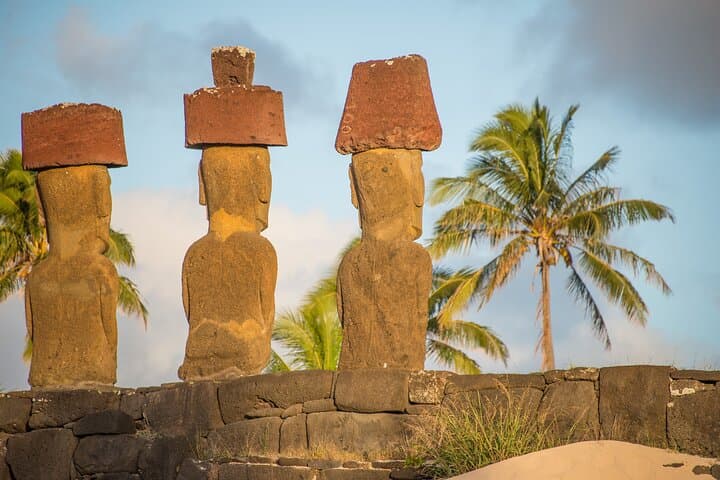
Rapa Nui’s layered history is immediate here — Polynesian navigators arrived around 1200 AD and spent centuries carving and moving massive stone figures from the tuff of Rano Raraku to ceremonial ahu platforms like Tongariki. Geology shapes the story: volcanic tuff, basalt outcrops and red scoria from Puna Pau create the raw materials for each statue and pukao. Guides on this private itinerary pair archaeology with local legend, explaining the birdman ceremonies at Orongo and the island’s later ecological changes.
Expect short, sometimes steep walks on uneven lava and sandy surfaces, excellent photo light at sunrise and late afternoon, and frequent coastal gusts that make a rain shell handy. Over two days the tour times are optimized to avoid crowds and maximize viewing conditions at Rano Raraku, Ahu Tongariki, Orongo and Akivi, with commentary in English and Spanish.
Practical notes: buy your national park ticket on arrival at the airport and carry it daily; wear sturdy shoes and sun protection; bring water and a compact daypack. The island is archaeologically sensitive — stay on designated paths, respect moai and ahu, and ask your guide about quieter viewpoints if you want more reflective moments away from busier stops.
easy.
2 days (≈13 hours total).
Suitable for most fitness levels; involves short walks on uneven, sometimes steep ground and steps at some sites.
Purchase the Rapa Nui National Park ticket upon arrival at Mataveri Airport; carry it during all site visits.
Most stops involve short walks of 10–45 minutes on uneven ground; the tour is designed for a broad range of abilities.
No — many sites have uneven lava rock, steps and narrow paths that are not suitable for wheelchairs.
Bottled water is included but meals are generally not; plan for snacks or ask the operator about lunch options.
Rapa Nui was settled by Polynesian voyagers around the 13th century; its moai and ahu reflect complex social and ceremonial systems centered on ancestor veneration.
The island’s archaeology is fragile and tourism is regulated through park tickets and routed paths; avoid climbing on ahu, stay on trails, and minimize plastic use.
Easter Island Travel operates guided outdoor trips and adventures with an emphasis on safety, stewardship, and memorable experiences.
Salt-licked wind pushes across low cliffs as a private minivan eases out of Hanga Roa, the Atlantic-blue Pacific stretching beyond the road. Over two days, the island reveals its oldest work: row after row of carved moai, quarry scars that scar the volcanic slopes, and cliff-edged ceremonial villages where the ocean seems to keep watch.
Salt-licked wind pushes across low cliffs as a private minivan eases out of Hanga Roa, the Atlantic-blue Pacific stretching beyond the road. Over two days, the island reveals its oldest work: row after row of carved moai, quarry scars that scar the volcanic slopes, and cliff-edged ceremonial villages where the ocean seems to keep watch.
Rapa Nui’s layered history is immediate here — Polynesian navigators arrived around 1200 AD and spent centuries carving and moving massive stone figures from the tuff of Rano Raraku to ceremonial ahu platforms like Tongariki. Geology shapes the story: volcanic tuff, basalt outcrops and red scoria from Puna Pau create the raw materials for each statue and pukao. Guides on this private itinerary pair archaeology with local legend, explaining the birdman ceremonies at Orongo and the island’s later ecological changes.
Expect short, sometimes steep walks on uneven lava and sandy surfaces, excellent photo light at sunrise and late afternoon, and frequent coastal gusts that make a rain shell handy. Over two days the tour times are optimized to avoid crowds and maximize viewing conditions at Rano Raraku, Ahu Tongariki, Orongo and Akivi, with commentary in English and Spanish.
Practical notes: buy your national park ticket on arrival at the airport and carry it daily; wear sturdy shoes and sun protection; bring water and a compact daypack. The island is archaeologically sensitive — stay on designated paths, respect moai and ahu, and ask your guide about quieter viewpoints if you want more reflective moments away from busier stops.