THE ADVENTURE COLLECTIVE® · Independent discovery and booking for outdoor travel

A compact two-day private itinerary that pairs Chichén Itzá’s monumental stonework with a swim in Cenote Ik Kil, a stroll through colonial Valladolid, and the cliff-and-beach scenery of Tulum and Playa del Carmen. Ideal for travelers who want major sites with private transport and flexible timing.
A compact two-day private itinerary that pairs Chichén Itzá’s monumental stonework with a swim in Cenote Ik Kil, a stroll through colonial Valladolid, and the cliff-and-beach scenery of Tulum and Playa del Carmen. Ideal for travelers who want major sites with private transport and flexible timing.
A cool, air-conditioned van pulls away from Cancún before sunrise and the limestone plain of the Yucatán opens up like folded paper — fields, low scrub, the distant silhouette of a stepped pyramid. By midmorning the Temple of Kukulkán dominates the horizon; its shadow shifts with the sun and the plaza hums with the city’s long past.
Verified experiences and guided adventures in the surrounding area.
Operated by Circuitos por México · Cancún, Quintana Roo
A cool, air-conditioned van pulls away from Cancún before sunrise and the limestone plain of the Yucatán opens up like folded paper — fields, low scrub, the distant silhouette of a stepped pyramid. By midmorning the Temple of Kukulkán dominates the horizon; its shadow shifts with the sun and the plaza hums with the city’s long past.
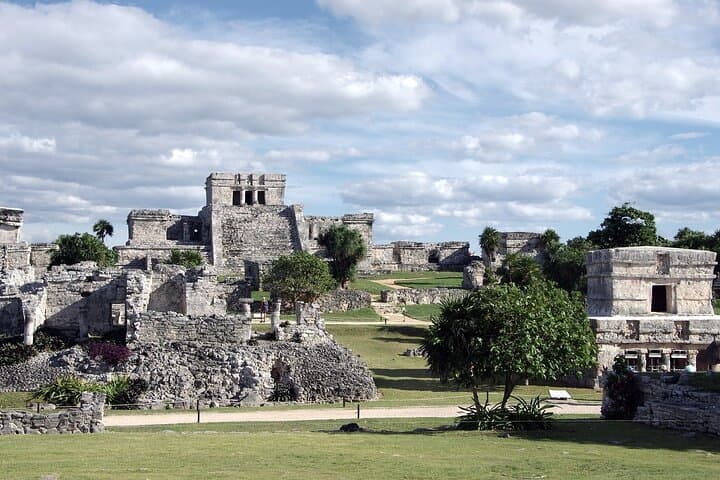
The route links three distinct chapters of the peninsula. Chichén Itzá exposes Mayan mastery of astronomy and stone: alignments, a ball court where echoes still land, and the nearby Cenote Sagrado where offerings once sank into deep, dark water. Cenote Ik Kil offers the opposite sensation — an open, sunlit bowl of clear water that seems to invite a plunge. Valladolid interjects a colonial beat: pastel facades, a convent church, and a town cenote at the square. Day two slides to the coast where Tulum’s cliff-top ruins face a sea that pushes turquoise against coral, then to Playa Paraíso’s wide sand and Playa del Carmen’s lively Quinta Avenida.
Practicalities are clear: the full itinerary spans two long travel days with 1.5–2 hour drives between key points, moderate walking over uneven stone and sandy beach, and swims at cenotes and beaches. Travelers should bring sun protection, a reusable water bottle, sturdy shoes for ruins, and swimwear. The private vehicle option gives flexibility to pace visits and skip lines; choose a licensed guide if you want archaeological context. Be ready for tropical heat, carry local cash for small purchases, and allow time at each stop to savor both the ruins and the coastal calm.
moderate.
2 days (approximately 10–12 hours per day).
Moderate fitness — able to walk on uneven terrain, climb short stone steps, and handle long days in heat.
Admissions are typically not included; entry fees for archaeological sites are paid on-site. Your operator can advise current prices and guide options.
Expect about 2–3 hours of driving each major leg: Cancún to Chichén ~2 hrs, Chichén to Valladolid ~40 mins, Cancún to Tulum ~1.5 hrs, with additional short transfers to beaches.
Cenote Ik Kil has ladders and shallow edges, but non-swimmers should use caution and consider a flotation aid; supervision is recommended.
The operator notes it’s not recommended for pregnant travelers or those with significant spinal/heart issues; children require supervision at ruins and cenotes.
The route connects Classic and Postclassic Maya architecture at Chichén Itzá and Tulum with colonial-era Valladolid, reflecting layers of regional history.
Cenotes and coastal reefs are sensitive; avoid sunscreen directly before entering cenotes if possible, take all trash, and use reef-safe sunscreen at beaches.
Circuitos por México operates guided outdoor trips and adventures with an emphasis on safety, stewardship, and memorable experiences.
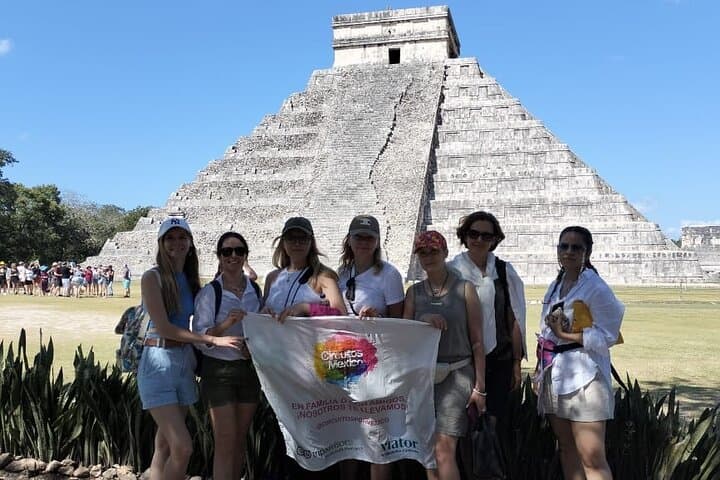
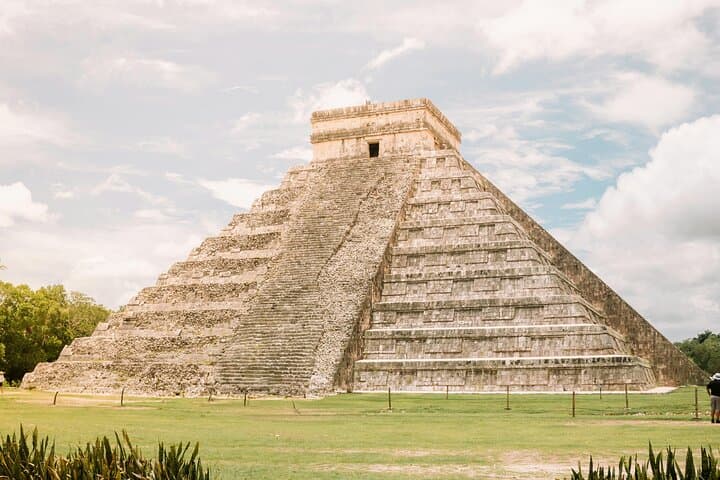
A cool, air-conditioned van pulls away from Cancún before sunrise and the limestone plain of the Yucatán opens up like folded paper — fields, low scrub, the distant silhouette of a stepped pyramid. By midmorning the Temple of Kukulkán dominates the horizon; its shadow shifts with the sun and the plaza hums with the city’s long past.
A cool, air-conditioned van pulls away from Cancún before sunrise and the limestone plain of the Yucatán opens up like folded paper — fields, low scrub, the distant silhouette of a stepped pyramid. By midmorning the Temple of Kukulkán dominates the horizon; its shadow shifts with the sun and the plaza hums with the city’s long past.
The route links three distinct chapters of the peninsula. Chichén Itzá exposes Mayan mastery of astronomy and stone: alignments, a ball court where echoes still land, and the nearby Cenote Sagrado where offerings once sank into deep, dark water. Cenote Ik Kil offers the opposite sensation — an open, sunlit bowl of clear water that seems to invite a plunge. Valladolid interjects a colonial beat: pastel facades, a convent church, and a town cenote at the square. Day two slides to the coast where Tulum’s cliff-top ruins face a sea that pushes turquoise against coral, then to Playa Paraíso’s wide sand and Playa del Carmen’s lively Quinta Avenida.
Practicalities are clear: the full itinerary spans two long travel days with 1.5–2 hour drives between key points, moderate walking over uneven stone and sandy beach, and swims at cenotes and beaches. Travelers should bring sun protection, a reusable water bottle, sturdy shoes for ruins, and swimwear. The private vehicle option gives flexibility to pace visits and skip lines; choose a licensed guide if you want archaeological context. Be ready for tropical heat, carry local cash for small purchases, and allow time at each stop to savor both the ruins and the coastal calm.