THE ADVENTURE COLLECTIVE® · Independent discovery and booking for outdoor travel

Two concentrated days that pair Petra’s carved city with Wadi Rum’s desert panoramas. Expect paved stretches and steep steps in Petra, then a three‑hour jeep tour, dunes and an overnight camp under clear desert skies.
Two concentrated days that pair Petra’s carved city with Wadi Rum’s desert panoramas. Expect paved stretches and steep steps in Petra, then a three‑hour jeep tour, dunes and an overnight camp under clear desert skies.
You step through the Siq before dawn and the sandstone light reaches out like a slow hand, revealing the Treasury as if it had been waiting for your arrival. Footsteps echo on carved rock, and the air—thin and cool at roughly 800–1,100 m elevation—keeps the early crowds at bay.
Verified experiences and guided adventures in the surrounding area.
Operated by Ismail Nas - Private guide · Wadi Musa, Ma'an Governorate
You step through the Siq before dawn and the sandstone light reaches out like a slow hand, revealing the Treasury as if it had been waiting for your arrival. Footsteps echo on carved rock, and the air—thin and cool at roughly 800–1,100 m elevation—keeps the early crowds at bay.
Day one centers on Petra: a labyrinth of slot canyons, stair-cut façades and red-hued cliffs. Geology here is readable—strata of compacted sand and calcite sheared by ancient rivers—while Nabataean engineering carved water channels and cisterns that made settlement possible. Local Bedouin culture remains visible in villages around Wadi Musa and in guides who blend oral history with route knowledge.
On day two, the tour flips to Wadi Rum’s wide desert: sweeping dunes, towering sandstone domes and wind-sculpted arches. A three-hour jeep loop covers 4–6 km of accessible terrain by vehicle and short on-foot stops where the sand dares you to climb a dune or peer into a canyon.
Practical notes: expect 3–6 km of walking in Petra (up to 8 km if you include the Monastery), hundreds of stone steps and uneven paths; bring 2–3 liters of water, sturdy shoes and layers for temperature swings. Sunrise or late afternoon visits reduce heat and crowds. Desert nights are cold—a camp stay requires a warm layer and a headlamp.
Logistics: private transport is included; confirmations are instant and cancellations typically allow a full refund with 24-hour notice. This two-day pairing delivers concentrated history, geological spectacle and a hands-on taste of Jordanian desert life.
moderate.
2 days (approx. 8–10 hours active).
Suitable for travelers with regular mobility; involves sustained walking, stair climbs and short uneven sections.
Most private tours do not include national park entrance fees or permits by default; confirm with the operator whether tickets are covered when booking.
Expect 3–6 km on a typical day tour with several stair sections; reaching the Monastery adds steeper climbs and more steps.
Camps range from simple Bedouin-style setups to more comfortable desert camps; this tour uses a traditional-style camp—bring layers and any personal comfort items.
The tour is described as suitable for all fitness levels, but Petra’s uneven terrain and stairs can be challenging; discuss specific mobility needs with the operator beforehand.
Petra was the capital of the Nabataean kingdom (1st century BCE–1st century CE) and a vital caravan hub; Wadi Rum has been inhabited and traversed for millennia and retains strong Bedouin cultural presence.
Both sites are protected as national reserves; visitors should stay on designated trails, avoid touching fragile rock art and minimize plastic and waste at camps.
Ismail Nas - Private guide operates guided outdoor trips and adventures with an emphasis on safety, stewardship, and memorable experiences.
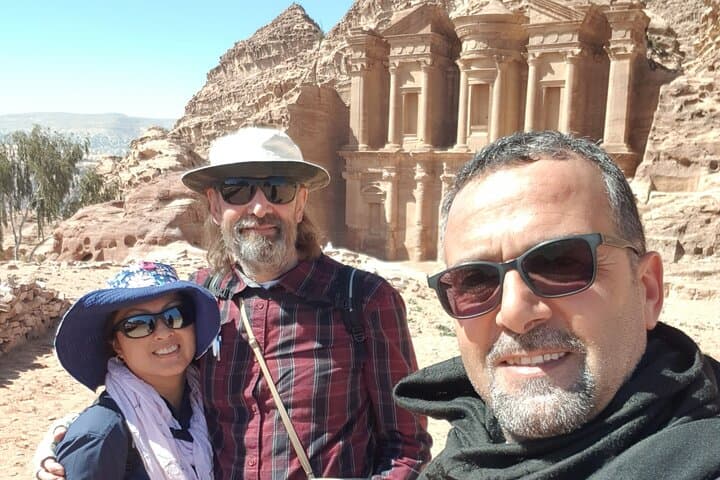
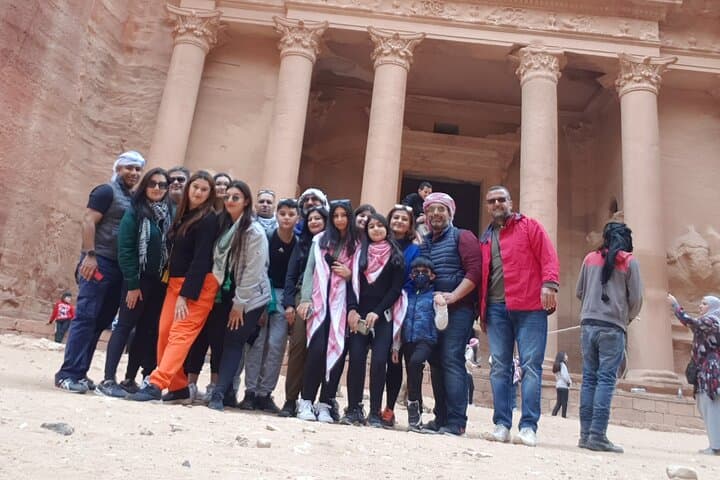
You step through the Siq before dawn and the sandstone light reaches out like a slow hand, revealing the Treasury as if it had been waiting for your arrival. Footsteps echo on carved rock, and the air—thin and cool at roughly 800–1,100 m elevation—keeps the early crowds at bay.
You step through the Siq before dawn and the sandstone light reaches out like a slow hand, revealing the Treasury as if it had been waiting for your arrival. Footsteps echo on carved rock, and the air—thin and cool at roughly 800–1,100 m elevation—keeps the early crowds at bay.
Day one centers on Petra: a labyrinth of slot canyons, stair-cut façades and red-hued cliffs. Geology here is readable—strata of compacted sand and calcite sheared by ancient rivers—while Nabataean engineering carved water channels and cisterns that made settlement possible. Local Bedouin culture remains visible in villages around Wadi Musa and in guides who blend oral history with route knowledge.
On day two, the tour flips to Wadi Rum’s wide desert: sweeping dunes, towering sandstone domes and wind-sculpted arches. A three-hour jeep loop covers 4–6 km of accessible terrain by vehicle and short on-foot stops where the sand dares you to climb a dune or peer into a canyon.
Practical notes: expect 3–6 km of walking in Petra (up to 8 km if you include the Monastery), hundreds of stone steps and uneven paths; bring 2–3 liters of water, sturdy shoes and layers for temperature swings. Sunrise or late afternoon visits reduce heat and crowds. Desert nights are cold—a camp stay requires a warm layer and a headlamp.
Logistics: private transport is included; confirmations are instant and cancellations typically allow a full refund with 24-hour notice. This two-day pairing delivers concentrated history, geological spectacle and a hands-on taste of Jordanian desert life.