THE ADVENTURE COLLECTIVE® · Independent discovery and booking for outdoor travel

Cross the High Atlas to the orange sweep of the Erg Lihoudi dunes on a private two-day escape from Marrakech. Visit Aït Ben Haddou, ride a camel at sunset and sleep under desert skies in a private tent.
Cross the High Atlas to the orange sweep of the Erg Lihoudi dunes on a private two-day escape from Marrakech. Visit Aït Ben Haddou, ride a camel at sunset and sleep under desert skies in a private tent.
Dust and light bend as the convoy climbs Tizi-n-Tichka; by midday the red earth of the Anti-Atlas slips into a ribbon of date palms and mud-brick kasbahs. On this two-day private route from Marrakech to Zagora, travelers exchange city bustle for the hush of dunes and a single clear horizon.
Verified experiences and guided adventures in the surrounding area.
Operated by Explore Morocco Travel SARL · Zagora, Drâa-Tafilalet
Dust and light bend as the convoy climbs Tizi-n-Tichka; by midday the red earth of the Anti-Atlas slips into a ribbon of date palms and mud-brick kasbahs. On this two-day private route from Marrakech to Zagora, travelers exchange city bustle for the hush of dunes and a single clear horizon.
The itinerary threads Moroccan history—the fortified ksar of Aït Ben Haddou, film backdrop and UNESCO site—through the Draa Valley’s irrigated oases and the crumbling Glaoui residence at Telouet. Geologically, the drive crosses Atlantic-folded High Atlas passes into Precambrian and Mesozoic soils that give way to Sahara sands; Erg Lihoudi’s dunes are wind-shaped ridges that shift night to night. Culturally, the trip is a study in Berber hospitality: local guides, tagine dinners and the quiet cadence of camel travel link modern visitors to trans-Saharan trade routes.
Practical guidance: rides total roughly 8–10 hours of driving across two days with short stops, and the camel transfer to camp is gentle but requires basic balance. Desert nights can drop sharply in temperature, so warm layers are essential; sunscreen and at least 2–3 liters of water per person during daytime sections are non-negotiable. Expect private tent accommodation with shared camp facilities, a sunset camel ride and a morning return by 4x4.
Timing your visit for shoulder seasons reduces daytime heat and dust. Maintain lightweight packing, respect local customs (modest dress in villages), and leave no trace—Sahara camps are resilient but fragile under heavy use.
moderate.
2 days (approx. 48 hours, including driving and stops).
Moderate fitness—able to manage several hours of vehicle travel, short hikes, and mounting a camel
Yes—handlers guide riders and camels move slowly; if you have concerns request a short practice before setting out.
Private tents with basic bedding are provided along with dinner and breakfast; facilities are rustic and may be shared for toilets and showers.
Signal varies—mountain passes and desert dunes often have limited or no coverage; expect connectivity gaps during portions of the itinerary.
Yes—the tour is private with pickup from Marrakech; return drop-off to your hotel or riad in Marrakech is included per the itinerary.
The route follows historic caravan corridors; kasbahs like Aït Ben Haddou guarded trade and film crews later used the same dramatic architecture as locations.
The Sahara’s dune systems and oasis groves are fragile—minimize campfire impact, avoid driving on vegetated interdunes, and carry out all waste.
Explore Morocco Travel SARL operates guided outdoor trips and adventures with an emphasis on safety, stewardship, and memorable experiences.
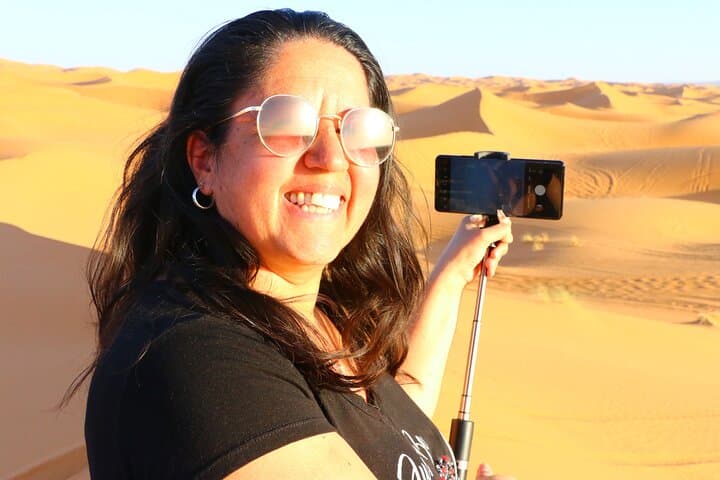
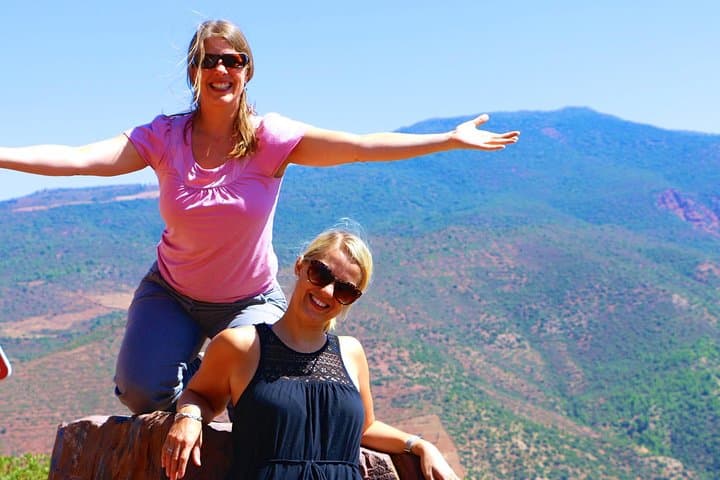
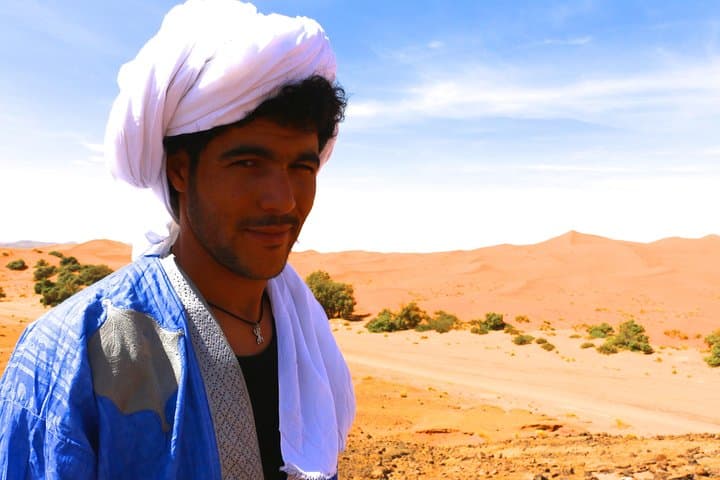
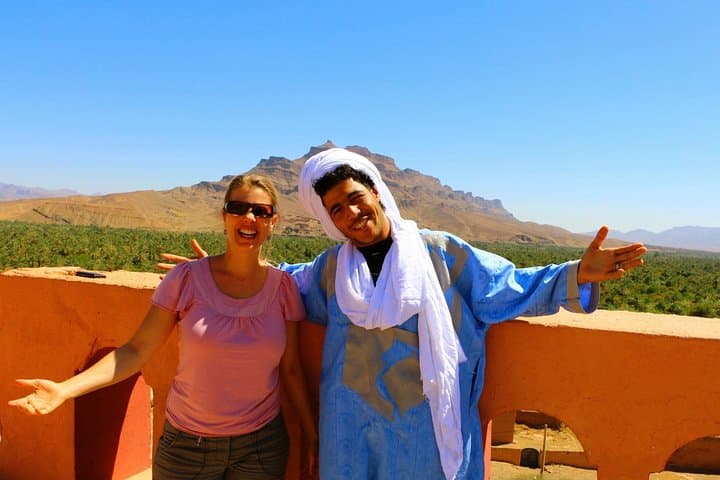
Dust and light bend as the convoy climbs Tizi-n-Tichka; by midday the red earth of the Anti-Atlas slips into a ribbon of date palms and mud-brick kasbahs. On this two-day private route from Marrakech to Zagora, travelers exchange city bustle for the hush of dunes and a single clear horizon.
Dust and light bend as the convoy climbs Tizi-n-Tichka; by midday the red earth of the Anti-Atlas slips into a ribbon of date palms and mud-brick kasbahs. On this two-day private route from Marrakech to Zagora, travelers exchange city bustle for the hush of dunes and a single clear horizon.
The itinerary threads Moroccan history—the fortified ksar of Aït Ben Haddou, film backdrop and UNESCO site—through the Draa Valley’s irrigated oases and the crumbling Glaoui residence at Telouet. Geologically, the drive crosses Atlantic-folded High Atlas passes into Precambrian and Mesozoic soils that give way to Sahara sands; Erg Lihoudi’s dunes are wind-shaped ridges that shift night to night. Culturally, the trip is a study in Berber hospitality: local guides, tagine dinners and the quiet cadence of camel travel link modern visitors to trans-Saharan trade routes.
Practical guidance: rides total roughly 8–10 hours of driving across two days with short stops, and the camel transfer to camp is gentle but requires basic balance. Desert nights can drop sharply in temperature, so warm layers are essential; sunscreen and at least 2–3 liters of water per person during daytime sections are non-negotiable. Expect private tent accommodation with shared camp facilities, a sunset camel ride and a morning return by 4x4.
Timing your visit for shoulder seasons reduces daytime heat and dust. Maintain lightweight packing, respect local customs (modest dress in villages), and leave no trace—Sahara camps are resilient but fragile under heavy use.