THE ADVENTURE COLLECTIVE® · Independent discovery and booking for outdoor travel

See Luxor’s temples and tombs across two full days with a private Egyptologist and a sunrise hot-air balloon flight. This compact tour pairs aerial perspective with step-inside archaeological highlights for a concentrated, practical exploration of ancient Thebes.
See Luxor’s temples and tombs across two full days with a private Egyptologist and a sunrise hot-air balloon flight. This compact tour pairs aerial perspective with step-inside archaeological highlights for a concentrated, practical exploration of ancient Thebes.
You rise before dawn as the desert cools and the Nile still drifts in shadow; a cluster of colorful balloons waits on the horizon, promising a different scale to Luxor’s layered landscape. From above, the line of the river cuts the city into memories and monuments — temples, colossi, and tombs laid out like chapters to be read on two compact days.
Verified experiences and guided adventures in the surrounding area.
You rise before dawn as the desert cools and the Nile still drifts in shadow; a cluster of colorful balloons waits on the horizon, promising a different scale to Luxor’s layered landscape. From above, the line of the river cuts the city into memories and monuments — temples, colossi, and tombs laid out like chapters to be read on two compact days.
This private, door-to-door itinerary threads the East Bank’s Karnak and Luxor Temples with the West Bank’s funerary sites: the Valley of the Kings, Valley of the Queens, Hatshepsut’s mortuary temple, and the Colossi of Memnon. Geologically, you walk on Nile-alluvial silt and exposed limestone cliffs where ancient masons cut rock for royal tombs; culturally, you trace Thebes’ role as Egypt’s capital in the New Kingdom when pharaohs turned death into architecture.
Expect close-up encounters with hieroglyphic reliefs, long colonnades, and the tight, cool hush inside tomb corridors. Local insights: early morning is best for ballooning and for beating the heat at open-air sites; late afternoon softens light on sandstone facades.
Practical guidance: book the balloon for first light, carry cash for small museum purchases and tips, and wear closed shoes for uneven stone and sand. Hydrate frequently — the desert pushes heat fast — and allow time between stops to move at a steady pace rather than rush through chambers. With an Egyptologist guide handling permits and routes, you get context as well as efficiency: comfortable transport, curated site access, and a full two-day immersion in Luxor’s monumental history.
moderate.
2 days (approx. 48 hours).
Light to moderate fitness; able to walk several kilometers across uneven ground and climb stone steps multiple times.
Operators follow standard safety procedures and flights are typically scheduled at dawn when conditions are calm; check aircraft limits and insurance with your provider.
Official entry tickets and some special-access fees may be extra; confirm with the tour operator which museum or tomb admissions are covered.
Many monuments have uneven surfaces and stairs; accessibility is limited inside tombs and some temples, though drivers can often drop visitors close to entrances.
Tipping is customary for guides, drivers and balloon crews; plan small bills for each service (a few USD or equivalent in EGP per person) and tip at service completion.
Luxor sits on the ancient city of Thebes, the political and religious heart of Egypt’s New Kingdom when pharaohs built monumental funerary complexes along the Nile’s west bank.
High visitor volume stresses fragile reliefs and pigments; follow site rules, avoid touching surfaces, and use local guides who support entry regulations and archaeological preservation.
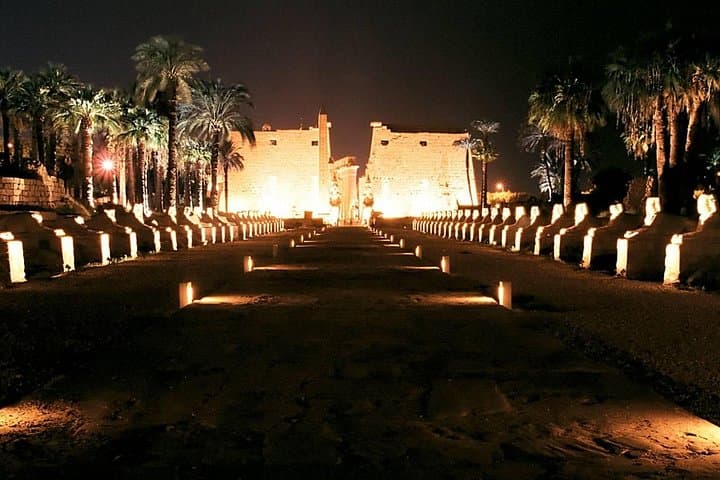
You rise before dawn as the desert cools and the Nile still drifts in shadow; a cluster of colorful balloons waits on the horizon, promising a different scale to Luxor’s layered landscape. From above, the line of the river cuts the city into memories and monuments — temples, colossi, and tombs laid out like chapters to be read on two compact days.
You rise before dawn as the desert cools and the Nile still drifts in shadow; a cluster of colorful balloons waits on the horizon, promising a different scale to Luxor’s layered landscape. From above, the line of the river cuts the city into memories and monuments — temples, colossi, and tombs laid out like chapters to be read on two compact days.
This private, door-to-door itinerary threads the East Bank’s Karnak and Luxor Temples with the West Bank’s funerary sites: the Valley of the Kings, Valley of the Queens, Hatshepsut’s mortuary temple, and the Colossi of Memnon. Geologically, you walk on Nile-alluvial silt and exposed limestone cliffs where ancient masons cut rock for royal tombs; culturally, you trace Thebes’ role as Egypt’s capital in the New Kingdom when pharaohs turned death into architecture.
Expect close-up encounters with hieroglyphic reliefs, long colonnades, and the tight, cool hush inside tomb corridors. Local insights: early morning is best for ballooning and for beating the heat at open-air sites; late afternoon softens light on sandstone facades.
Practical guidance: book the balloon for first light, carry cash for small museum purchases and tips, and wear closed shoes for uneven stone and sand. Hydrate frequently — the desert pushes heat fast — and allow time between stops to move at a steady pace rather than rush through chambers. With an Egyptologist guide handling permits and routes, you get context as well as efficiency: comfortable transport, curated site access, and a full two-day immersion in Luxor’s monumental history.