THE ADVENTURE COLLECTIVE® · Independent discovery and booking for outdoor travel

Drive Georgia’s dramatic Military Road to Stepantsminda, spend a night in Juta or Kazbegi, then set out on a guided 5‑hour trek toward the Chaukhi glacier. Expect sharp ridgelines, alpine meadows, and authentic village stays.
Drive Georgia’s dramatic Military Road to Stepantsminda, spend a night in Juta or Kazbegi, then set out on a guided 5‑hour trek toward the Chaukhi glacier. Expect sharp ridgelines, alpine meadows, and authentic village stays.
You crest the Georgian Military Road as clouds lift and the Great Caucasus bares a hard, glacial jaw: Gergeti Trinity Church perches against a sky the color of steel, and a river below dares you toward higher trails.
Verified experiences and guided adventures in the surrounding area.
Operated by Traffic Travel LLC · Stepantsminda, Mtskheta-Mtianeti
You crest the Georgian Military Road as clouds lift and the Great Caucasus bares a hard, glacial jaw: Gergeti Trinity Church perches against a sky the color of steel, and a river below dares you toward higher trails.
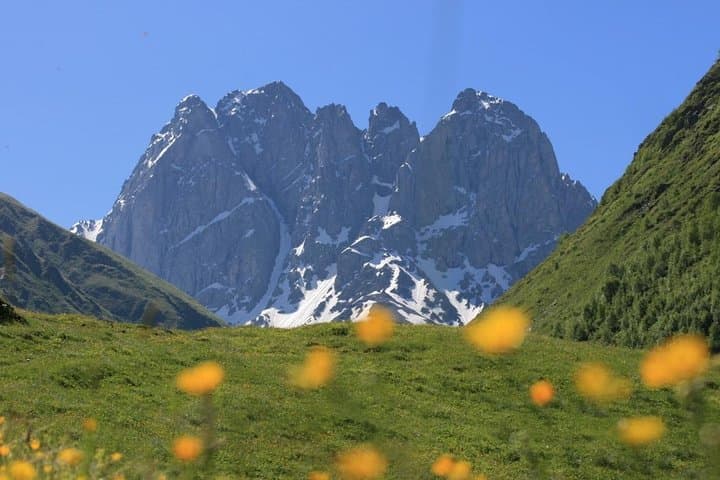
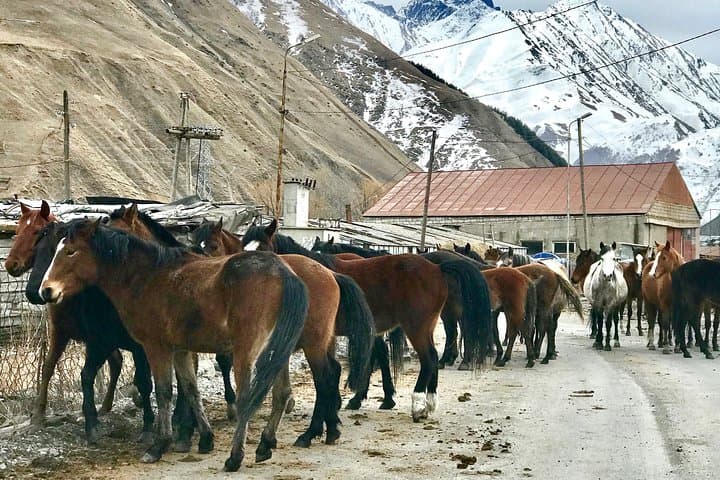
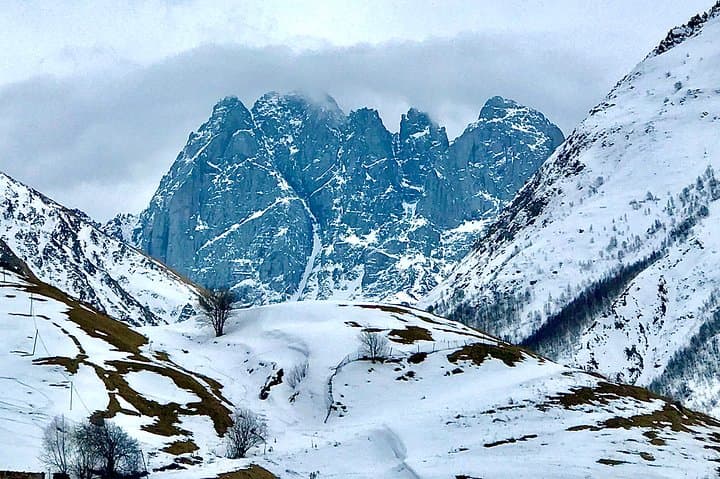
This private two-day route takes you from Tbilisi’s warm streets into Mtskheta‑Mtianeti’s high valleys. The drive follows a historic artery first shaped by empires and later modernized for military use; along the way you pass the medieval Jvari Monastery and the Jinvali reservoir before arriving in Stepantsminda (Kazbegi). Geologically, the Chaukhi massif is a block of ancient metamorphic rock sculpted by ice—sharp ridges give way to grassy cols and small glaciers that feed rushing streams. Culturally, highland villages like Juta and Sno keep pastoral traditions alive: shepherd trails, stone barns, and hearty mountain cooking.
On day two the guided trek from Juta toward the Chaukhi glacier takes about five hours on mostly clear, marked trails with moderate elevation change—firm footing on scree and alpine meadows. Expect wide views, sudden wind, and birds of prey circling thermals.
Practical guidance: start early to avoid afternoon weather, carry layered insulation, and pack snacks and at least 2 liters of water. The route is best in late spring through early fall; winter conditions require technical gear and local expertise. Accommodation is in village guesthouses—simple, local, and often family-run—so bring a headlamp and willingness to trade stories over strong mountain tea.
moderate.
2 days (≈5 hours hiking).
Moderate cardiovascular fitness with comfort on uneven terrain and sustained uphill hiking.
It’s rated easy–moderate: about 4–6 hours round trip with some steady uphill sections and loose scree near the glacier approach.
No technical gear is required in summer; for winter or glacier travel you’ll need crampons, ice axe, and a qualified guide.
Overnight accommodation is in local guesthouses in Juta or in Stepantsminda (Kazbegi), typically simple family‑run rooms with breakfast included.
Yes—the itinerary includes hotel pickup and drop‑off in Tbilisi and private 4x4 transfer along the Military Road.
The Georgian Military Road has linked the Georgian lowlands and highlands since antiquity, widened under Russian imperial rule and used as a strategic alpine route.
High‑altitude grasslands are fragile—stick to defined trails, pack out waste, and support local guesthouses that practice low‑impact hospitality.
Traffic Travel LLC operates guided outdoor trips and adventures with an emphasis on safety, stewardship, and memorable experiences.
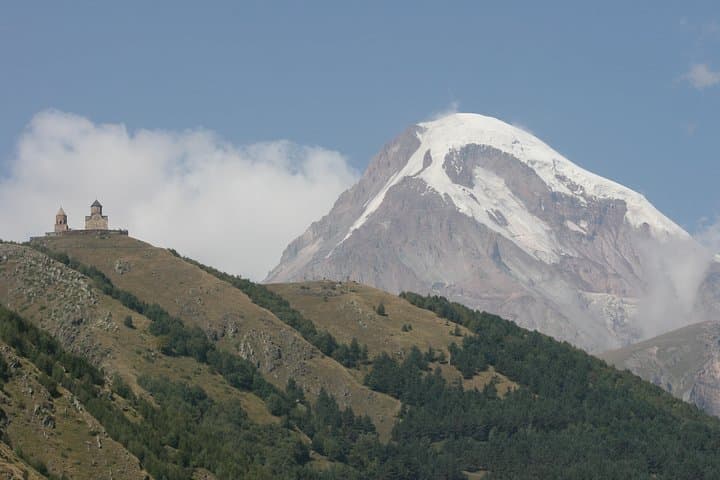
You crest the Georgian Military Road as clouds lift and the Great Caucasus bares a hard, glacial jaw: Gergeti Trinity Church perches against a sky the color of steel, and a river below dares you toward higher trails.
You crest the Georgian Military Road as clouds lift and the Great Caucasus bares a hard, glacial jaw: Gergeti Trinity Church perches against a sky the color of steel, and a river below dares you toward higher trails.
This private two-day route takes you from Tbilisi’s warm streets into Mtskheta‑Mtianeti’s high valleys. The drive follows a historic artery first shaped by empires and later modernized for military use; along the way you pass the medieval Jvari Monastery and the Jinvali reservoir before arriving in Stepantsminda (Kazbegi). Geologically, the Chaukhi massif is a block of ancient metamorphic rock sculpted by ice—sharp ridges give way to grassy cols and small glaciers that feed rushing streams. Culturally, highland villages like Juta and Sno keep pastoral traditions alive: shepherd trails, stone barns, and hearty mountain cooking.
On day two the guided trek from Juta toward the Chaukhi glacier takes about five hours on mostly clear, marked trails with moderate elevation change—firm footing on scree and alpine meadows. Expect wide views, sudden wind, and birds of prey circling thermals.
Practical guidance: start early to avoid afternoon weather, carry layered insulation, and pack snacks and at least 2 liters of water. The route is best in late spring through early fall; winter conditions require technical gear and local expertise. Accommodation is in village guesthouses—simple, local, and often family-run—so bring a headlamp and willingness to trade stories over strong mountain tea.