THE ADVENTURE COLLECTIVE® · Independent discovery and booking for outdoor travel

A brisk, two-day route along the classic Inca Trail delivers cloud-forest ruins, a sunrise reveal at the Sun Gate and a guided tour of Machu Picchu. Ideal for time‑pressed trekkers who want the trail’s highlights with one overnight in Aguas Calientes.
A brisk, two-day route along the classic Inca Trail delivers cloud-forest ruins, a sunrise reveal at the Sun Gate and a guided tour of Machu Picchu. Ideal for time‑pressed trekkers who want the trail’s highlights with one overnight in Aguas Calientes.
Dawn breaks on the rails north of Ollantaytambo as the train slides toward kilometre 104, where the jungle leans down to meet the stonework of the Andes. You step off into cool, oxygen-thin air, and the path ahead threads cloud forest, terraces and ruins that feel half-reclaimed by the mountain.
Verified experiences and guided adventures in the surrounding area.
Operated by Conde Travel · Aguas Calientes (Machu Picchu Pueblo), Cusco Region
Dawn breaks on the rails north of Ollantaytambo as the train slides toward kilometre 104, where the jungle leans down to meet the stonework of the Andes. You step off into cool, oxygen-thin air, and the path ahead threads cloud forest, terraces and ruins that feel half-reclaimed by the mountain.
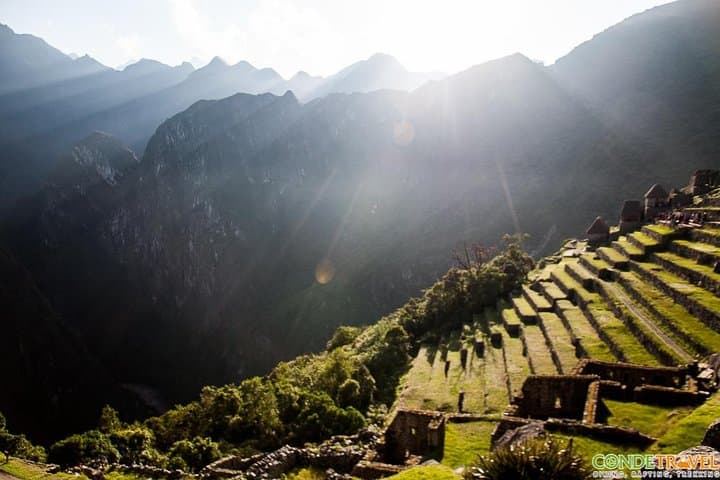
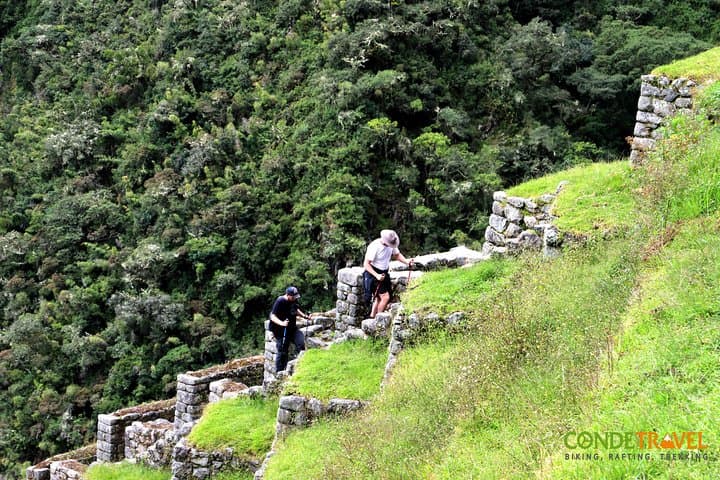
This condensed Inca Trail follows the same engineered corridors used by the Tawantinsuyu—stone stairways, agricultural platforms and water channels that reveal a pragmatic sophistication. Geologically, the route crosses steep volcanic and metamorphic slopes cut by river valleys; microclimates flip from high puna to humid cloud forest in a matter of hours. Culturally the trail moves through places where Quechua traditions persist: llamas graze, local guides interpret stone masonry and offerings occasionally mark sacred springs.
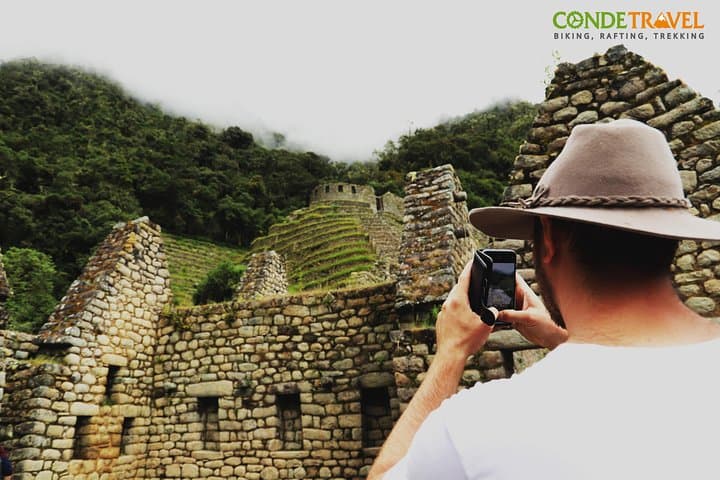
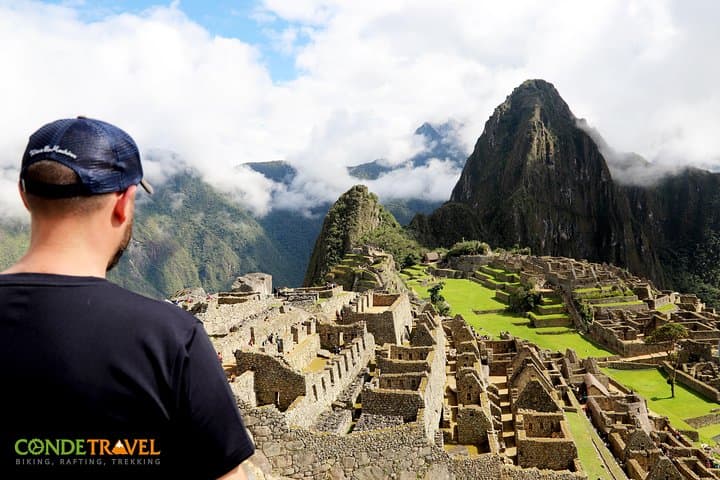
Expect archaeological highlights at Chachabamba and Wiñay Wayna, a sunrise reveal at Inti Punku (Sun Gate), and a guided visit through Machu Picchu’s urban and agricultural sectors the following morning. The two-day itinerary trades long camps for a night in Aguas Calientes, shortening exposure to heavy packs but keeping the altitude and rocky footing as constant considerations.
Practical guidance: acclimatize in Cusco for 48 hours before departure, pack a waterproof layer and sturdy ankle-support boots, and plan early starts—the best light and the fewest crowds are before mid-morning. Hydrate proactively and move at a steady pace on steep stone staircases; this route rewards patience with one of the most cinematic arrivals in trekking.
moderate.
2 days (approx. 8–10 hours hiking total).
Good cardiovascular fitness and experience with day hikes at altitude; able to handle uphill stone staircases and uneven terrain.
Yes—access to the official Inca Trail is limited and requires advance permits; two-day itineraries typically include the required entrance and train tickets, booked by the operator.
The 2-day option is shorter and involves less pack weight (you sleep in Aguas Calientes) but still includes steep climbs and similar altitude; it's more condensed but not necessarily easier.
Huayna Picchu is optional and requires a separate, limited ticket; the tour can often arrange it if permits are available, but book early.
Yes—Cusco sits above 3,300 m; acclimatize, stay hydrated, avoid alcohol before the trek and consult a physician about medications like acetazolamide if you have a history of altitude problems.
The Inca Trail was an imperial road used for administrative, military and ceremonial purposes; many sections were engineered to manage water and agriculture across steep terrain.
Visitor limits protect fragile trails and archaeological sites; stick to marked paths, pack out waste and use licensed guides to support local conservation and communities.
Conde Travel operates guided outdoor trips and adventures with an emphasis on safety, stewardship, and memorable experiences.
Dawn breaks on the rails north of Ollantaytambo as the train slides toward kilometre 104, where the jungle leans down to meet the stonework of the Andes. You step off into cool, oxygen-thin air, and the path ahead threads cloud forest, terraces and ruins that feel half-reclaimed by the mountain.
Dawn breaks on the rails north of Ollantaytambo as the train slides toward kilometre 104, where the jungle leans down to meet the stonework of the Andes. You step off into cool, oxygen-thin air, and the path ahead threads cloud forest, terraces and ruins that feel half-reclaimed by the mountain.
This condensed Inca Trail follows the same engineered corridors used by the Tawantinsuyu—stone stairways, agricultural platforms and water channels that reveal a pragmatic sophistication. Geologically, the route crosses steep volcanic and metamorphic slopes cut by river valleys; microclimates flip from high puna to humid cloud forest in a matter of hours. Culturally the trail moves through places where Quechua traditions persist: llamas graze, local guides interpret stone masonry and offerings occasionally mark sacred springs.
Expect archaeological highlights at Chachabamba and Wiñay Wayna, a sunrise reveal at Inti Punku (Sun Gate), and a guided visit through Machu Picchu’s urban and agricultural sectors the following morning. The two-day itinerary trades long camps for a night in Aguas Calientes, shortening exposure to heavy packs but keeping the altitude and rocky footing as constant considerations.
Practical guidance: acclimatize in Cusco for 48 hours before departure, pack a waterproof layer and sturdy ankle-support boots, and plan early starts—the best light and the fewest crowds are before mid-morning. Hydrate proactively and move at a steady pace on steep stone staircases; this route rewards patience with one of the most cinematic arrivals in trekking.