THE ADVENTURE COLLECTIVE® · Independent discovery and booking for outdoor travel

Spend two immersive days exploring the Giza Plateau, the Egyptian Museum and the bazaar of Khan el-Khalili. This private itinerary pairs sunrise pyramid views with Saqqara’s Step Pyramid and Dahshur’s Red and Bent Pyramids—practical, guided, and paced for discovery.
Spend two immersive days exploring the Giza Plateau, the Egyptian Museum and the bazaar of Khan el-Khalili. This private itinerary pairs sunrise pyramid views with Saqqara’s Step Pyramid and Dahshur’s Red and Bent Pyramids—practical, guided, and paced for discovery.
You arrive before the heat sets in, the air carrying the dry, mineral smell of the Western Desert and the outline of stone monuments rising from the plateau like deliberate gestures. On day one a low sun throws crisp shadows across Khufu’s casing stones while the Sphinx sits like a patient watcher; day two moves deeper into the necropolis rhythms at Saqqara and the angled silhouette of Dahshur.
Verified experiences and guided adventures in the surrounding area.
Operated by Egipto Excursiones · Giza, Giza Governorate
You arrive before the heat sets in, the air carrying the dry, mineral smell of the Western Desert and the outline of stone monuments rising from the plateau like deliberate gestures. On day one a low sun throws crisp shadows across Khufu’s casing stones while the Sphinx sits like a patient watcher; day two moves deeper into the necropolis rhythms at Saqqara and the angled silhouette of Dahshur.
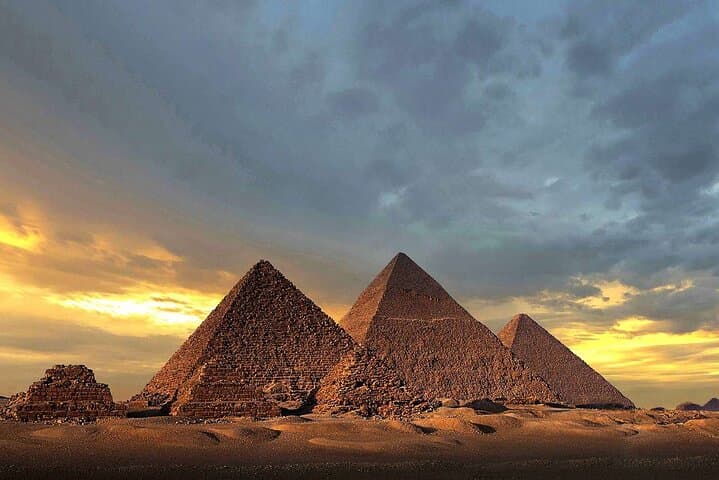
These sites span millennia: Giza’s three major pyramids date to Egypt’s Fourth Dynasty, Saqqara holds the Step Pyramid of Djoser from the Third Dynasty, and Dahshur preserves Senefru’s experimentations—the Bent and Red Pyramids. Geologically the Giza Plateau is limestone capped with harder beds, shaped by ancient quarrying as much as by nature. Culturally, the tour threads modern Cairo life —market stalls at Khan el-Khalili, cafe chatter—into the formal, funerary spaces of the pharaohs.
Expect guided walks across packed-sand paths, short climbs onto viewpoints, and tight interior passages if you choose to enter a pyramid. Photographers will want low-angle sun for silhouette shots; crowds peak mid-morning and late afternoon. Practical details: the tour includes air-conditioned transfers and bottled water, but entrance fees for special chambers may be extra. Dress conservatively —light, breathable layers that cover shoulders and knees; sturdy walking shoes with good grip; and sunscreen and a hat.
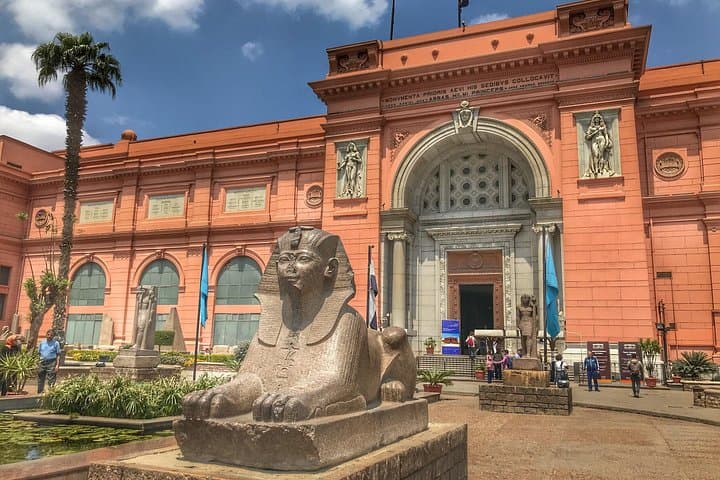
Plan for two full days of walking and standing with frequent stops for shade and explanations. Bring cash for tips and small purchases, and allow extra time at the Egyptian Museum if Tutankhamun’s collection is a priority.
easy.
2 days (approximately 8–10 hours per day of guided touring).
Basic fitness for walking and standing through archaeological sites; able to manage short climbs and uneven surfaces.
The standard tour price covers transport, a guide and basic entry in many cases, but optional interior or special-chamber tickets and the Grand Egyptian Museum transfer may be extra—confirm on booking.
Access to interior chambers is limited and sometimes sold separately; space is restricted and requires bending through narrow passages, so check availability and physical suitability beforehand.
Yes—this private tour typically includes hotel pickup and drop-off within Cairo or Giza; confirm your pickup point when booking.
The tour is family-friendly, but interior pyramid passages and some uneven surfaces are not suitable for those with significant mobility limitations; notify the operator about needs in advance.
The Giza pyramids were built in the Fourth Dynasty (c. 2600–2500 BCE); Saqqara contains the earlier Step Pyramid of Djoser, and Dahshur preserves royal experimentation in pyramid construction.
Visitors are asked to stay on marked paths, avoid touching reliefs and openings, and minimize plastic waste; sustainable tourism helps protect fragile archaeological surfaces.
Egipto Excursiones operates guided outdoor trips and adventures with an emphasis on safety, stewardship, and memorable experiences.
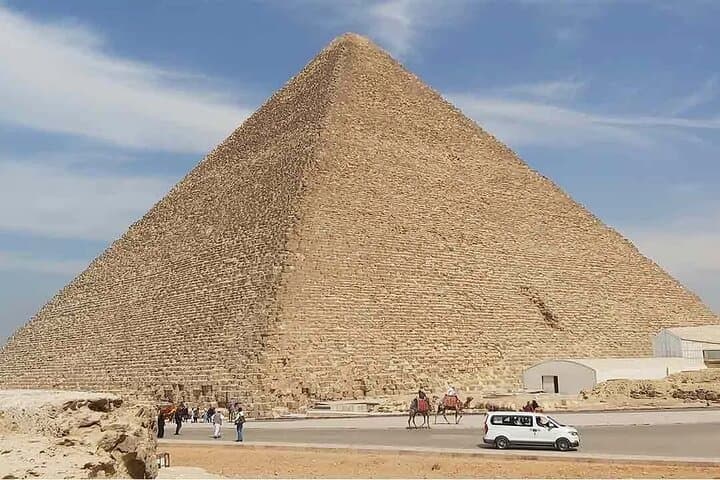
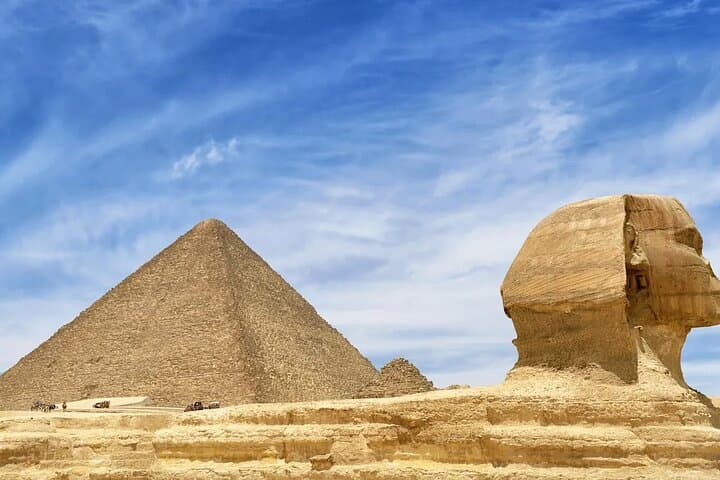
You arrive before the heat sets in, the air carrying the dry, mineral smell of the Western Desert and the outline of stone monuments rising from the plateau like deliberate gestures. On day one a low sun throws crisp shadows across Khufu’s casing stones while the Sphinx sits like a patient watcher; day two moves deeper into the necropolis rhythms at Saqqara and the angled silhouette of Dahshur.
You arrive before the heat sets in, the air carrying the dry, mineral smell of the Western Desert and the outline of stone monuments rising from the plateau like deliberate gestures. On day one a low sun throws crisp shadows across Khufu’s casing stones while the Sphinx sits like a patient watcher; day two moves deeper into the necropolis rhythms at Saqqara and the angled silhouette of Dahshur.
These sites span millennia: Giza’s three major pyramids date to Egypt’s Fourth Dynasty, Saqqara holds the Step Pyramid of Djoser from the Third Dynasty, and Dahshur preserves Senefru’s experimentations—the Bent and Red Pyramids. Geologically the Giza Plateau is limestone capped with harder beds, shaped by ancient quarrying as much as by nature. Culturally, the tour threads modern Cairo life —market stalls at Khan el-Khalili, cafe chatter—into the formal, funerary spaces of the pharaohs.
Expect guided walks across packed-sand paths, short climbs onto viewpoints, and tight interior passages if you choose to enter a pyramid. Photographers will want low-angle sun for silhouette shots; crowds peak mid-morning and late afternoon. Practical details: the tour includes air-conditioned transfers and bottled water, but entrance fees for special chambers may be extra. Dress conservatively —light, breathable layers that cover shoulders and knees; sturdy walking shoes with good grip; and sunscreen and a hat.
Plan for two full days of walking and standing with frequent stops for shade and explanations. Bring cash for tips and small purchases, and allow extra time at the Egyptian Museum if Tutankhamun’s collection is a priority.