THE ADVENTURE COLLECTIVE® · Independent discovery and booking for outdoor travel

Two intensive days that pair the Giza plateau and Sakkara’s ancient monuments with Cairo’s major museums. Private transport, guided visits and lunches streamline a deep dive into Egypt’s antiquities.
Two intensive days that pair the Giza plateau and Sakkara’s ancient monuments with Cairo’s major museums. Private transport, guided visits and lunches streamline a deep dive into Egypt’s antiquities.
You step from an air-conditioned van into a wind that has been shaping the plateau for four millennia—fine Sahara dust moving like a slow tide across the Giza necropolis. In the first light the stone faces of Khufu, Khafre and Menkaure seem to measure time itself; later you’ll trade the open desert for the low, stepped profile of Sakkara and the quieter ruins of Memphis.
Verified experiences and guided adventures in the surrounding area.
Operated by Egipto Excursiones · Cairo, Cairo Governorate
You step from an air-conditioned van into a wind that has been shaping the plateau for four millennia—fine Sahara dust moving like a slow tide across the Giza necropolis. In the first light the stone faces of Khufu, Khafre and Menkaure seem to measure time itself; later you’ll trade the open desert for the low, stepped profile of Sakkara and the quieter ruins of Memphis.
The route traces core chapters of Pharaonic Egypt: Fourth Dynasty engineering on the Giza plateau (c. 2600–2500 BCE), the evolution from mastaba to the Step Pyramid at Sakkara, and Memphis, one of the country’s earliest capitals. Day two shifts from field to gallery—The Egyptian Museum’s vast antiquities and the National Museum of Egyptian Civilization’s chronological displays frame artifacts from prehistory through modern Egypt.
Expect a private guide, hotel pickup and drop-off, air-conditioned transport, two lunches and bottled water. Some site admissions are included; others may require entrance fees depending on options chosen, and interior access (e.g., pyramid chambers) is subject to separate tickets and limited capacity.
Practical edge: start early to avoid mid-day heat, wear closed-toe shoes for uneven limestone and sand, carry sun protection and small change for tipping. Photography is generally allowed, but tripods and certain interiors may be restricted. Pace your two days—this is cultural immersion more than endurance hiking, but walking on rough, exposed surfaces requires steady footing and hydration. With simple preparation, the itinerary delivers one of Egypt’s most concentrated cultural experiences.
moderate.
2 days.
Suitable for travelers who can walk 2–4 miles over uneven ground each day and tolerate heat; not strenuous but requires steady mobility.
Some site admissions may be included depending on the booking option; interior access (like pyramid chambers) often requires additional tickets—confirm before arrival.
Yes—carry your passport for entrance into major museums and archaeological sites where ID checks or ticketing require it.
The itinerary is physically easy overall but involves walking on uneven ground; specialized infant seats are available, but those with spinal, cardiovascular issues or pregnancy are advised to consult the operator.
Yes—private hotel pickup and drop-off in Cairo or Giza are provided as part of the tour.
Giza’s pyramids date to Egypt’s Fourth Dynasty (c. 2600–2500 BCE); the Egyptian Museum houses Tutankhamun’s treasures, while the NMEC presents a chronological view of Egyptian civilization.
Sites are vulnerable to erosion, pollution and visitor impact—stick to marked paths, avoid touching carvings and follow local guidance to reduce wear on ancient stone.
Egipto Excursiones operates guided outdoor trips and adventures with an emphasis on safety, stewardship, and memorable experiences.

You step from an air-conditioned van into a wind that has been shaping the plateau for four millennia—fine Sahara dust moving like a slow tide across the Giza necropolis. In the first light the stone faces of Khufu, Khafre and Menkaure seem to measure time itself; later you’ll trade the open desert for the low, stepped profile of Sakkara and the quieter ruins of Memphis.
You step from an air-conditioned van into a wind that has been shaping the plateau for four millennia—fine Sahara dust moving like a slow tide across the Giza necropolis. In the first light the stone faces of Khufu, Khafre and Menkaure seem to measure time itself; later you’ll trade the open desert for the low, stepped profile of Sakkara and the quieter ruins of Memphis.
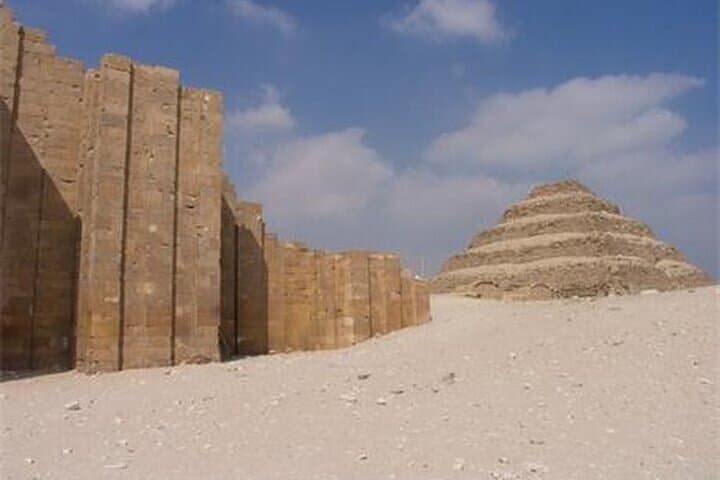
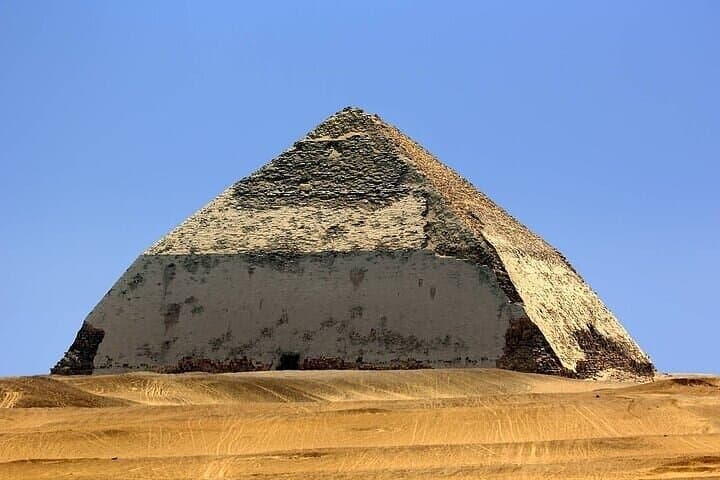
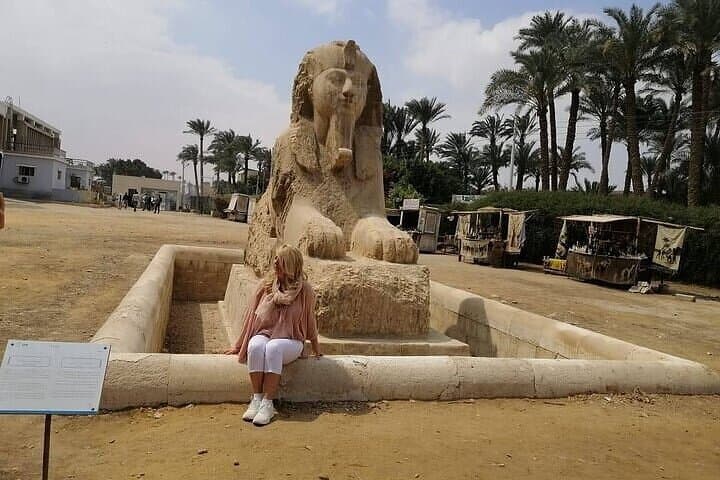
The route traces core chapters of Pharaonic Egypt: Fourth Dynasty engineering on the Giza plateau (c. 2600–2500 BCE), the evolution from mastaba to the Step Pyramid at Sakkara, and Memphis, one of the country’s earliest capitals. Day two shifts from field to gallery—The Egyptian Museum’s vast antiquities and the National Museum of Egyptian Civilization’s chronological displays frame artifacts from prehistory through modern Egypt.
Expect a private guide, hotel pickup and drop-off, air-conditioned transport, two lunches and bottled water. Some site admissions are included; others may require entrance fees depending on options chosen, and interior access (e.g., pyramid chambers) is subject to separate tickets and limited capacity.
Practical edge: start early to avoid mid-day heat, wear closed-toe shoes for uneven limestone and sand, carry sun protection and small change for tipping. Photography is generally allowed, but tripods and certain interiors may be restricted. Pace your two days—this is cultural immersion more than endurance hiking, but walking on rough, exposed surfaces requires steady footing and hydration. With simple preparation, the itinerary delivers one of Egypt’s most concentrated cultural experiences.