THE ADVENTURE COLLECTIVE® · Independent discovery and booking for outdoor travel

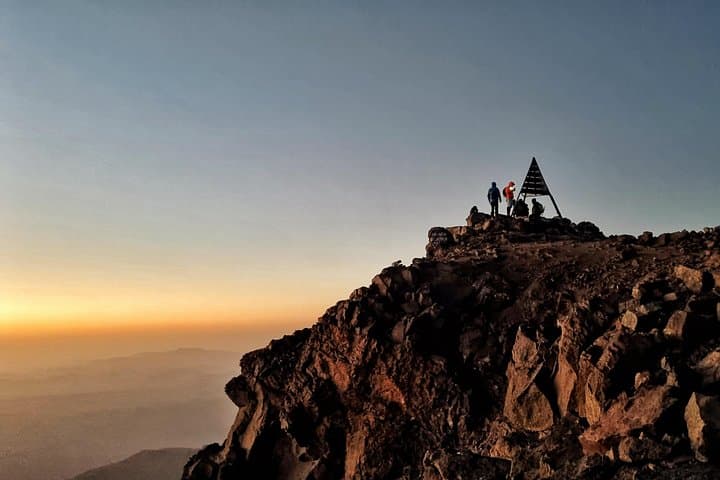
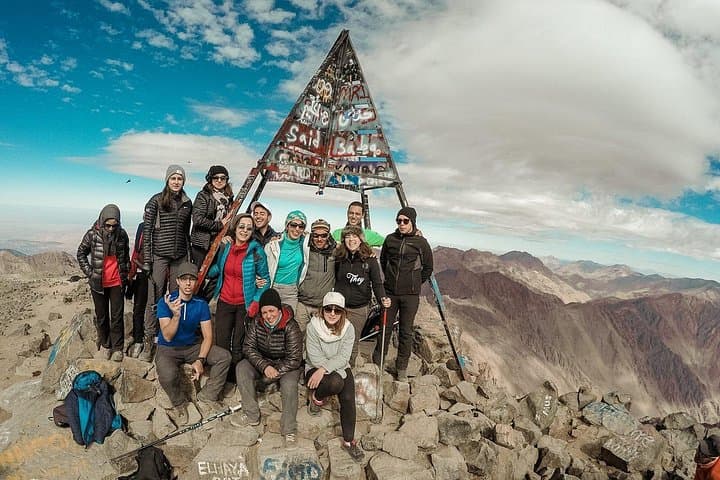
Climb North Africa’s highest mountain on a focused two-day private trek from Marrakech. Expect long days, rocky trails, a refuge night at 3,200 m, and a dawn summit push to 4,167 m.
Climb North Africa’s highest mountain on a focused two-day private trek from Marrakech. Expect long days, rocky trails, a refuge night at 3,200 m, and a dawn summit push to 4,167 m.
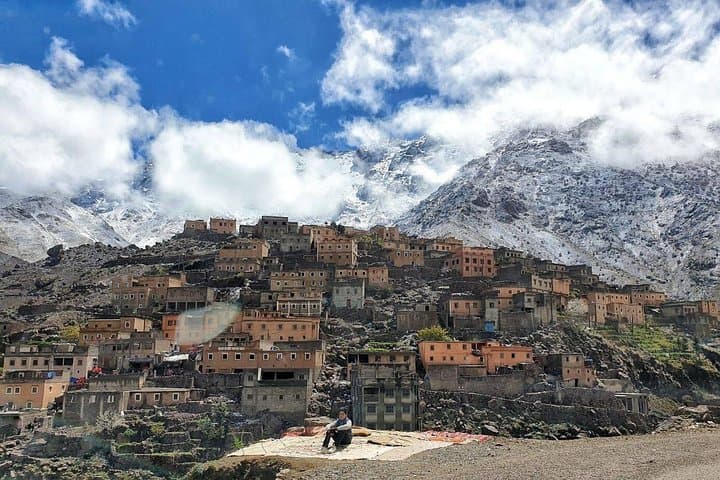
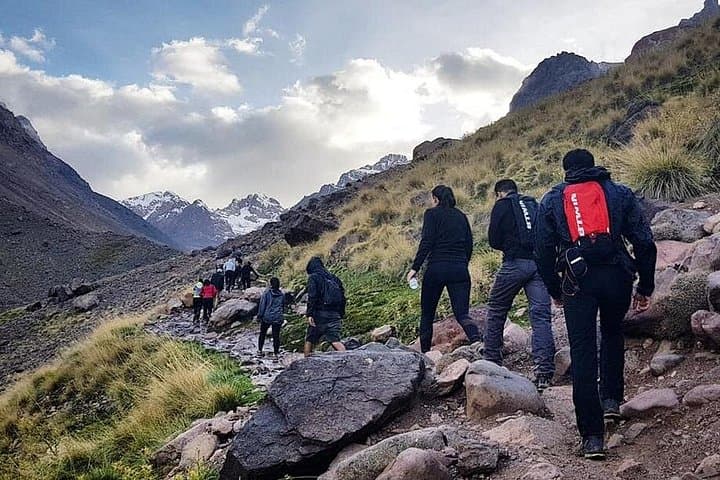
A pre-dawn van leaves Marrakech and the High Atlas road narrows into switchbacks, cedar and almond trees leaning into the valley as the driver drops you in Imlil. From the village your guide briefs you, and the trail carries you up past terraced fields and stone hamlets until the air thins and the refuge perches like a weathered outpost at roughly 3,207 m. The mountain keeps moving — wind and rock daring you onward — and you bed down preparing for a 3:00 a.m. wake-up.
Verified experiences and guided adventures in the surrounding area.
Operated by GEEKTRIP · Imlil, Marrakesh-Safi
A pre-dawn van leaves Marrakech and the High Atlas road narrows into switchbacks, cedar and almond trees leaning into the valley as the driver drops you in Imlil. From the village your guide briefs you, and the trail carries you up past terraced fields and stone hamlets until the air thins and the refuge perches like a weathered outpost at roughly 3,207 m. The mountain keeps moving — wind and rock daring you onward — and you bed down preparing for a 3:00 a.m. wake-up.
Mount Toubkal (4,167 m) is North Africa’s highest summit. Geologically it’s part of the High Atlas, raised by the collision of the African and Eurasian plates; culturally the route threads through Berber villages shaped by centuries of transhumance and mountain agriculture. The refuge system and mule tracks reflect a long history of local guiding and pastoral life.
Practically, the two-day schedule compresses acclimatization: expect ~1,400 m ascent to the refuge on day one (6–8 km of trail) and a 9–12 km summit loop day two with ~960 m of climbing from the refuge. Trails are rocky with scree near the top; the final slopes are steep but non-technical in summer and autumn. Plan for cold nights, early starts, and simple dormitory lodging at the refuge. Hydrate, layer for wind and sun, and carry a headlamp for the summit push. Mules carry luggage; you carry essentials.
This private itinerary suits fit trekkers who want a guided, efficient route to a significant high-altitude peak and the reward of a 360-degree panorama over the Atlas before descending back to the valley and Marrakech.
challenging.
2 days.
Good aerobic fitness with experience on full-day hikes; comfortable with sustained climbs and high-altitude walking.
Toubkal is non-technical in summer and autumn—no ropes required—but steep, exposed scree and high altitude make it physically demanding.
Yes—the itinerary includes one night in dormitory accommodation at the Toubkal refuge (basic mountain bedding provided).
Yes—mules are arranged to transport main luggage to the refuge; you should carry a daypack with essentials for the summit push.
Late spring through autumn (May–October) offers the most reliable conditions; winter requires snow gear and alpine experience.
The High Atlas has been inhabited by Berber communities for millennia; paths to Toubkal follow traditional pastoral routes and mule tracks used for trade and herding.
Toubkal sits within Toubkal National Park—stay on trails, pack out waste, and use local guides to support community-based conservation.
GEEKTRIP operates guided outdoor trips and adventures with an emphasis on safety, stewardship, and memorable experiences.
A pre-dawn van leaves Marrakech and the High Atlas road narrows into switchbacks, cedar and almond trees leaning into the valley as the driver drops you in Imlil. From the village your guide briefs you, and the trail carries you up past terraced fields and stone hamlets until the air thins and the refuge perches like a weathered outpost at roughly 3,207 m. The mountain keeps moving — wind and rock daring you onward — and you bed down preparing for a 3:00 a.m. wake-up.
A pre-dawn van leaves Marrakech and the High Atlas road narrows into switchbacks, cedar and almond trees leaning into the valley as the driver drops you in Imlil. From the village your guide briefs you, and the trail carries you up past terraced fields and stone hamlets until the air thins and the refuge perches like a weathered outpost at roughly 3,207 m. The mountain keeps moving — wind and rock daring you onward — and you bed down preparing for a 3:00 a.m. wake-up.
Mount Toubkal (4,167 m) is North Africa’s highest summit. Geologically it’s part of the High Atlas, raised by the collision of the African and Eurasian plates; culturally the route threads through Berber villages shaped by centuries of transhumance and mountain agriculture. The refuge system and mule tracks reflect a long history of local guiding and pastoral life.
Practically, the two-day schedule compresses acclimatization: expect ~1,400 m ascent to the refuge on day one (6–8 km of trail) and a 9–12 km summit loop day two with ~960 m of climbing from the refuge. Trails are rocky with scree near the top; the final slopes are steep but non-technical in summer and autumn. Plan for cold nights, early starts, and simple dormitory lodging at the refuge. Hydrate, layer for wind and sun, and carry a headlamp for the summit push. Mules carry luggage; you carry essentials.
This private itinerary suits fit trekkers who want a guided, efficient route to a significant high-altitude peak and the reward of a 360-degree panorama over the Atlas before descending back to the valley and Marrakech.