THE ADVENTURE COLLECTIVE® · Independent discovery and booking for outdoor travel

Spend two days tracing Angkor’s high points: Angkor Wat at sunrise, the jungle-wrapped Ta Prohm, Bayon’s carved faces and the delicate pink carvings of Banteay Srei. This private tour pairs early light and late sunsets with a guide who places architecture, history and local life into clear context.
Spend two days tracing Angkor’s high points: Angkor Wat at sunrise, the jungle-wrapped Ta Prohm, Bayon’s carved faces and the delicate pink carvings of Banteay Srei. This private tour pairs early light and late sunsets with a guide who places architecture, history and local life into clear context.
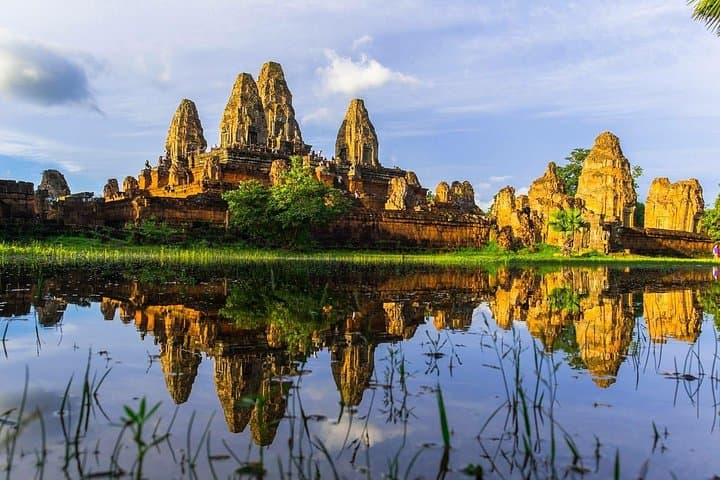
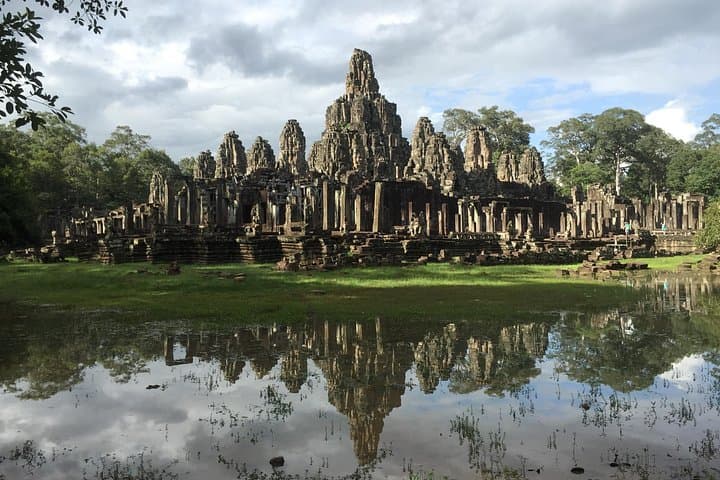
You arrive before the sky lightens and Angkor Wat stands like an island of stone, its reflection trembling in the moat as day pries color from the horizon. The first morning is about light and scale—sanding pathways, carved lintels and the hush of early pilgrims—while the second day trades sunrise for a slow, deliberate sweep of Bayon’s carved faces and the rose-pink sandstone of Banteay Srei.
Verified experiences and guided adventures in the surrounding area.
Operated by Siem Reap Guide · Siem Reap, Siem Reap Province
You arrive before the sky lightens and Angkor Wat stands like an island of stone, its reflection trembling in the moat as day pries color from the horizon. The first morning is about light and scale—sanding pathways, carved lintels and the hush of early pilgrims—while the second day trades sunrise for a slow, deliberate sweep of Bayon’s carved faces and the rose-pink sandstone of Banteay Srei.
The temples are chaptered history: Angkor Wat’s 12th-century Khmer empire architecture, Bayon’s enigmatic bas-relief faces, Ta Prohm’s roots wrapping stones, and Banteay Srei’s unusually fine carvings on red sandstone. Geology here is both maker and canvas—sandstone blocks quarried and stacked, later softened by tropical rains and fig roots that now pry them apart. Local culture remains close: village markets, guardian spirits, and a guide’s steady narration that places myth beside archaeological fact.
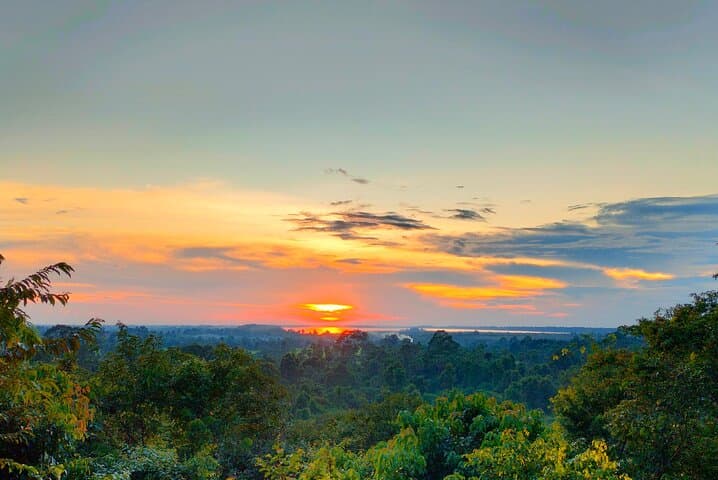
Practically, this is a lot of walking across uneven stone, shallow steps and dusty service roads; mornings are coolest, late afternoons offer softer light for photographs. Carry a refillable water bottle, sun protection and modest clothing—shoulders and knees need covering at active shrines. Expect a private air-conditioned vehicle between sites, guided storytelling, and timed stops for sunset on Phnom Bakheng.
Timing your visits—sunrise at Angkor Wat, quieter corners at Ta Prohm—and pacing your day around heat and crowds will make the two-day circuit feel like a careful excavation rather than a checklist. Move deliberately, respect the temples, and let each ruin reveal a different pulse of Angkor’s long history.
moderate.
2 days (approx. 8–10 hours per day including transfers).
Requires moderate fitness: standing, climbing short temple steps, and walking on uneven stone paths over long days.
Yes—an Angkor Archaeological Park pass is required for entry; passes are available for 1, 3 or 7 days and are typically purchased at the park ticket center or arranged by your operator.
Pickups for Angkor Wat sunrise are usually around 4:00–4:30 AM depending on the season to reach the site before first light and find a good viewing spot.
Children can join but must be supervised; temples have many steps and uneven surfaces, and heat can be challenging for young kids.
Lunch is commonly provided at a local restaurant on the itinerary, but confirm specifics with the operator for dietary needs and included meals.
Angkor was the center of the Khmer Empire from the 9th to 15th centuries; many monuments are Hindu or Buddhist temples that evolved with shifting royal patronage.
The park balances tourism with preservation—follow marked paths, avoid touching carvings, and use local guides who support site stewardship programs.
Siem Reap Guide operates guided outdoor trips and adventures with an emphasis on safety, stewardship, and memorable experiences.
You arrive before the sky lightens and Angkor Wat stands like an island of stone, its reflection trembling in the moat as day pries color from the horizon. The first morning is about light and scale—sanding pathways, carved lintels and the hush of early pilgrims—while the second day trades sunrise for a slow, deliberate sweep of Bayon’s carved faces and the rose-pink sandstone of Banteay Srei.
You arrive before the sky lightens and Angkor Wat stands like an island of stone, its reflection trembling in the moat as day pries color from the horizon. The first morning is about light and scale—sanding pathways, carved lintels and the hush of early pilgrims—while the second day trades sunrise for a slow, deliberate sweep of Bayon’s carved faces and the rose-pink sandstone of Banteay Srei.
The temples are chaptered history: Angkor Wat’s 12th-century Khmer empire architecture, Bayon’s enigmatic bas-relief faces, Ta Prohm’s roots wrapping stones, and Banteay Srei’s unusually fine carvings on red sandstone. Geology here is both maker and canvas—sandstone blocks quarried and stacked, later softened by tropical rains and fig roots that now pry them apart. Local culture remains close: village markets, guardian spirits, and a guide’s steady narration that places myth beside archaeological fact.
Practically, this is a lot of walking across uneven stone, shallow steps and dusty service roads; mornings are coolest, late afternoons offer softer light for photographs. Carry a refillable water bottle, sun protection and modest clothing—shoulders and knees need covering at active shrines. Expect a private air-conditioned vehicle between sites, guided storytelling, and timed stops for sunset on Phnom Bakheng.
Timing your visits—sunrise at Angkor Wat, quieter corners at Ta Prohm—and pacing your day around heat and crowds will make the two-day circuit feel like a careful excavation rather than a checklist. Move deliberately, respect the temples, and let each ruin reveal a different pulse of Angkor’s long history.