THE ADVENTURE COLLECTIVE® · Independent discovery and booking for outdoor travel

Witness sunrise at Angkor Wat, read the stone faces of Bayon, then glide through the flooded mangroves of Kampong Phluk on Tonlé Sap. This private two-day tour pairs monumental Khmer temples with intimate village life.
Witness sunrise at Angkor Wat, read the stone faces of Bayon, then glide through the flooded mangroves of Kampong Phluk on Tonlé Sap. This private two-day tour pairs monumental Khmer temples with intimate village life.
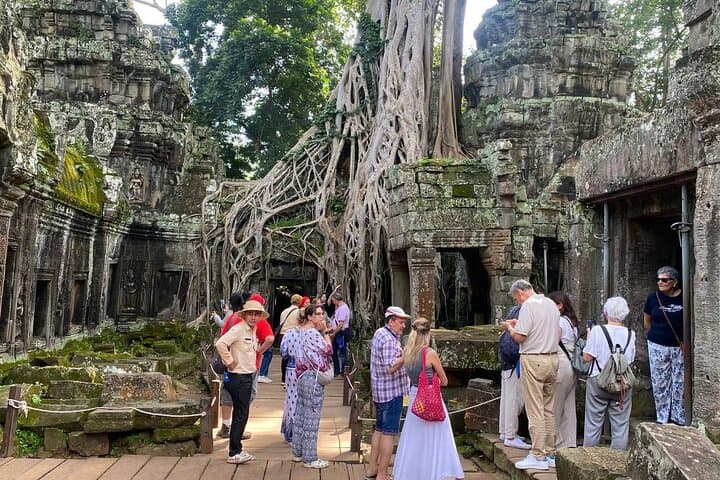
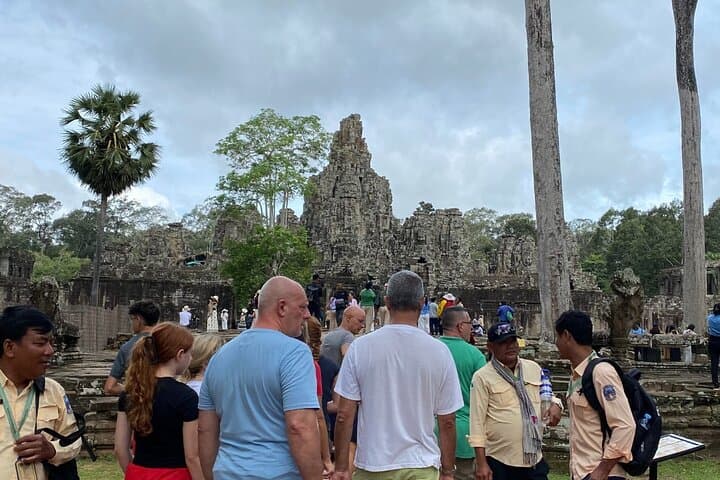
The sky is still a bruise of blue when the first light slides over Angkor Wat’s reflection pools, and the stone silhouette sharpens like an invitation. On day one the tour moves through layered history: the low, serene towers of Angkor Wat at dawn, the enormous smiling faces of Bayon in the compact centre of Angkor Thom, and Ta Prohm where roots tug at walls and the jungle seems to test the ruins’ patience.
Verified experiences and guided adventures in the surrounding area.
Operated by Angkor Daily Trip · Siem Reap, Siem Reap Province
The sky is still a bruise of blue when the first light slides over Angkor Wat’s reflection pools, and the stone silhouette sharpens like an invitation. On day one the tour moves through layered history: the low, serene towers of Angkor Wat at dawn, the enormous smiling faces of Bayon in the compact centre of Angkor Thom, and Ta Prohm where roots tug at walls and the jungle seems to test the ruins’ patience.
These monuments were raised during the height of the Khmer Empire—Angkor Wat in the early 12th century and the Bayon under Jayavarman VII a century later—on a landscape carved by rivers, seasonal floods and ancient waterworks. Tonlé Sap, accessed on day two, is geology in motion: the lake swells and retreats with the Mekong’s pulse, reversing flow each year and transforming floodplains into a watery village.
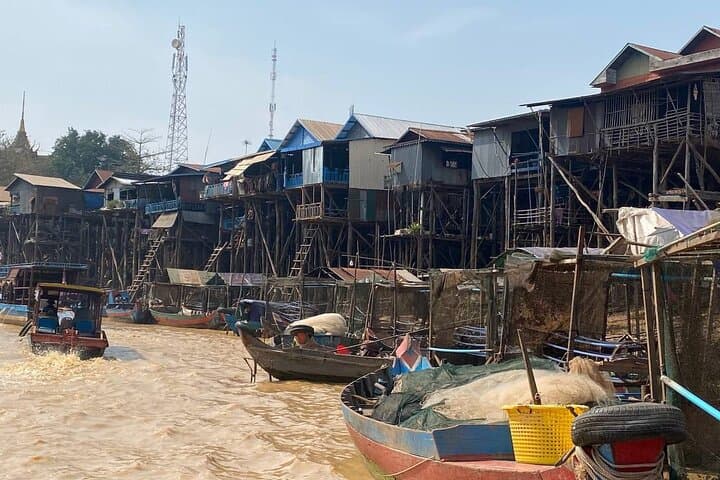
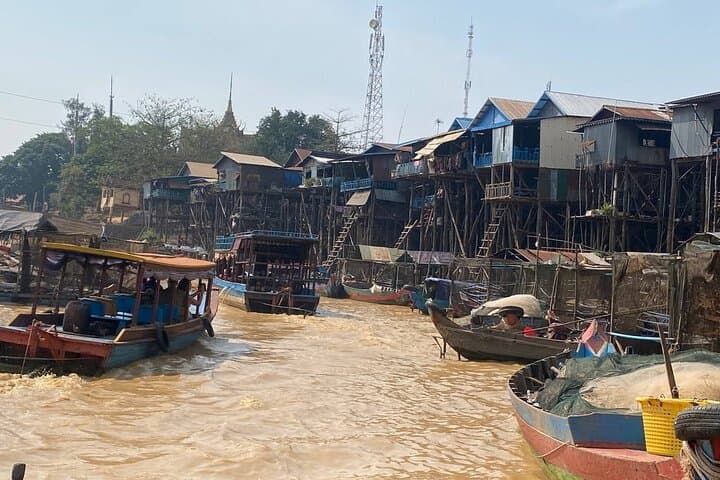
Culture here is pragmatic and visible—stilt houses, wooden boats, nets cast at dawn, and small shrines at temple thresholds. Guides explain how engineering, religion and rice economics shaped the city’s scale.
Practical notes: expect early starts and long walking on uneven stone; modest dress is required at temples (shoulders and knees covered). Boats on Tonlé Sap put you close to village life; pack sunscreen, mosquito repellent and a lightweight rain layer in the wet months. Bring cash for Angkor passes, small purchases and tips. With a private guide and air-conditioned transport, the itinerary balances focused temple time with a quieter, observational afternoon on the lake—two days that pair monumental architecture with a living, water-borne community.
easy.
2 days.
Suitable for most travelers who can walk several kilometres over uneven surfaces and handle early starts.
Yes—entry to Angkor Archaeological Park requires a purchased Angkor Pass (one-day, three-day or seven-day options); your guide or hotel can assist with purchase.
Each day involves several hours of guided sightseeing—expect early starts and roughly 6–8 hours of activity on day one and 4–6 hours on day two with boat time included.
Yes—local boats are operated by experienced boatmen; children should wear life jackets when provided and avoid standing while the boat is moving.
Many sites have uneven steps and narrow passageways; some temples are more accessible than others—discuss mobility needs with the operator when booking so routes can be adjusted.
Angkor was the capital of the Khmer Empire from the 9th to 15th centuries; its temples display shifts from Hindu to Buddhist patronage and advanced hydraulic engineering.
Tonlé Sap is an ecological hotspot facing overfishing and habitat pressure; favor operators who practice low-impact boating and support local communities.
Angkor Daily Trip operates guided outdoor trips and adventures with an emphasis on safety, stewardship, and memorable experiences.
The sky is still a bruise of blue when the first light slides over Angkor Wat’s reflection pools, and the stone silhouette sharpens like an invitation. On day one the tour moves through layered history: the low, serene towers of Angkor Wat at dawn, the enormous smiling faces of Bayon in the compact centre of Angkor Thom, and Ta Prohm where roots tug at walls and the jungle seems to test the ruins’ patience.
The sky is still a bruise of blue when the first light slides over Angkor Wat’s reflection pools, and the stone silhouette sharpens like an invitation. On day one the tour moves through layered history: the low, serene towers of Angkor Wat at dawn, the enormous smiling faces of Bayon in the compact centre of Angkor Thom, and Ta Prohm where roots tug at walls and the jungle seems to test the ruins’ patience.
These monuments were raised during the height of the Khmer Empire—Angkor Wat in the early 12th century and the Bayon under Jayavarman VII a century later—on a landscape carved by rivers, seasonal floods and ancient waterworks. Tonlé Sap, accessed on day two, is geology in motion: the lake swells and retreats with the Mekong’s pulse, reversing flow each year and transforming floodplains into a watery village.
Culture here is pragmatic and visible—stilt houses, wooden boats, nets cast at dawn, and small shrines at temple thresholds. Guides explain how engineering, religion and rice economics shaped the city’s scale.
Practical notes: expect early starts and long walking on uneven stone; modest dress is required at temples (shoulders and knees covered). Boats on Tonlé Sap put you close to village life; pack sunscreen, mosquito repellent and a lightweight rain layer in the wet months. Bring cash for Angkor passes, small purchases and tips. With a private guide and air-conditioned transport, the itinerary balances focused temple time with a quieter, observational afternoon on the lake—two days that pair monumental architecture with a living, water-borne community.