THE ADVENTURE COLLECTIVE® · Independent discovery and booking for outdoor travel

Catch sunrise at Angkor Wat and spend two focused days moving through grand galleries, banyan-held ruins and intricately carved temples. This private tour pairs an English-speaking guide with an air-conditioned car to cover Angkor’s highlights with practical comfort.
Catch sunrise at Angkor Wat and spend two focused days moving through grand galleries, banyan-held ruins and intricately carved temples. This private tour pairs an English-speaking guide with an air-conditioned car to cover Angkor’s highlights with practical comfort.
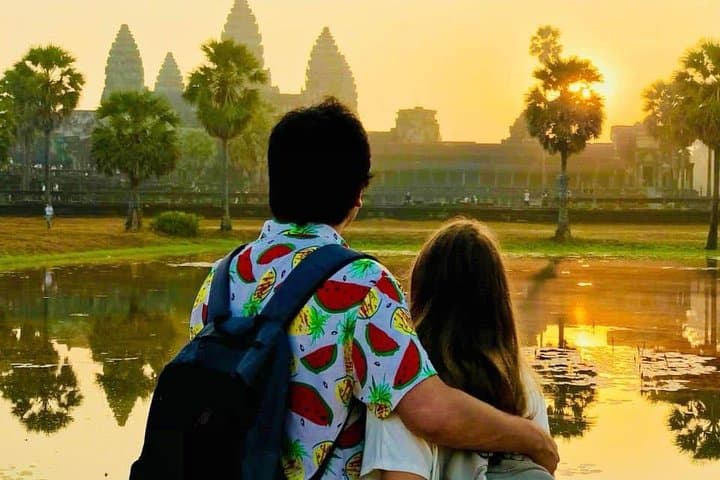
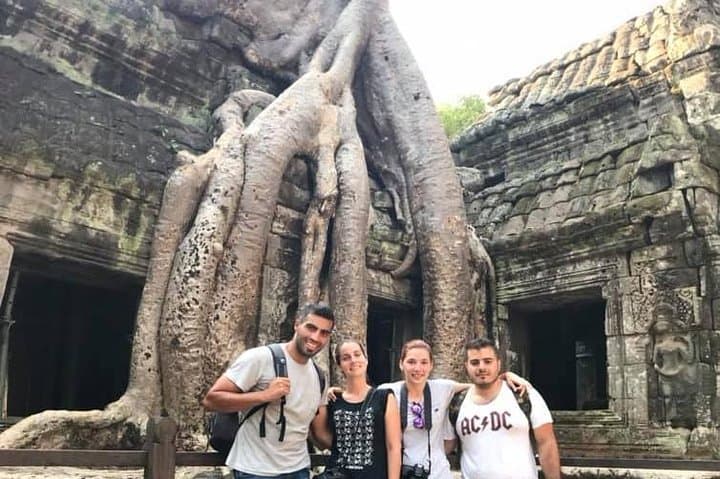
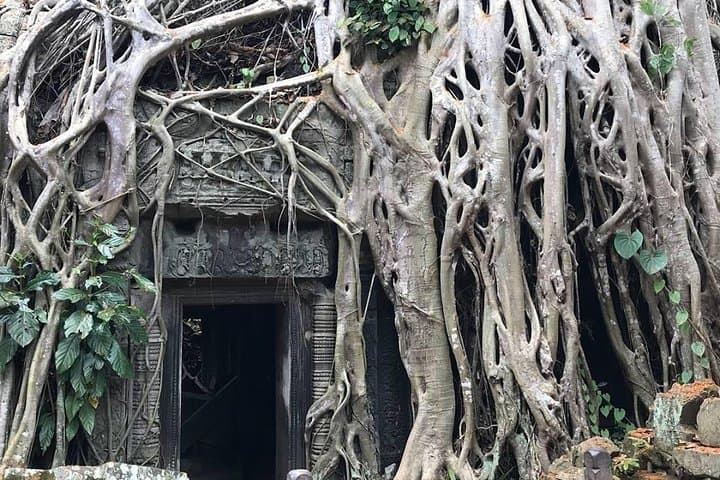
You stand at the shallow pool in front of Angkor Wat before sunrise, the stones cooling from the night and the sky bruising from dark to orange. The reflection shivers as the first light finds the central tower; your English-speaking guide checks the route while the driver warms the air-conditioned car. Over two compact days you move from dawn crowds at Angkor Wat to quieter galleries and laterite terraces where roots and ruins argue for space.
Verified experiences and guided adventures in the surrounding area.
Operated by KH Angkor Tour · Siem Reap, Siem Reap Province
You stand at the shallow pool in front of Angkor Wat before sunrise, the stones cooling from the night and the sky bruising from dark to orange. The reflection shivers as the first light finds the central tower; your English-speaking guide checks the route while the driver warms the air-conditioned car. Over two compact days you move from dawn crowds at Angkor Wat to quieter galleries and laterite terraces where roots and ruins argue for space.
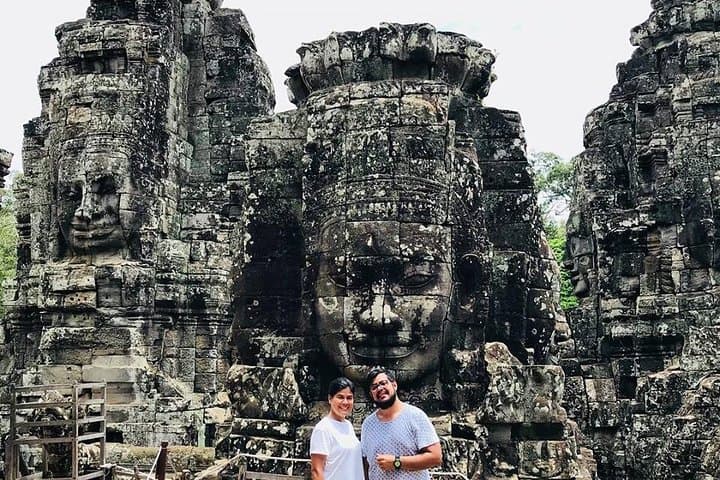
Angkor was the heart of the Khmer Empire (9th–15th centuries); the main monuments are sandstone and laterite sculptures carved in the 12th century under Suryavarman II and later kings. Geology matters here—soft sandstone holds deep bas-reliefs but weathers quickly under tropical rain. Culture and conservation are visible in small ways: monks’ saffron robes, village children selling postcards, restoration scaffolding from French-era and modern conservation efforts.
Practically, expect low elevation and a lot of flat-but-uneven walking—plan 3–6 km of walking each day, with steps at temple gopuras and galleries. Banteay Srei sits about 37 km northeast of the main group and rewards the drive with its intricate pink sandstone carvings; Prei Rup and Phnom Bakheng are traditional sunset options. The tour includes bottled water, cold towels, an AC vehicle and an English-speaking guide, but Angkor Park admission (passes) is not included.
Pack sun protection, modest clothing that covers shoulders and knees for temple entry, and a small daypack. Start early for good light and thinner crowds; keep cash for tickets, tips and small purchases. Move deliberately—these stone walls have patience, and the sites will reveal their stories if you give them time.
easy.
2 days (14–16 hours total).
Suitable for travelers in average fitness; expect several hours of walking on flat but uneven temple ground each day
No—Angkor Park passes (1-, 3-, or 7-day) are purchased separately at the park gates or official counters; bring cash for the ticket.
Expect 3–6 km of walking per day across level but uneven surfaces, with short climbs on temple staircases and raised platforms.
Yes; the English-speaking guide and private driver manage routing, timing, and transport, but meals and park admission are not included unless specified.
Yes; the tour notes that infants may sit on laps and specialized infant seats are available—confirm age and needs at booking.
Angkor was the political and religious center of the Khmer Empire between the 9th and 15th centuries; Angkor Wat was built in the early 12th century by King Suryavarman II as a state temple and mausoleum.
Restoration and visitor management are ongoing; follow rules, avoid touching carvings, and minimize single-use plastics to reduce impact on the fragile sandstone and local communities.
KH Angkor Tour operates guided outdoor trips and adventures with an emphasis on safety, stewardship, and memorable experiences.
You stand at the shallow pool in front of Angkor Wat before sunrise, the stones cooling from the night and the sky bruising from dark to orange. The reflection shivers as the first light finds the central tower; your English-speaking guide checks the route while the driver warms the air-conditioned car. Over two compact days you move from dawn crowds at Angkor Wat to quieter galleries and laterite terraces where roots and ruins argue for space.
You stand at the shallow pool in front of Angkor Wat before sunrise, the stones cooling from the night and the sky bruising from dark to orange. The reflection shivers as the first light finds the central tower; your English-speaking guide checks the route while the driver warms the air-conditioned car. Over two compact days you move from dawn crowds at Angkor Wat to quieter galleries and laterite terraces where roots and ruins argue for space.
Angkor was the heart of the Khmer Empire (9th–15th centuries); the main monuments are sandstone and laterite sculptures carved in the 12th century under Suryavarman II and later kings. Geology matters here—soft sandstone holds deep bas-reliefs but weathers quickly under tropical rain. Culture and conservation are visible in small ways: monks’ saffron robes, village children selling postcards, restoration scaffolding from French-era and modern conservation efforts.
Practically, expect low elevation and a lot of flat-but-uneven walking—plan 3–6 km of walking each day, with steps at temple gopuras and galleries. Banteay Srei sits about 37 km northeast of the main group and rewards the drive with its intricate pink sandstone carvings; Prei Rup and Phnom Bakheng are traditional sunset options. The tour includes bottled water, cold towels, an AC vehicle and an English-speaking guide, but Angkor Park admission (passes) is not included.
Pack sun protection, modest clothing that covers shoulders and knees for temple entry, and a small daypack. Start early for good light and thinner crowds; keep cash for tickets, tips and small purchases. Move deliberately—these stone walls have patience, and the sites will reveal their stories if you give them time.