THE ADVENTURE COLLECTIVE® · Independent discovery and booking for outdoor travel

Watch Angkor Wat bloom at sunrise and close the day with a drink as the rice fields go gold. This private 2‑day tour pairs early‑morning access to major temples with quieter, atmospheric sites and local insight.
Watch Angkor Wat bloom at sunrise and close the day with a drink as the rice fields go gold. This private 2‑day tour pairs early‑morning access to major temples with quieter, atmospheric sites and local insight.
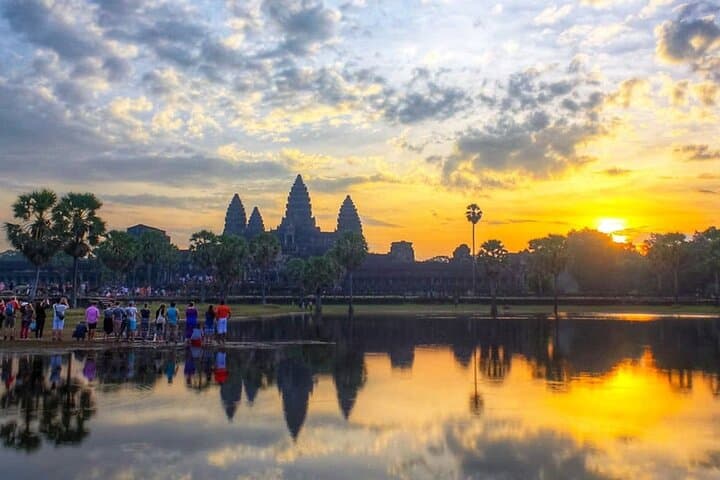
Before dawn you wait on the steps as a thin light unrolls across the moat and towers of Angkor Wat; the temple’s bas‑reliefs slip from shadow into detail and the air cools with expectation. By sunset the tour shifts tone—rice paddies take on a burnished glow, frogs and river channels seeming to hurry the last light toward the horizon. This two‑day private itinerary stitches those bookend moments together with quieter jewels in between.
Verified experiences and guided adventures in the surrounding area.
Operated by Journey Cambodia · Siem Reap, Siem Reap Province
Before dawn you wait on the steps as a thin light unrolls across the moat and towers of Angkor Wat; the temple’s bas‑reliefs slip from shadow into detail and the air cools with expectation. By sunset the tour shifts tone—rice paddies take on a burnished glow, frogs and river channels seeming to hurry the last light toward the horizon. This two‑day private itinerary stitches those bookend moments together with quieter jewels in between.
The Angkor zone preserves a landscape shaped by Khmer engineers and decades of tropical weather: sandstone galleries, laterite cores and towering trees that pry mortar from stone. Angkor Wat (12th century) and Angkor Thom’s Bayon illustrate political theology in carved stone; Ta Prohm shows the energetic slow work of banyan roots consuming built form. Banteay Srei, with its pink sandstone, demonstrates a different hand—ornate, delicate carving far from the main circuit.
Culturally, these sites are more than ruins; they remain active symbols in Cambodian identity and pilgrimage. Expect interpretable bas‑reliefs depicting myth, harvest, and warfare—useful guides to Khmer cosmology. Geologically the sandstone preserves fine detail but erodes quickly under monsoon rains; foot traffic and humidity are the daily agents of change.
Practical guidance: bring a small headlamp for pre‑dawn access, modest clothing that covers shoulders and knees for temple entry, and closed walking shoes for uneven stone and tree roots. Plan hydration and sun protection—Siem Reap’s heat gains quickly—and allow quiet time at lesser temples to beat the crowds. With an experienced guide, the pace is relaxed; you leave with both spectacle and context, not just photographs.
easy.
2 days (full days).
Basic walking fitness; participants should be comfortable on uneven ground and climbing modest stone steps.
The Angkor Archaeological Park pass is not included; a 1‑, 3‑, or 7‑day pass must be purchased separately on site (card surcharge may apply).
Yes; the tour is family‑friendly but children must be accompanied by an adult and follow temple dress codes.
Yes—the itinerary includes early access to Angkor Wat’s eastern approach; bring a headlamp and be prepared for stairs and low light inside corridors.
Expect several hours of walking across uneven temple grounds with pauses at major sites; transport between complexes is provided by private vehicle.
The monuments were built between the 9th and 13th centuries during the Khmer Empire; Angkor Wat was consecrated in the early 12th century and later repurposed as a Buddhist site.
Visitor impact and tropical weather drive ongoing conservation; stick to marked paths and avoid touching carved surfaces to help preserve the stonework.
Journey Cambodia operates guided outdoor trips and adventures with an emphasis on safety, stewardship, and memorable experiences.


Before dawn you wait on the steps as a thin light unrolls across the moat and towers of Angkor Wat; the temple’s bas‑reliefs slip from shadow into detail and the air cools with expectation. By sunset the tour shifts tone—rice paddies take on a burnished glow, frogs and river channels seeming to hurry the last light toward the horizon. This two‑day private itinerary stitches those bookend moments together with quieter jewels in between.
Before dawn you wait on the steps as a thin light unrolls across the moat and towers of Angkor Wat; the temple’s bas‑reliefs slip from shadow into detail and the air cools with expectation. By sunset the tour shifts tone—rice paddies take on a burnished glow, frogs and river channels seeming to hurry the last light toward the horizon. This two‑day private itinerary stitches those bookend moments together with quieter jewels in between.
The Angkor zone preserves a landscape shaped by Khmer engineers and decades of tropical weather: sandstone galleries, laterite cores and towering trees that pry mortar from stone. Angkor Wat (12th century) and Angkor Thom’s Bayon illustrate political theology in carved stone; Ta Prohm shows the energetic slow work of banyan roots consuming built form. Banteay Srei, with its pink sandstone, demonstrates a different hand—ornate, delicate carving far from the main circuit.
Culturally, these sites are more than ruins; they remain active symbols in Cambodian identity and pilgrimage. Expect interpretable bas‑reliefs depicting myth, harvest, and warfare—useful guides to Khmer cosmology. Geologically the sandstone preserves fine detail but erodes quickly under monsoon rains; foot traffic and humidity are the daily agents of change.
Practical guidance: bring a small headlamp for pre‑dawn access, modest clothing that covers shoulders and knees for temple entry, and closed walking shoes for uneven stone and tree roots. Plan hydration and sun protection—Siem Reap’s heat gains quickly—and allow quiet time at lesser temples to beat the crowds. With an experienced guide, the pace is relaxed; you leave with both spectacle and context, not just photographs.