THE ADVENTURE COLLECTIVE® · Independent discovery and booking for outdoor travel

Two packed days link Jordan’s two headline landscapes: the carved streets of Petra and the wind-sculpted expanse of Wadi Rum. This guided tour from Eilat pairs a full-day Petra visit with an authentic Bedouin overnight under desert skies.
Two packed days link Jordan’s two headline landscapes: the carved streets of Petra and the wind-sculpted expanse of Wadi Rum. This guided tour from Eilat pairs a full-day Petra visit with an authentic Bedouin overnight under desert skies.
You step out of the van at Petra just as the canyon admits light: the siq narrows, cool stone pressing close, the red cliffs slowly revealing carved facades. The city opens like a theater—columns, tombs and the Treasury cut into sandstone that shifts from ochre to rose as the sun climbs. By late afternoon the desert of Wadi Rum reclaims a different rhythm: dunes and sculpted cliffs under a wide sky, Bedouin tents dotting the sand where cooking smoke and stories rise.
Verified experiences and guided adventures in the surrounding area.
You step out of the van at Petra just as the canyon admits light: the siq narrows, cool stone pressing close, the red cliffs slowly revealing carved facades. The city opens like a theater—columns, tombs and the Treasury cut into sandstone that shifts from ochre to rose as the sun climbs. By late afternoon the desert of Wadi Rum reclaims a different rhythm: dunes and sculpted cliffs under a wide sky, Bedouin tents dotting the sand where cooking smoke and stories rise.
Petra was the Nabatean capital and a crossroads of trade; its carved rock faces and water-management systems speak to ancient engineering in a sandstone basin. Wadi Rum, a granite and sandstone desert, bears both geological scars from millennia of wind and human marks from Bedouin life and Lawrence of Arabia’s tracks. Culturally the trip pairs archaeological wonder with living desert hospitality—expect a communal Zarb (underground roast) and simple camp comforts.
Practically: this is a full two-day itinerary with extensive walking on uneven stone paths, short climbs and desert driving. Wear sturdy shoes, bring sun protection and refillable water; nights in the camp are comfortable but temperatures drop, so layers matter. Border formalities from Eilat into Jordan are handled by guides, but bring passport and any required visas. If you want quieter moments, arrive at Petra early to beat buses; in Wadi Rum, ask your guide about short hikes to viewpoints or a dawn camel ride. The route rewards early starts and a measured pace—ancient stone and open desert both ask you to slow down and look closely.
moderate.
2 days.
Comfortable walking fitness; able to handle 4–6 hours of walking in a day with some short climbs and uneven terrain.
Visa rules vary by nationality; many nationalities can obtain a Jordanian visa on arrival but confirm ahead and carry passports—the operator generally assists with border formalities.
Expect multiple hours of walking on uneven, often steep stone pathways; you can shorten the visit by using local horse/donkey services for part of the route, though trails still require walking.
Camps typically provide comfortable beds and warm showers, simple tents or cabins, and communal dining—comfortable but rustic compared to hotels.
Families and older guests can do the tour if mobile; plan for slow pacing, bring mobility aids if needed, and notify operators about special requirements.
Petra was the Nabatean trade hub from the 4th century BCE and features complex water channels; Wadi Rum has long been home to Bedouin tribes and gained fame through Lawrence of Arabia’s wartime accounts.
Both Petra and Wadi Rum are protected areas with visitor limits and entrance fees; stick to marked paths, minimize water use, and follow guides to reduce impact.
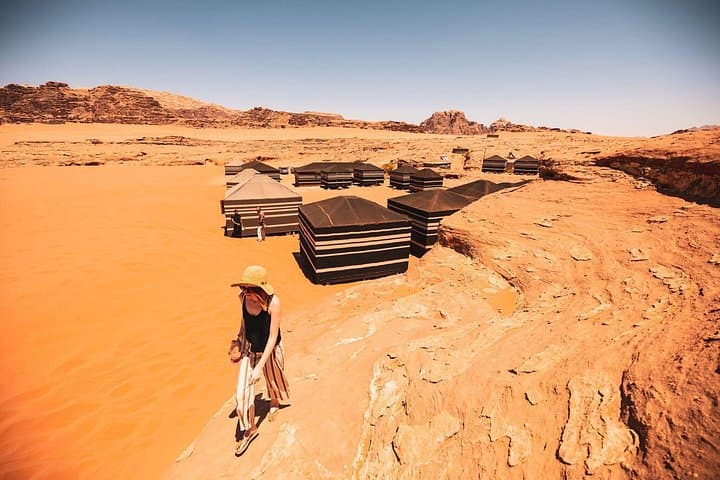
You step out of the van at Petra just as the canyon admits light: the siq narrows, cool stone pressing close, the red cliffs slowly revealing carved facades. The city opens like a theater—columns, tombs and the Treasury cut into sandstone that shifts from ochre to rose as the sun climbs. By late afternoon the desert of Wadi Rum reclaims a different rhythm: dunes and sculpted cliffs under a wide sky, Bedouin tents dotting the sand where cooking smoke and stories rise.
You step out of the van at Petra just as the canyon admits light: the siq narrows, cool stone pressing close, the red cliffs slowly revealing carved facades. The city opens like a theater—columns, tombs and the Treasury cut into sandstone that shifts from ochre to rose as the sun climbs. By late afternoon the desert of Wadi Rum reclaims a different rhythm: dunes and sculpted cliffs under a wide sky, Bedouin tents dotting the sand where cooking smoke and stories rise.
Petra was the Nabatean capital and a crossroads of trade; its carved rock faces and water-management systems speak to ancient engineering in a sandstone basin. Wadi Rum, a granite and sandstone desert, bears both geological scars from millennia of wind and human marks from Bedouin life and Lawrence of Arabia’s tracks. Culturally the trip pairs archaeological wonder with living desert hospitality—expect a communal Zarb (underground roast) and simple camp comforts.
Practically: this is a full two-day itinerary with extensive walking on uneven stone paths, short climbs and desert driving. Wear sturdy shoes, bring sun protection and refillable water; nights in the camp are comfortable but temperatures drop, so layers matter. Border formalities from Eilat into Jordan are handled by guides, but bring passport and any required visas. If you want quieter moments, arrive at Petra early to beat buses; in Wadi Rum, ask your guide about short hikes to viewpoints or a dawn camel ride. The route rewards early starts and a measured pace—ancient stone and open desert both ask you to slow down and look closely.