THE ADVENTURE COLLECTIVE® · Independent discovery and booking for outdoor travel

A compact two-day loop from Amman that pairs Petra’s rock-cut wonders with a Wadi Rum 4x4 and a buoyant dip in the Dead Sea. Ideal for travelers who want archaeology, desert driving, and a unique float—without losing a day of travel.
A compact two-day loop from Amman that pairs Petra’s rock-cut wonders with a Wadi Rum 4x4 and a buoyant dip in the Dead Sea. Ideal for travelers who want archaeology, desert driving, and a unique float—without losing a day of travel.
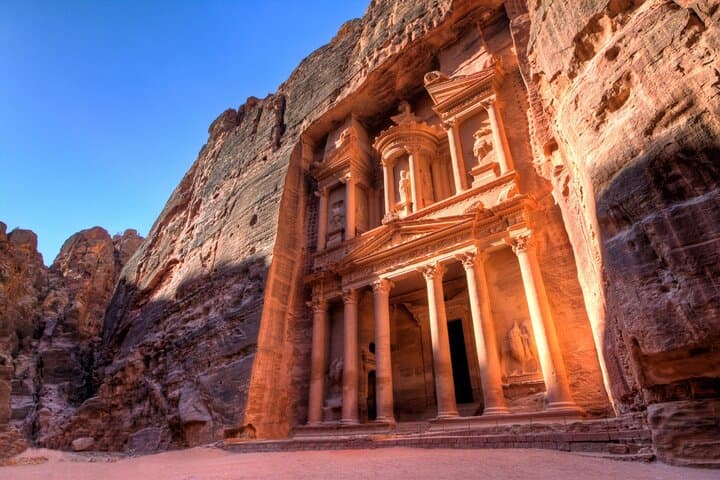
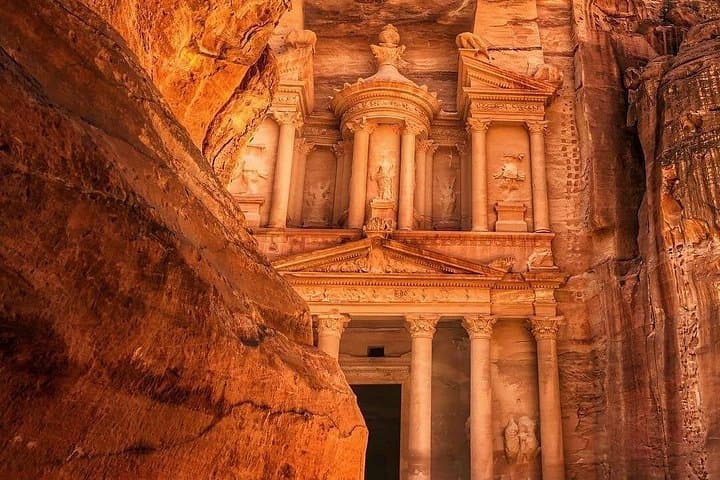
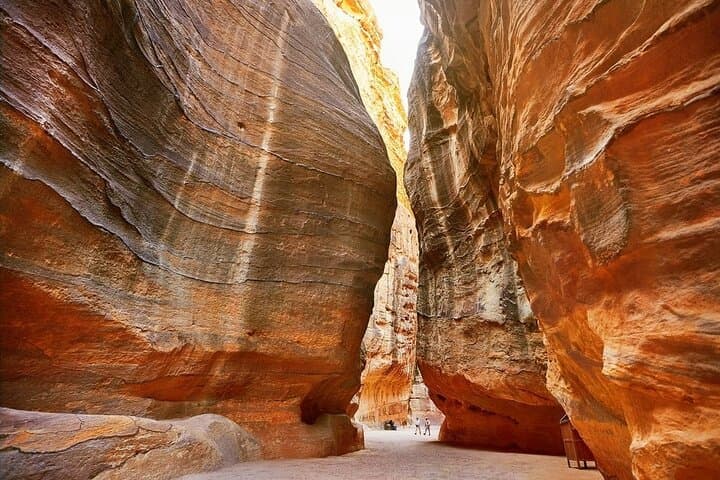
You leave Amman before sunrise, the capital shrinking behind a line of red-tiled roofs as the highway unspools toward the south. The light hardens over the limestone hills and, three hours later, the narrow cut of the Siq appears—an opening in stone that narrows and then suddenly gives way to the Treasury, its carved face catching the morning like a held breath.
Verified experiences and guided adventures in the surrounding area.
Operated by Postcard Travels & Tours · Amman, Amman Governorate
You leave Amman before sunrise, the capital shrinking behind a line of red-tiled roofs as the highway unspools toward the south. The light hardens over the limestone hills and, three hours later, the narrow cut of the Siq appears—an opening in stone that narrows and then suddenly gives way to the Treasury, its carved face catching the morning like a held breath.
Petra arrives with the slow certainty of a place that has been here far longer than anyone's timetable. The Nabataeans chiselled water channels and façades into rose-colored sandstone; their engineering turned seasonal floods into a city. Walking from the Siq to the Royal Tombs is roughly 2–3 kilometers of uneven stone and stairs, with an elevation near Petra’s center of about 900 meters. The rock itself tells a geological story—layers of sandstone folded and stained by iron and manganese, an exposed record of deserts and seas that came and went.
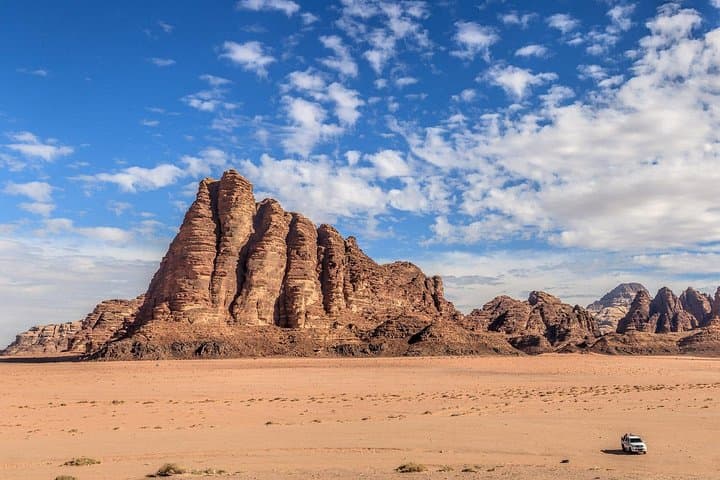
By late afternoon the group drives across the desert toward Wadi Rum. The landscape flips from carved rock to vast open sand with granite monoliths thrusting skyward. Local Bedouin guides steer a 4x4 across soft sand and rock plateaus, their vehicles bouncing over dunes while the wind writes tracks behind you. Camp is simple: low tents, warm fires, and a sky that seems to press down full of stars; temperatures can fall quickly after dusk so layers are essential.
On day two, you rise for a Wadi Rum sunrise—an hour when the rock blushes, and the desert pushes you into stillness—before a morning 4x4 tour that covers narrow canyons, natural arches, and the Lawrence's Spring area.
The final chapter is the Dead Sea. Sitting at roughly 430 meters below sea level, its hypersaline water refuses you under—so you float. The experience is odd and almost playful: salt crystals cling like glitter, and mineral mud invites a scrub. Bring an old swimsuit and a towel that you don’t mind salt-staining.
Practical edge: the route includes about 5–6 hours of driving total across two days, with moderate walking in Petra and light scrambling in Wadi Rum. Expect dust and sun; hydrate frequently and pack layers for desert nights. Respect Bedouin customs—ask before photographing people and carry small bills for tips. The tour operator typically offers hotel pickup in Amman and returns you to the city after the Dead Sea, making the loop efficient for travelers short on time.
This two-day circuit compresses Jordan’s big draws into a compact itinerary: archaeology, desert adventure, and a saline sea that will lift you out of gravity and into something almost mythic. It’s a crash course in landscape and history, best tackled with good shoes, a patient pace, and a readiness to be surprised by how varied a single country can be.
moderate.
2 days.
Suitable for travelers with decent mobility—expect several hours of walking over uneven stone in Petra and short, bumpy rides in Wadi Rum.
This tour’s price typically covers transportation and guided activities; entrance fees to Petra and any national park permits are usually not included—confirm at booking.
Expect roughly 3 hours Amman–Petra, 1.5–2 hours Petra–Wadi Rum, and 2–3 hours from Wadi Rum to the Dead Sea, with a final transfer back to Amman.
Yes—overnight accommodation is in a traditional Bedouin camp; facilities vary from basic tents to more structured camp beds depending on the option chosen.
Absolutely—because of its high salinity you float without swimming skills; however, enter slowly and avoid getting water in your eyes.
The itinerary includes lunches and some camp meals; check the operator’s inclusions for specific meal counts and any optional extras.
The tour notes advise against participation for pregnant travelers and those with serious back or heart conditions; children can join but consider long drives and rocky terrain.
Petra was the capital of the Nabataean Kingdom from the 4th century BCE and thrived as a caravan hub; Wadi Rum has served as a crossroads for Bedouin communities for centuries.
Visitors are encouraged to stay on marked routes in Petra and to avoid climbing fragile rock faces; in Wadi Rum, support locally run camps that practice low-impact tourism.
Postcard Travels & Tours operates guided outdoor trips and adventures with an emphasis on safety, stewardship, and memorable experiences.
You leave Amman before sunrise, the capital shrinking behind a line of red-tiled roofs as the highway unspools toward the south. The light hardens over the limestone hills and, three hours later, the narrow cut of the Siq appears—an opening in stone that narrows and then suddenly gives way to the Treasury, its carved face catching the morning like a held breath.
You leave Amman before sunrise, the capital shrinking behind a line of red-tiled roofs as the highway unspools toward the south. The light hardens over the limestone hills and, three hours later, the narrow cut of the Siq appears—an opening in stone that narrows and then suddenly gives way to the Treasury, its carved face catching the morning like a held breath.
Petra arrives with the slow certainty of a place that has been here far longer than anyone's timetable. The Nabataeans chiselled water channels and façades into rose-colored sandstone; their engineering turned seasonal floods into a city. Walking from the Siq to the Royal Tombs is roughly 2–3 kilometers of uneven stone and stairs, with an elevation near Petra’s center of about 900 meters. The rock itself tells a geological story—layers of sandstone folded and stained by iron and manganese, an exposed record of deserts and seas that came and went.
By late afternoon the group drives across the desert toward Wadi Rum. The landscape flips from carved rock to vast open sand with granite monoliths thrusting skyward. Local Bedouin guides steer a 4x4 across soft sand and rock plateaus, their vehicles bouncing over dunes while the wind writes tracks behind you. Camp is simple: low tents, warm fires, and a sky that seems to press down full of stars; temperatures can fall quickly after dusk so layers are essential.
On day two, you rise for a Wadi Rum sunrise—an hour when the rock blushes, and the desert pushes you into stillness—before a morning 4x4 tour that covers narrow canyons, natural arches, and the Lawrence's Spring area.
The final chapter is the Dead Sea. Sitting at roughly 430 meters below sea level, its hypersaline water refuses you under—so you float. The experience is odd and almost playful: salt crystals cling like glitter, and mineral mud invites a scrub. Bring an old swimsuit and a towel that you don’t mind salt-staining.
Practical edge: the route includes about 5–6 hours of driving total across two days, with moderate walking in Petra and light scrambling in Wadi Rum. Expect dust and sun; hydrate frequently and pack layers for desert nights. Respect Bedouin customs—ask before photographing people and carry small bills for tips. The tour operator typically offers hotel pickup in Amman and returns you to the city after the Dead Sea, making the loop efficient for travelers short on time.
This two-day circuit compresses Jordan’s big draws into a compact itinerary: archaeology, desert adventure, and a saline sea that will lift you out of gravity and into something almost mythic. It’s a crash course in landscape and history, best tackled with good shoes, a patient pace, and a readiness to be surprised by how varied a single country can be.