THE ADVENTURE COLLECTIVE® · Independent discovery and booking for outdoor travel

Walk through the Siq to Petra's Treasury by morning, then trade carved rock for wind-sculpted desert by evening. This private two-day tour pairs Nabataean ruins with a Bedouin camp experience in Wadi Rum, delivering history, geology and star-filled nights with private transport and meals.
Walk through the Siq to Petra's Treasury by morning, then trade carved rock for wind-sculpted desert by evening. This private two-day tour pairs Nabataean ruins with a Bedouin camp experience in Wadi Rum, delivering history, geology and star-filled nights with private transport and meals.
You step out of the air-conditioned van and the heat changes its voice — a dry whisper that presses against your jacket. The drive from Amman gives way to an austere canyon; the Siq narrows and the sandstone walls close in, swallowing the sound of the world behind you. When the Treasury slides into view after the roughly 1.2-kilometer walk through the Siq, it arrives like an old ruler reasserting itself: carved facades catching sun and shadow, centuries of wind-smoothed detail gleaming rose-red.
Verified experiences and guided adventures in the surrounding area.
Operated by Tour Experts · Wadi Musa, Ma'an Governorate
You step out of the air-conditioned van and the heat changes its voice — a dry whisper that presses against your jacket. The drive from Amman gives way to an austere canyon; the Siq narrows and the sandstone walls close in, swallowing the sound of the world behind you. When the Treasury slides into view after the roughly 1.2-kilometer walk through the Siq, it arrives like an old ruler reasserting itself: carved facades catching sun and shadow, centuries of wind-smoothed detail gleaming rose-red.
Petra is the architectural heart of this two-day route: an ancient Nabataean capital hewn from Jurassic sandstone, laid out along trade routes, and later layered with Roman and Byzantine marks. Expect to cover 3–6 km inside Petra depending on how far up to the Royal Tombs or the Monastery you push — the climb to the Monastery involves roughly 800 steps and up to 200–300 meters of ascent for those who go that far. The geology here is literal storytelling: banded sandstone of different mineral loads, eroded by flash floods and time into cliffs, alcoves, and narrow passages.
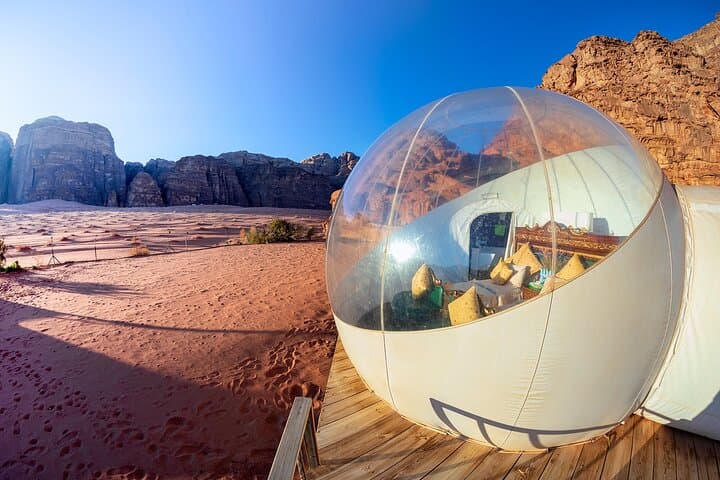
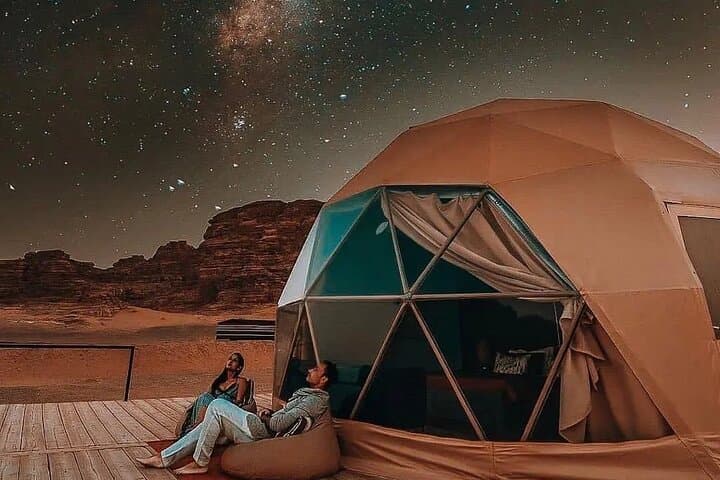
By afternoon the landscape resets. The road south opens into the wide silence of Wadi Rum, a desert of sculpted sandstone and granite that still carries Bedouin life. The desert seems to breathe — dunes rolling like slow waves and wind-carved arches that dare you to climb them. Here, the tour moves from walking to wheeled exploration: local 4x4s thread tracks across open flats, stopping at mushroom rocks and Lawrence of Arabia landmarks before a desert camp becomes your nightscape. Dinner is traditional; the stove sends fragrant steam into a star-heavy sky.
Practical edge: this private tour includes door-to-door transport from Amman or Q.A.I. Airport, an English-speaking driver, bottled water, dinner, and breakfast, but entrance fees to Petra and Wadi Rum are usually not included. Buy a Jordan Pass ahead of time if it covers your entry needs and saves time.
Timing and gear matter. Start early in Petra to avoid midday heat and crowds; in Wadi Rum afternoons are best for soft light and sunset hikes. Footwear should be sturdy with decent tread for uneven rock and sand. Hydrate continuously — the desert will take water without asking.
Cultural note: Bedouin hosts in Wadi Rum offer genuine hospitality; modest dress and asking before photographing people is good etiquette. Environmentally, both sites are managing increasing visitation: stick to paths, avoid leaving waste, and choose operators who support local communities. This two-day loop is compact but layered — ancient city, desert highways, and a night under the stars that makes Jordan feel immediate and elemental.
moderate.
2 days.
Suitable for travelers who can walk 3–6 km, handle short steep climbs and tolerate desert heat; not technical but expect uneven terrain.
No; the tour typically covers transport, meals and camp accommodation, but Petra and Wadi Rum entrance fees are usually separate—consider purchasing the Jordan Pass ahead of arrival to streamline Petra entry.
Plan on 3–6 km of walking to see major sites; reaching the Monastery adds significant steps and elevation (roughly 800 steps and 200–300 m ascent if you go all the way up).
(edited)
Yes. The itinerary notes accessibility for a wide range of fitness levels; however, Petra terrain can be uneven and steep in places, so plan for assistance or reduced walking where needed.
Spring and fall offer the most comfortable temperatures; summers are hot and winters can be cold at night but are manageable with warm layers.
Tipping is customary in Jordan—small tips for drivers, guides and camp staff are appreciated and support local livelihoods.
Petra was the Nabataean capital and a hub on ancient incense and spice routes; Wadi Rum carries Bedouin traditions and was a staging ground for Lawrence of Arabia during the Arab Revolt.
Both sites face pressure from growing tourism and scarce water; follow path rules, avoid single-use plastics and favor operators who hire local Bedouin staff.
Tour Experts operates guided outdoor trips and adventures with an emphasis on safety, stewardship, and memorable experiences.
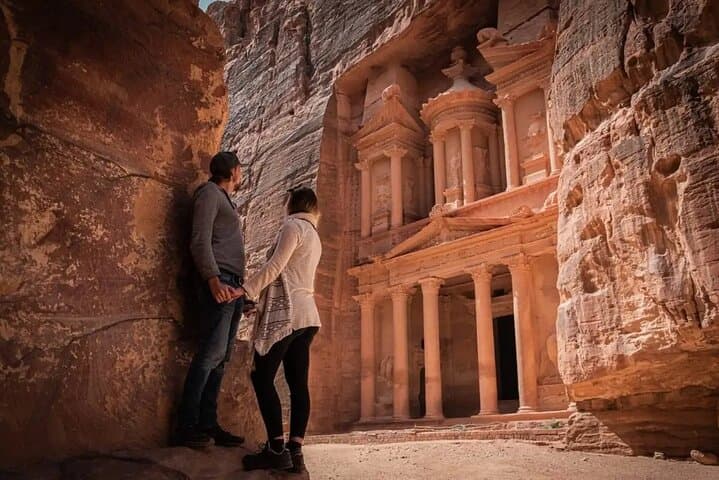
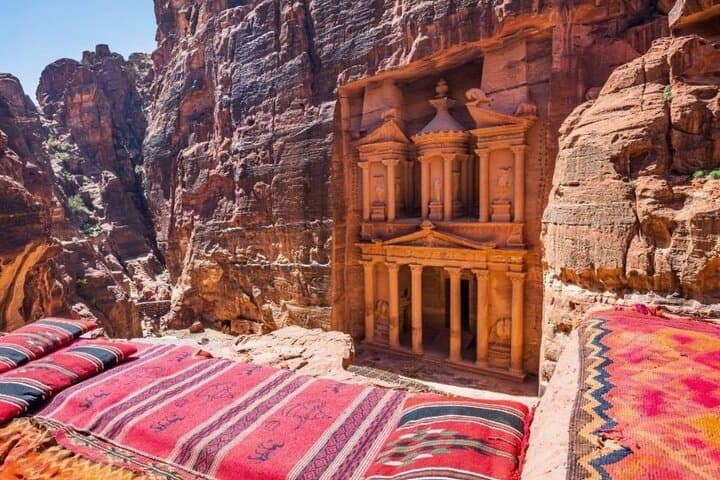
You step out of the air-conditioned van and the heat changes its voice — a dry whisper that presses against your jacket. The drive from Amman gives way to an austere canyon; the Siq narrows and the sandstone walls close in, swallowing the sound of the world behind you. When the Treasury slides into view after the roughly 1.2-kilometer walk through the Siq, it arrives like an old ruler reasserting itself: carved facades catching sun and shadow, centuries of wind-smoothed detail gleaming rose-red.
You step out of the air-conditioned van and the heat changes its voice — a dry whisper that presses against your jacket. The drive from Amman gives way to an austere canyon; the Siq narrows and the sandstone walls close in, swallowing the sound of the world behind you. When the Treasury slides into view after the roughly 1.2-kilometer walk through the Siq, it arrives like an old ruler reasserting itself: carved facades catching sun and shadow, centuries of wind-smoothed detail gleaming rose-red.
Petra is the architectural heart of this two-day route: an ancient Nabataean capital hewn from Jurassic sandstone, laid out along trade routes, and later layered with Roman and Byzantine marks. Expect to cover 3–6 km inside Petra depending on how far up to the Royal Tombs or the Monastery you push — the climb to the Monastery involves roughly 800 steps and up to 200–300 meters of ascent for those who go that far. The geology here is literal storytelling: banded sandstone of different mineral loads, eroded by flash floods and time into cliffs, alcoves, and narrow passages.
By afternoon the landscape resets. The road south opens into the wide silence of Wadi Rum, a desert of sculpted sandstone and granite that still carries Bedouin life. The desert seems to breathe — dunes rolling like slow waves and wind-carved arches that dare you to climb them. Here, the tour moves from walking to wheeled exploration: local 4x4s thread tracks across open flats, stopping at mushroom rocks and Lawrence of Arabia landmarks before a desert camp becomes your nightscape. Dinner is traditional; the stove sends fragrant steam into a star-heavy sky.
Practical edge: this private tour includes door-to-door transport from Amman or Q.A.I. Airport, an English-speaking driver, bottled water, dinner, and breakfast, but entrance fees to Petra and Wadi Rum are usually not included. Buy a Jordan Pass ahead of time if it covers your entry needs and saves time.
Timing and gear matter. Start early in Petra to avoid midday heat and crowds; in Wadi Rum afternoons are best for soft light and sunset hikes. Footwear should be sturdy with decent tread for uneven rock and sand. Hydrate continuously — the desert will take water without asking.
Cultural note: Bedouin hosts in Wadi Rum offer genuine hospitality; modest dress and asking before photographing people is good etiquette. Environmentally, both sites are managing increasing visitation: stick to paths, avoid leaving waste, and choose operators who support local communities. This two-day loop is compact but layered — ancient city, desert highways, and a night under the stars that makes Jordan feel immediate and elemental.