THE ADVENTURE COLLECTIVE® · Independent discovery and booking for outdoor travel

Drive from Amman into two days of desert and stone: walk Petra’s Siq to the Treasury, spend a night in a Bedouin camp under a cathedral of stars, float in the Dead Sea and tour the baptismal pools at El-Maghtas. This compact itinerary combines archaeology, geology and living Bedouin culture.
Drive from Amman into two days of desert and stone: walk Petra’s Siq to the Treasury, spend a night in a Bedouin camp under a cathedral of stars, float in the Dead Sea and tour the baptismal pools at El-Maghtas. This compact itinerary combines archaeology, geology and living Bedouin culture.
The morning begins in an Amman hotel lobby where your English-speaking driver waits with the engine humming like a promise. You slide into an air-conditioned vehicle and head south: three hours of highway that trade cityscapes for ochre plains until the road narrows and orange cliffs rise. The Siq opens like a private corridor—1.2 kilometers of shadow and sandstone—and then the Treasury appears, carved in rose-pink rock, a sudden face in a canyon that forces you to slow your breath and your camera shutter.
Verified experiences and guided adventures in the surrounding area.
Operated by Retaj Jordan Tours and transportation · Wadi Musa, Ma'an Governorate
The morning begins in an Amman hotel lobby where your English-speaking driver waits with the engine humming like a promise. You slide into an air-conditioned vehicle and head south: three hours of highway that trade cityscapes for ochre plains until the road narrows and orange cliffs rise. The Siq opens like a private corridor—1.2 kilometers of shadow and sandstone—and then the Treasury appears, carved in rose-pink rock, a sudden face in a canyon that forces you to slow your breath and your camera shutter.
Petra is more than a photo; it’s a working landscape. The Nabataeans, a desert-savvy people, engineered cisterns and channels into the sandstone to collect seasonal rains, turning harsh terrain into an urban center. Walk past the theater and Royal Tombs, then choose to climb the carved steps to the Monastery or the High Place of Sacrifice for a panorama that reads like a chapter in geological time—layers of strata exposed and wind-polished.
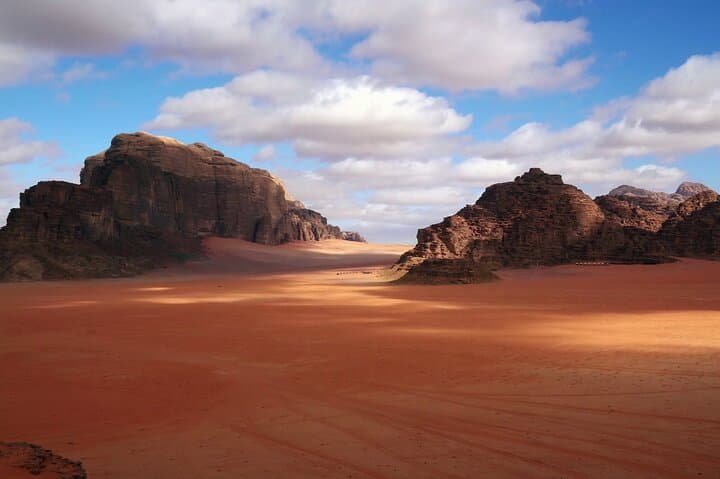
At dusk you cross into Wadi Rum. The desert here is an active character: wind-carved cliffs, dunes that shift week by week, and a palette of reds and golds that drain and deepen with the sun. An authentic Bedouin camp awaits—the low lights, shared meals, and a sky that refuses to compete with anything but itself. If you prefer, a short 4x4 (your own expense) reveals desert arches and Lawrence’s Spring; vehicles bump over tracks that memory and rainfall have made.
Day two loosens the pace. You’ll float in the Dead Sea—over 430 meters below sea level—where the water’s density holds you with quiet insistence; the salt can sting open cuts, so rinse thoroughly afterward. The tour ends with El-Maghtas (Bethany Beyond the Jordan), where baptismal pools and early churches mark the site’s layered religious history cherished by Christians, Jews and Muslims.
Practical edge: the two-day itinerary covers long drives and significant walking on uneven stone—bring sturdy shoes, sun protection, and a refillable water system. Entry fees for Petra, Wadi Rum, and El-Maghtas, plus optional 4x4 rides and local guides, are generally not included, so budget accordingly. Respect religious sites: modest dress and quiet conduct are expected at El-Maghtas. Weather swings dramatically—hot, dry days give way to cold nights in the desert—so pack layers. With thoughtful planning this tour yields dense history, desert motion, and one of the most singular swims on Earth.
moderate.
2 days.
Expect several hours of walking on uneven stone, some stair climbs (Monastery/High Place) and periods of standing; a moderate fitness level is recommended.
No—entry to Petra, Wadi Rum protected area fees and El-Maghtas admissions are typically not included; pay locally or prebook tickets when possible.
Expect about three hours each way depending on traffic; the tour schedules early departures to maximize time on site.
Camps usually offer simple private or shared tents with bedding; amenities vary—ask about private sleeping arrangements when booking for specifics.
Yes for most people—avoid swallowing water, keep it out of eyes and open cuts, and exit if you feel unwell; pregnant guests or those with certain skin conditions should consult a doctor first.
Modest dress is expected—cover shoulders and knees—and maintain respectful behavior around religious ruins and active worship areas.
Some vehicles and pickup options are wheelchair accessible, but sites like Petra’s Siq and the Monastery include uneven terrain and stairs; accessibility is limited on foot.
Petra was the Nabataean capital and a major caravan hub; its rock-cut architecture and water systems reflect sophisticated desert engineering from the 1st century BCE onward.
Park authorities limit vehicle access and collect fees that fund site preservation; stick to marked paths, avoid climbing fragile facades, and minimize plastic waste in camps.
Retaj Jordan Tours and transportation operates guided outdoor trips and adventures with an emphasis on safety, stewardship, and memorable experiences.
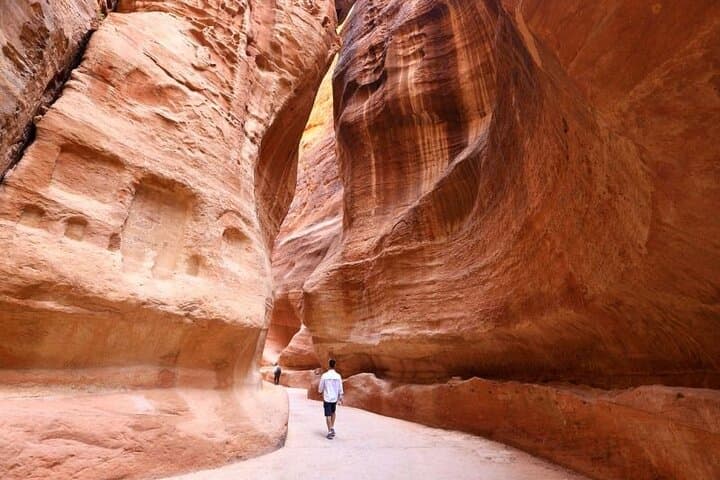
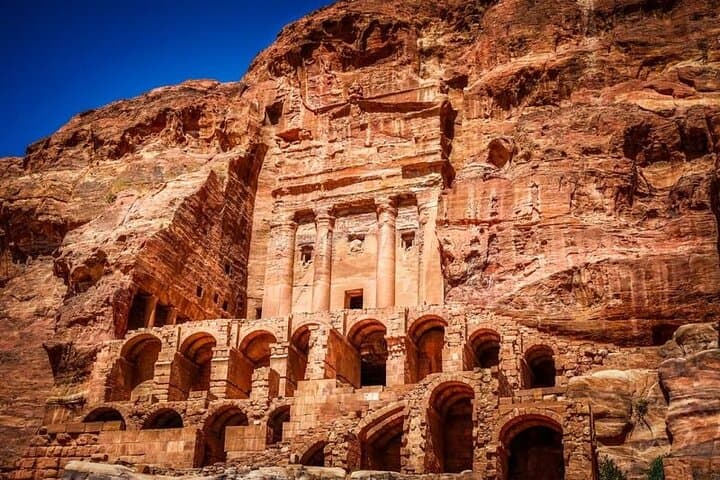
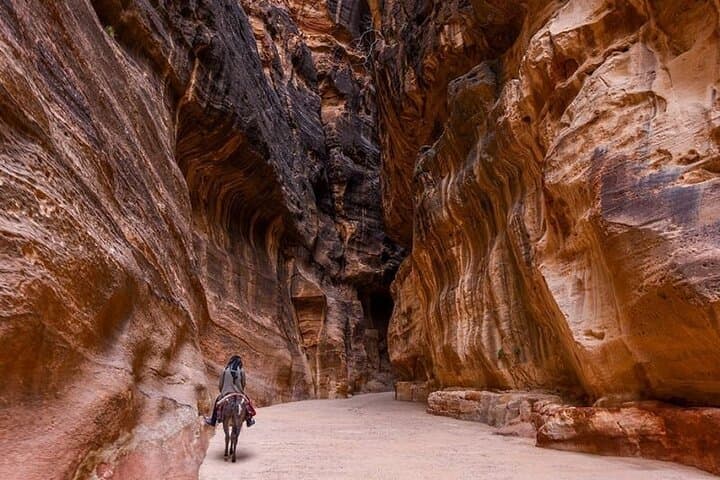
The morning begins in an Amman hotel lobby where your English-speaking driver waits with the engine humming like a promise. You slide into an air-conditioned vehicle and head south: three hours of highway that trade cityscapes for ochre plains until the road narrows and orange cliffs rise. The Siq opens like a private corridor—1.2 kilometers of shadow and sandstone—and then the Treasury appears, carved in rose-pink rock, a sudden face in a canyon that forces you to slow your breath and your camera shutter.
The morning begins in an Amman hotel lobby where your English-speaking driver waits with the engine humming like a promise. You slide into an air-conditioned vehicle and head south: three hours of highway that trade cityscapes for ochre plains until the road narrows and orange cliffs rise. The Siq opens like a private corridor—1.2 kilometers of shadow and sandstone—and then the Treasury appears, carved in rose-pink rock, a sudden face in a canyon that forces you to slow your breath and your camera shutter.
Petra is more than a photo; it’s a working landscape. The Nabataeans, a desert-savvy people, engineered cisterns and channels into the sandstone to collect seasonal rains, turning harsh terrain into an urban center. Walk past the theater and Royal Tombs, then choose to climb the carved steps to the Monastery or the High Place of Sacrifice for a panorama that reads like a chapter in geological time—layers of strata exposed and wind-polished.
At dusk you cross into Wadi Rum. The desert here is an active character: wind-carved cliffs, dunes that shift week by week, and a palette of reds and golds that drain and deepen with the sun. An authentic Bedouin camp awaits—the low lights, shared meals, and a sky that refuses to compete with anything but itself. If you prefer, a short 4x4 (your own expense) reveals desert arches and Lawrence’s Spring; vehicles bump over tracks that memory and rainfall have made.
Day two loosens the pace. You’ll float in the Dead Sea—over 430 meters below sea level—where the water’s density holds you with quiet insistence; the salt can sting open cuts, so rinse thoroughly afterward. The tour ends with El-Maghtas (Bethany Beyond the Jordan), where baptismal pools and early churches mark the site’s layered religious history cherished by Christians, Jews and Muslims.
Practical edge: the two-day itinerary covers long drives and significant walking on uneven stone—bring sturdy shoes, sun protection, and a refillable water system. Entry fees for Petra, Wadi Rum, and El-Maghtas, plus optional 4x4 rides and local guides, are generally not included, so budget accordingly. Respect religious sites: modest dress and quiet conduct are expected at El-Maghtas. Weather swings dramatically—hot, dry days give way to cold nights in the desert—so pack layers. With thoughtful planning this tour yields dense history, desert motion, and one of the most singular swims on Earth.