THE ADVENTURE COLLECTIVE® · Independent discovery and booking for outdoor travel

A compact two-day loop from Quito through the northern highlands that pairs Otavalo’s famous indigenous market with volcanic scenery at Cuicocha and a night at historic Hacienda Guachalá. Ideal for travelers who want culture, geology and market life without long transit.
A compact two-day loop from Quito through the northern highlands that pairs Otavalo’s famous indigenous market with volcanic scenery at Cuicocha and a night at historic Hacienda Guachalá. Ideal for travelers who want culture, geology and market life without long transit.
You arrive before dawn to a highland road that climbs out of Quito’s smog and opens into green valleys, where volcanoes keep a steady watch and llamas graze like punctuation on the hills.
Verified experiences and guided adventures in the surrounding area.
Operated by Ecuador Best Tours · Otavalo, Imbabura
You arrive before dawn to a highland road that climbs out of Quito’s smog and opens into green valleys, where volcanoes keep a steady watch and llamas graze like punctuation on the hills.
Day one moves between ancient earthworks and colonial estates: Cochasquí’s stepped mounds let you feel pre-Columbian engineering underfoot, while Hacienda Guachalá — one of Ecuador’s oldest haciendas — frames the Spanish colonial legacy with stone courtyards and wood beams.
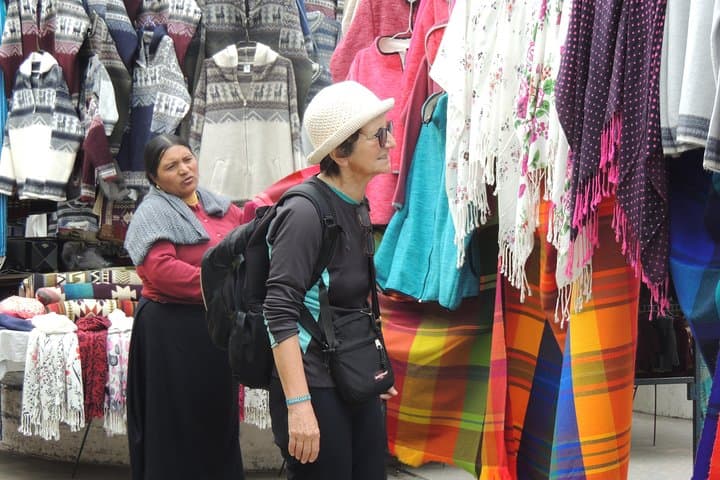
Geology here is blunt and recent. The Imbabura, Cotacachi and Cuicocha calderas were shaped by explosive eruptions; Cuicocha’s lake fills a volcanic crater and its islands rise like small, wind-buffed fortresses. Culture is immediate: Otavalo’s Kichwa people keep commercial weaving and market traditions alive in Plaza de Ponchos, where patterns act as social language and bargaining is part performance.
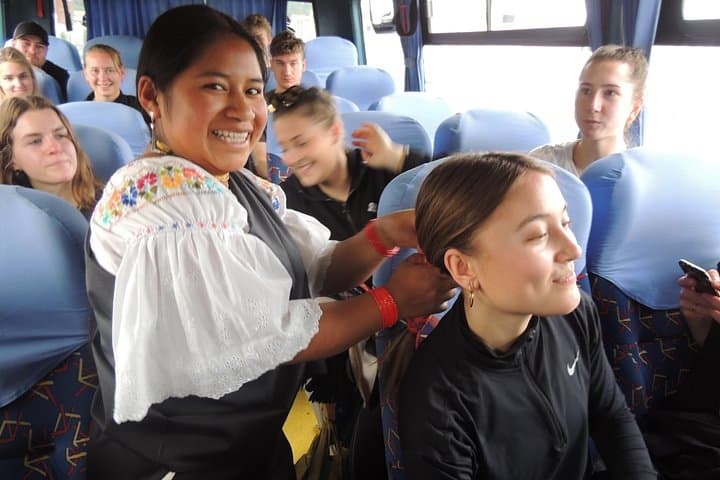
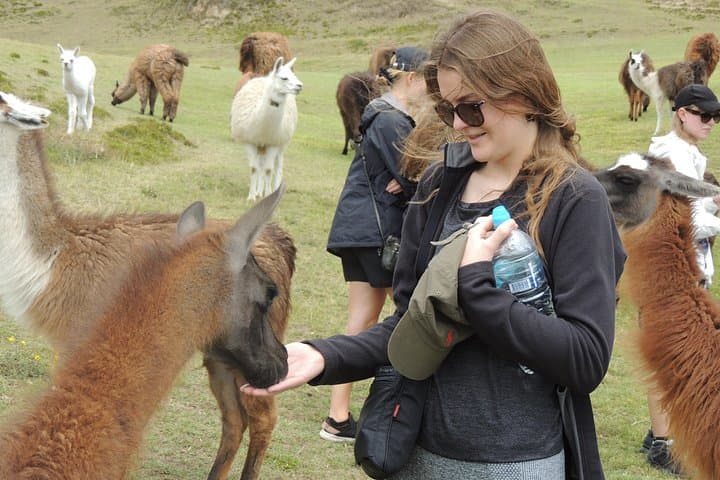
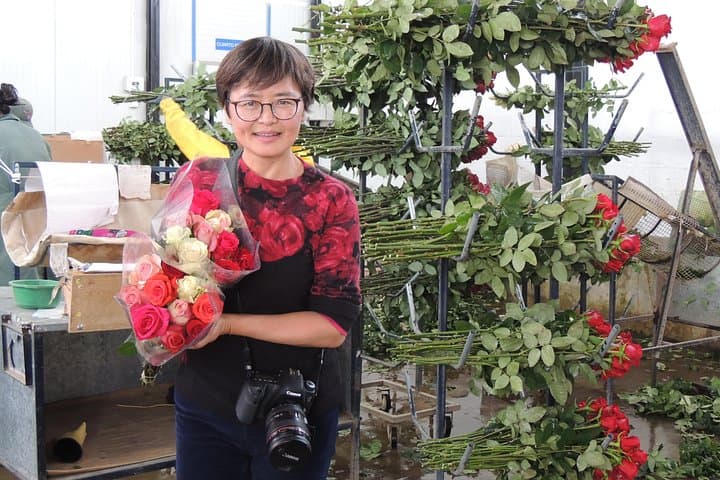
Expect hands-on experiences: walking among llamas at Cochasquí, touring a commercial rose plantation, visiting the Quitsato equatorial sundial, and watching master weavers in Peguche. Accommodation is a comfortable hacienda or local guesthouse with breakfast and one dinner included.
Practical guide: the itinerary covers uneven earth, short hikes, and market strolls at 2,500–3,000 m altitude — bring sun protection, a warm midlayer for evenings, and small bills for market purchases. Transportation is private and door-to-door from Quito, but roads can be winding; plan extra time for slow mountain driving.
This two-day run through northern Ecuador pairs cultural immersion with geological spectacle — efficient, textured, and paced for travelers who want context as well as views.
moderate.
2 days (approx. 48 hours).
Light to moderate fitness required: able to walk on uneven ground and handle short hikes at high altitude.
Yes — the tour includes private transport from Quito and returns you to your hotel at the end of day two.
Sites reach roughly 2,500–3,000 m; many travelers are fine but some experience mild symptoms—take it easy, hydrate, and notify your guide if you feel unwell.
The itinerary includes one night’s accommodation (hacienda or similar), breakfast, and one dinner; other meals are typically provided as noted in the itinerary.
Smaller vendors usually accept cash only; larger shops in Otavalo and Cotacachi may accept cards but it's best to carry local currency.
The area was shaped by pre-Columbian Caranqui societies and later by Spanish colonial haciendas such as Guachalá (16th century), creating a layered cultural landscape.
Support local artisans and established cooperatives to ensure income stays in the community; stick to paths around Cuicocha to protect fragile páramo vegetation.
Ecuador Best Tours operates guided outdoor trips and adventures with an emphasis on safety, stewardship, and memorable experiences.
You arrive before dawn to a highland road that climbs out of Quito’s smog and opens into green valleys, where volcanoes keep a steady watch and llamas graze like punctuation on the hills.
You arrive before dawn to a highland road that climbs out of Quito’s smog and opens into green valleys, where volcanoes keep a steady watch and llamas graze like punctuation on the hills.
Day one moves between ancient earthworks and colonial estates: Cochasquí’s stepped mounds let you feel pre-Columbian engineering underfoot, while Hacienda Guachalá — one of Ecuador’s oldest haciendas — frames the Spanish colonial legacy with stone courtyards and wood beams.
Geology here is blunt and recent. The Imbabura, Cotacachi and Cuicocha calderas were shaped by explosive eruptions; Cuicocha’s lake fills a volcanic crater and its islands rise like small, wind-buffed fortresses. Culture is immediate: Otavalo’s Kichwa people keep commercial weaving and market traditions alive in Plaza de Ponchos, where patterns act as social language and bargaining is part performance.
Expect hands-on experiences: walking among llamas at Cochasquí, touring a commercial rose plantation, visiting the Quitsato equatorial sundial, and watching master weavers in Peguche. Accommodation is a comfortable hacienda or local guesthouse with breakfast and one dinner included.
Practical guide: the itinerary covers uneven earth, short hikes, and market strolls at 2,500–3,000 m altitude — bring sun protection, a warm midlayer for evenings, and small bills for market purchases. Transportation is private and door-to-door from Quito, but roads can be winding; plan extra time for slow mountain driving.
This two-day run through northern Ecuador pairs cultural immersion with geological spectacle — efficient, textured, and paced for travelers who want context as well as views.