THE ADVENTURE COLLECTIVE® · Independent discovery and booking for outdoor travel

Two full days of Oaxaca’s highlights: Monte Albán’s plaza and tombs, artisan workshops, Mitla’s mosaic friezes, the petrified cascades at Hierve el Agua and a mezcal tasting. Expect long days, uneven terrain and high‑altitude vistas.
Two full days of Oaxaca’s highlights: Monte Albán’s plaza and tombs, artisan workshops, Mitla’s mosaic friezes, the petrified cascades at Hierve el Agua and a mezcal tasting. Expect long days, uneven terrain and high‑altitude vistas.
You step out of the van into thin, dry air and the city slips behind you—red tile roofs shrinking as roads climb toward plazas cut from stone. On day one the watchful platforms of Monte Albán rise from the valley floor; wind carries dust and the skeletons of ancient ballcourts dare you to imagine ceremonies that shaped Zapotec life.
Verified experiences and guided adventures in the surrounding area.
Operated by Circuitos por México · Oaxaca de Juárez, Oaxaca
You step out of the van into thin, dry air and the city slips behind you—red tile roofs shrinking as roads climb toward plazas cut from stone. On day one the watchful platforms of Monte Albán rise from the valley floor; wind carries dust and the skeletons of ancient ballcourts dare you to imagine ceremonies that shaped Zapotec life.
Monte Albán, founded around 500 BCE, served as a regional capital; its plazas, tombs and carved stelae give a direct line to pre‑Columbian social order. Nearby artisan villages—Arrazola’s painted copal alebrijes and San Bartolo Coyotepec’s burnished black pottery—show how raw materials and technique threaded past and present.
Day two turns toward Mitla’s precise fretwork—an architectural vocabulary unique in Mesoamerica—then toward Hierve el Agua, a set of mineral terraces and petrified cascades formed by groundwater rich in calcium carbonate. The vertiginous overlooks frame scrubland and the distant Sierra Madre; later, a mezcal palenque offers the vegetal heat of espadín and the smoky note of reposado.
Practical edge: expect long days of short walks on uneven stone and dusty paths, moderate altitude (1,500–2,200 m), and limited services at archaeological sites. Bring sun protection, at least 2 liters of water, sturdy shoes, and cash for small workshops and tastings. If you prefer slow frames for photography and private time with artisans, opt for the private version—shared groups average 12–15 people. This tour stitches cultural history to raw geology, best approached with curiosity and sensible gear.
moderate.
2 days (full days; roughly 8–10 hours each).
Suitable for travelers in average fitness who can manage several hours of walking on uneven ground and short uphill sections.
No; the tour description notes that admissions are not included for archaeological sites—bring cash or confirm payment details with the operator.
Expect 30–60 minutes to Monte Albán from Oaxaca City, and longer drives (up to 1.5–2 hours) toward Hierve el Agua depending on traffic and road conditions.
The itinerary is labeled physically easy, but uneven terrain and altitude mean those with mobility or serious health issues should opt for the private option or consult the operator first.
No—pregnant travelers are advised not to consume alcohol; if you’ll be driving afterward, limit tastings as mezcal is potent and local roads can be challenging.
Monte Albán was a major Zapotec center from about 500 BCE; Mitla later became an important Mixtec‑Zapotec ceremonial city noted for its intricate geometric mosaics.
Sites are vulnerable to erosion and foot traffic—stay on marked paths, avoid touching carved reliefs, and support local artisans directly to foster sustainable tourism.
Circuitos por México operates guided outdoor trips and adventures with an emphasis on safety, stewardship, and memorable experiences.
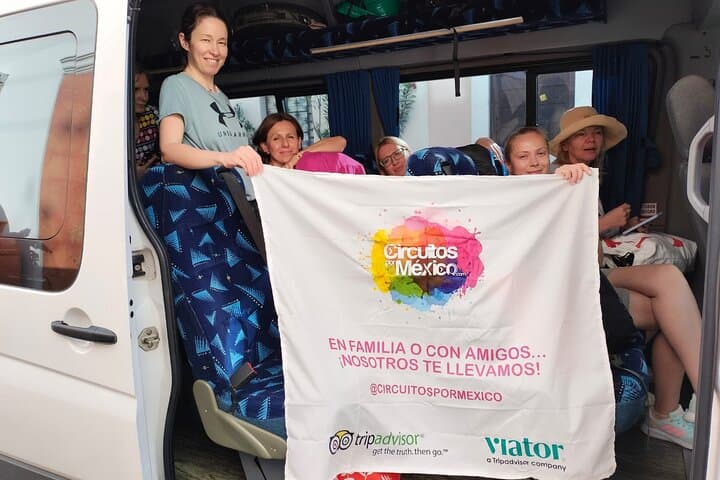
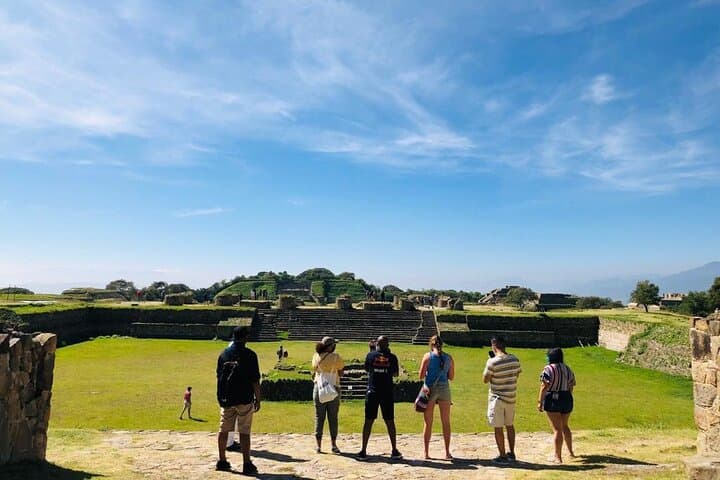
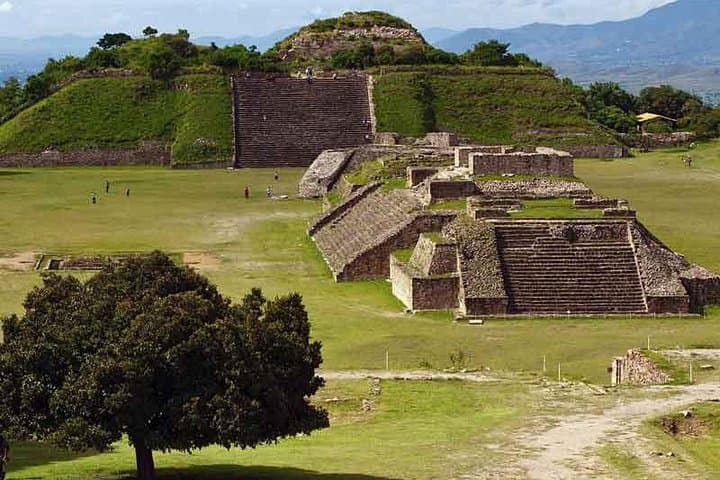

You step out of the van into thin, dry air and the city slips behind you—red tile roofs shrinking as roads climb toward plazas cut from stone. On day one the watchful platforms of Monte Albán rise from the valley floor; wind carries dust and the skeletons of ancient ballcourts dare you to imagine ceremonies that shaped Zapotec life.
You step out of the van into thin, dry air and the city slips behind you—red tile roofs shrinking as roads climb toward plazas cut from stone. On day one the watchful platforms of Monte Albán rise from the valley floor; wind carries dust and the skeletons of ancient ballcourts dare you to imagine ceremonies that shaped Zapotec life.
Monte Albán, founded around 500 BCE, served as a regional capital; its plazas, tombs and carved stelae give a direct line to pre‑Columbian social order. Nearby artisan villages—Arrazola’s painted copal alebrijes and San Bartolo Coyotepec’s burnished black pottery—show how raw materials and technique threaded past and present.
Day two turns toward Mitla’s precise fretwork—an architectural vocabulary unique in Mesoamerica—then toward Hierve el Agua, a set of mineral terraces and petrified cascades formed by groundwater rich in calcium carbonate. The vertiginous overlooks frame scrubland and the distant Sierra Madre; later, a mezcal palenque offers the vegetal heat of espadín and the smoky note of reposado.
Practical edge: expect long days of short walks on uneven stone and dusty paths, moderate altitude (1,500–2,200 m), and limited services at archaeological sites. Bring sun protection, at least 2 liters of water, sturdy shoes, and cash for small workshops and tastings. If you prefer slow frames for photography and private time with artisans, opt for the private version—shared groups average 12–15 people. This tour stitches cultural history to raw geology, best approached with curiosity and sensible gear.