THE ADVENTURE COLLECTIVE® · Independent discovery and booking for outdoor travel

A compact 2-day trip from Hanoi that combines UNESCO-listed Trang An boat caves, a 500-step climb at Hang Mua for Tam Coc panoramas, and an afternoon boat through Thung Nham’s bird valley. Ideal for travelers who want karst scenery, temples, and easy wildlife viewing with one overnight.
A compact 2-day trip from Hanoi that combines UNESCO-listed Trang An boat caves, a 500-step climb at Hang Mua for Tam Coc panoramas, and an afternoon boat through Thung Nham’s bird valley. Ideal for travelers who want karst scenery, temples, and easy wildlife viewing with one overnight.
The bus eases out of Hanoi at first light and the limestone karsts of Ninh Binh appear like cliffs waking from sleep—green faces, river veins, and rice fields stretching between them.
Verified experiences and guided adventures in the surrounding area.
Operated by LOCAL TOURS VIETNAM · Tam Coc, Ninh Binh Province
The bus eases out of Hanoi at first light and the limestone karsts of Ninh Binh appear like cliffs waking from sleep—green faces, river veins, and rice fields stretching between them.
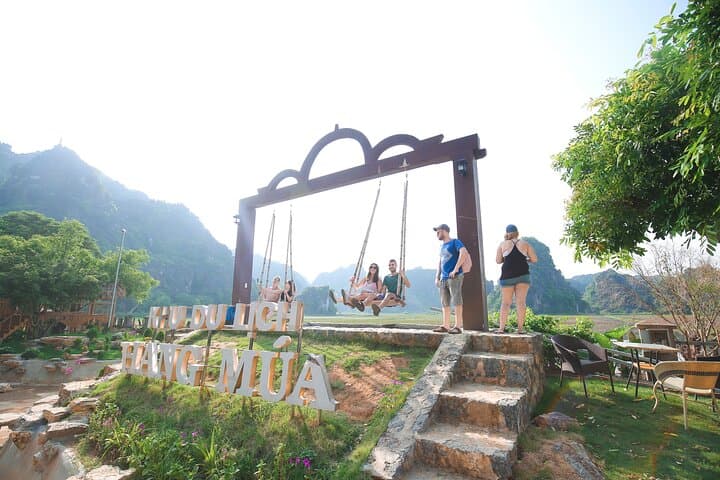
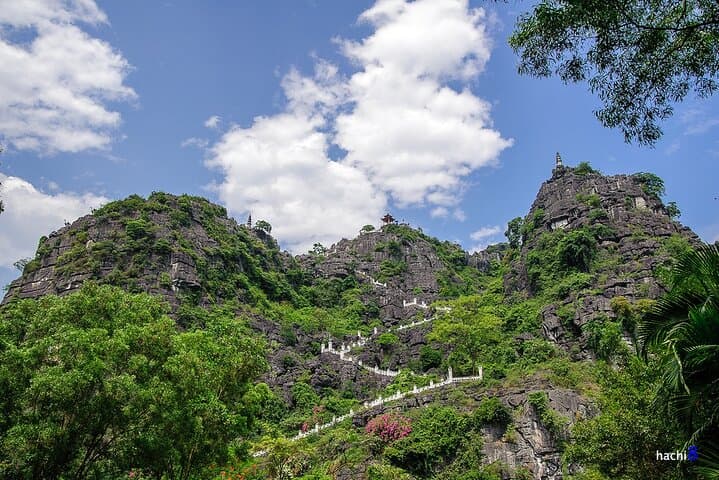
Over two days you move through layers: Hoa Lư’s compact ruins recall Vietnam’s 10th–11th century capitals; Trang An’s boat tunnels carve through a karst maze formed by millennia of river erosion; and Hang Mua (Mua Cave) rewards a climb of roughly 500 stone steps with a sweeping panorama across the Tam Coc floodplain. Evenings are spent in a bungalow or homestay where local cooking centers on goat, river fish, and seasonal greens.
Geology here is obvious—the region is Permian to Triassic limestone worn into caves, pinnacles and subterranean passages. Culturally the area blends rural rice-farming life with centuries-old pagodas like Bich Dong and smaller temple complexes at Thai Vi.
Day two shifts tone: a morning bike ride to temples, then a small-sampan trip through Thung Nham Bird Park where thousands of waterbirds gather in the late afternoon; this is best seen in calm light with quiet paddling.
Practical guidance: be ready for uneven steps and short boat transfers, bring a refillable water bottle, and plan to move at a steady, moderate pace. Mornings and late afternoons are cooler and best for photography and bird activity. Wear shoes with grip for steps and a light rain layer in wet months. With basic fitness and steady shoes, this two-day loop delivers cultural sites, karst panoramas, and close-up wildlife viewing without technical demands.
moderate.
2 days (1 night).
Suitable for travelers with basic fitness; includes up to 500 steps and short cycling on flat village roads
The transfer is about 2–2.5 hours each way depending on traffic; the itinerary includes a mid-journey break.
Yes—boats are shallow sampans rowed by guides; children should wear caution and stay seated during tunnels and narrow passages.
Yes; local restaurants and the provided buffet normally accommodate vegetarian requests if noted in advance.
Expect roughly 500 uneven stone steps—short but steep in sections; take breaks if needed and allow 30–45 minutes round-trip.
Hoa Lư served as Vietnam’s capital in the 10th–11th centuries under the Đinh and Lê dynasties; many temples on the tour commemorate those early rulers.
Tourism in Trang An and Thung Nham is managed to limit motorized traffic on waterways and protect nesting birds; visitors should avoid littering and stick to marked docks and paths.
LOCAL TOURS VIETNAM operates guided outdoor trips and adventures with an emphasis on safety, stewardship, and memorable experiences.


The bus eases out of Hanoi at first light and the limestone karsts of Ninh Binh appear like cliffs waking from sleep—green faces, river veins, and rice fields stretching between them.
The bus eases out of Hanoi at first light and the limestone karsts of Ninh Binh appear like cliffs waking from sleep—green faces, river veins, and rice fields stretching between them.
Over two days you move through layers: Hoa Lư’s compact ruins recall Vietnam’s 10th–11th century capitals; Trang An’s boat tunnels carve through a karst maze formed by millennia of river erosion; and Hang Mua (Mua Cave) rewards a climb of roughly 500 stone steps with a sweeping panorama across the Tam Coc floodplain. Evenings are spent in a bungalow or homestay where local cooking centers on goat, river fish, and seasonal greens.
Geology here is obvious—the region is Permian to Triassic limestone worn into caves, pinnacles and subterranean passages. Culturally the area blends rural rice-farming life with centuries-old pagodas like Bich Dong and smaller temple complexes at Thai Vi.
Day two shifts tone: a morning bike ride to temples, then a small-sampan trip through Thung Nham Bird Park where thousands of waterbirds gather in the late afternoon; this is best seen in calm light with quiet paddling.
Practical guidance: be ready for uneven steps and short boat transfers, bring a refillable water bottle, and plan to move at a steady, moderate pace. Mornings and late afternoons are cooler and best for photography and bird activity. Wear shoes with grip for steps and a light rain layer in wet months. With basic fitness and steady shoes, this two-day loop delivers cultural sites, karst panoramas, and close-up wildlife viewing without technical demands.