THE ADVENTURE COLLECTIVE® · Independent discovery and booking for outdoor travel

See penguins and sea lions at the Ballestas, toast pisco in Ica, and surf some of South America’s largest dunes in Huacachina — then finish with a scenic flight over the mysterious Nazca Lines. This compact two-day loop packs wildlife, culture, and high-adrenaline sandboarding into one seamless escape from Lima.
See penguins and sea lions at the Ballestas, toast pisco in Ica, and surf some of South America’s largest dunes in Huacachina — then finish with a scenic flight over the mysterious Nazca Lines. This compact two-day loop packs wildlife, culture, and high-adrenaline sandboarding into one seamless escape from Lima.
The bus leaves Lima before sunrise and the Pacific cliffs slide past like a slower heartbeat — gulls keep pace, the ocean daring you to look away. By midmorning you’ll be skimming across choppy water toward the Ballestas Islands, where sea lions lounge on black rock and Humboldt penguins dart like punctuation marks. The desert takes over thereafter: low scrub, wind-swept dunes, and the sudden palm-ringed mirror of Huacachina. Dune buggies launch up the sand and sandboards push you toward a clean, fast descent; the dunes seem to push back with equal enthusiasm.
Verified experiences and guided adventures in the surrounding area.
Operated by Peru Hop · Ica, Ica Region
The bus leaves Lima before sunrise and the Pacific cliffs slide past like a slower heartbeat — gulls keep pace, the ocean daring you to look away. By midmorning you’ll be skimming across choppy water toward the Ballestas Islands, where sea lions lounge on black rock and Humboldt penguins dart like punctuation marks. The desert takes over thereafter: low scrub, wind-swept dunes, and the sudden palm-ringed mirror of Huacachina. Dune buggies launch up the sand and sandboards push you toward a clean, fast descent; the dunes seem to push back with equal enthusiasm.
This loop threads natural history with human craft: the Ballestas sit inside an ecologically rich coastal reserve, the Ica valley has shaped Peru’s pisco industry for centuries, and the Nazca Lines — etched between 500 BCE and 500 CE — remain one of the most intriguing examples of large-scale geoglyphs. Nearby Cantalloc aqueducts show pre-Incan hydraulic ingenuity carved to capture scarce desert groundwater.
Practical notes: bring your passport for the Nazca flight check-in and expect weight limits; motion-sickness remedies help on both speedboats and small aircraft. Footwear should handle sand and short hikes; layers cope with coastal garúa mornings and strong sun by afternoon. Hydrate often in the desert heat, and follow guides’ safety briefings for buggies and boarding. Wildlife-viewing regulations are strict — keep distance, don’t feed animals, and carry out waste. Two days is compact but efficient: it’s both sightseeing and hands-on adventure, paced to leave time for tasting pisco, snapping geoglyph silhouettes from the sky, and surfing sand with a grin.
moderate.
2 days.
Suitable for travelers in average physical condition; includes short walks, sandboarding, and boarding small aircraft; stair-free but active
Yes — original passport required at check-in for the flight over the Nazca Lines; keep it accessible.
Yes — passengers over approximately 95 kg may need to pay for an extra seat; operators enforce aircraft weight restrictions for safety.
No — instructors provide basic technique and most first-timers manage short runs; choose a beginner slope or sit-down style if preferred.
Expect reliable sightings of sea lions and seabird colonies; penguin sightings are common but not guaranteed, and dolphins are occasional visitors.
The Nazca Lines were created between roughly 500 BCE and 500 CE; the Ica valley has produced pisco and viticulture since colonial times, building on indigenous grape cultivation.
Ballestas and Paracas are protected areas with rules to minimize disturbance to marine wildlife; avoid touching geoglyphs, stay on designated paths, and pack out trash to protect fragile desert and coastal ecosystems.
Peru Hop operates guided outdoor trips and adventures with an emphasis on safety, stewardship, and memorable experiences.
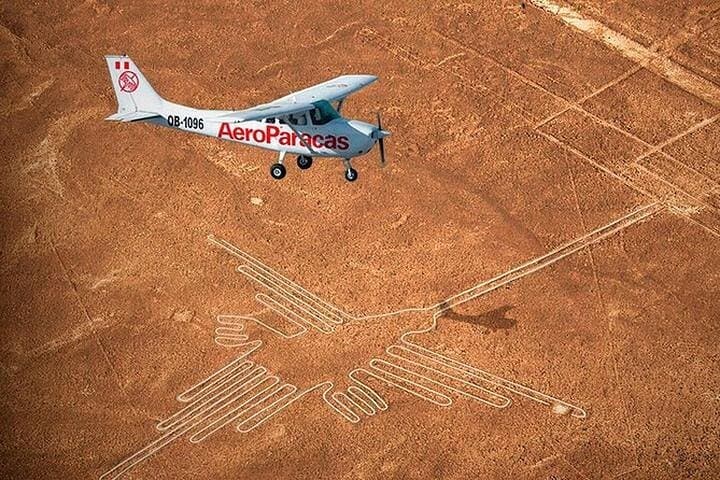
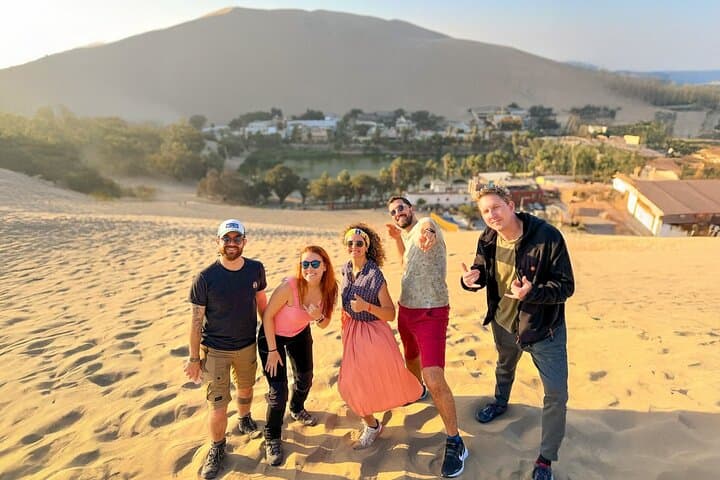
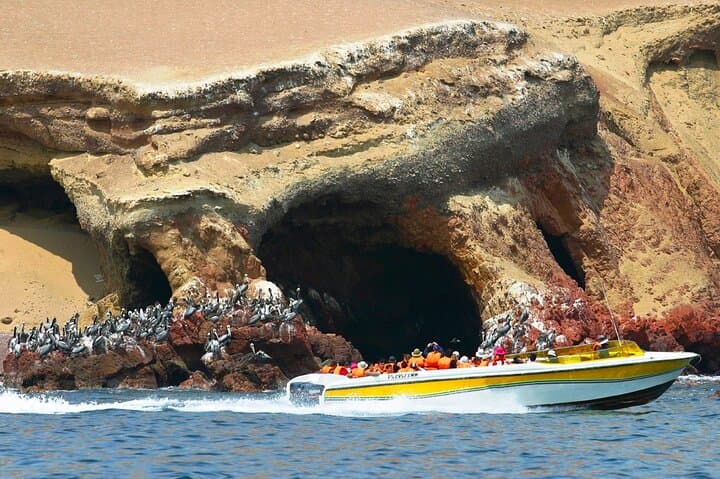

The bus leaves Lima before sunrise and the Pacific cliffs slide past like a slower heartbeat — gulls keep pace, the ocean daring you to look away. By midmorning you’ll be skimming across choppy water toward the Ballestas Islands, where sea lions lounge on black rock and Humboldt penguins dart like punctuation marks. The desert takes over thereafter: low scrub, wind-swept dunes, and the sudden palm-ringed mirror of Huacachina. Dune buggies launch up the sand and sandboards push you toward a clean, fast descent; the dunes seem to push back with equal enthusiasm.
The bus leaves Lima before sunrise and the Pacific cliffs slide past like a slower heartbeat — gulls keep pace, the ocean daring you to look away. By midmorning you’ll be skimming across choppy water toward the Ballestas Islands, where sea lions lounge on black rock and Humboldt penguins dart like punctuation marks. The desert takes over thereafter: low scrub, wind-swept dunes, and the sudden palm-ringed mirror of Huacachina. Dune buggies launch up the sand and sandboards push you toward a clean, fast descent; the dunes seem to push back with equal enthusiasm.
This loop threads natural history with human craft: the Ballestas sit inside an ecologically rich coastal reserve, the Ica valley has shaped Peru’s pisco industry for centuries, and the Nazca Lines — etched between 500 BCE and 500 CE — remain one of the most intriguing examples of large-scale geoglyphs. Nearby Cantalloc aqueducts show pre-Incan hydraulic ingenuity carved to capture scarce desert groundwater.
Practical notes: bring your passport for the Nazca flight check-in and expect weight limits; motion-sickness remedies help on both speedboats and small aircraft. Footwear should handle sand and short hikes; layers cope with coastal garúa mornings and strong sun by afternoon. Hydrate often in the desert heat, and follow guides’ safety briefings for buggies and boarding. Wildlife-viewing regulations are strict — keep distance, don’t feed animals, and carry out waste. Two days is compact but efficient: it’s both sightseeing and hands-on adventure, paced to leave time for tasting pisco, snapping geoglyph silhouettes from the sky, and surfing sand with a grin.