THE ADVENTURE COLLECTIVE® · Independent discovery and booking for outdoor travel

A brisk two-day ascent from Imlil to Jebel Toubkal offers raw High Atlas scenery, a night at the mountain refuge, and a pre-dawn summit push. This guide explains what to expect on the trails, local culture, and how to prepare for altitude and scree.
A brisk two-day ascent from Imlil to Jebel Toubkal offers raw High Atlas scenery, a night at the mountain refuge, and a pre-dawn summit push. This guide explains what to expect on the trails, local culture, and how to prepare for altitude and scree.
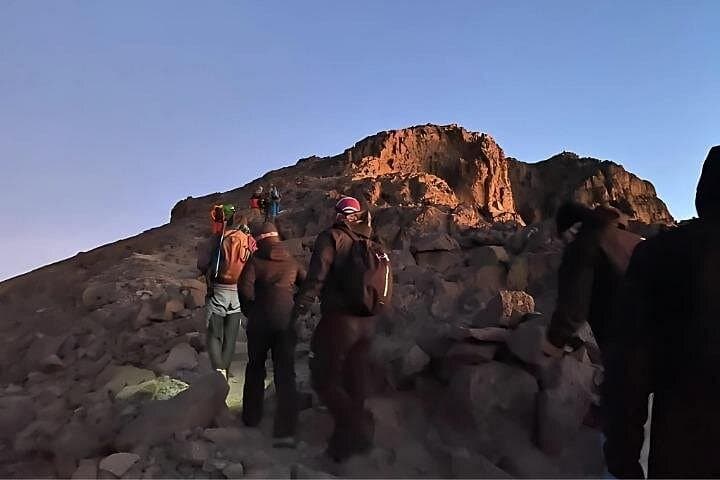
A cold dawn in the High Atlas lifts the world into hard light: mule tracks cut through frost, and guides fall into a steady rhythm as the valley exhales behind them.
Verified experiences and guided adventures in the surrounding area.
Operated by Sun SKy Camp · Imlil, Marrakech-Safi
A cold dawn in the High Atlas lifts the world into hard light: mule tracks cut through frost, and guides fall into a steady rhythm as the valley exhales behind them.
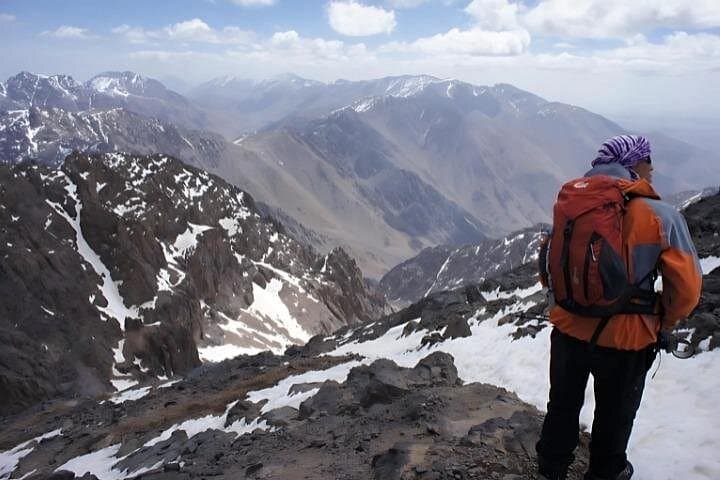
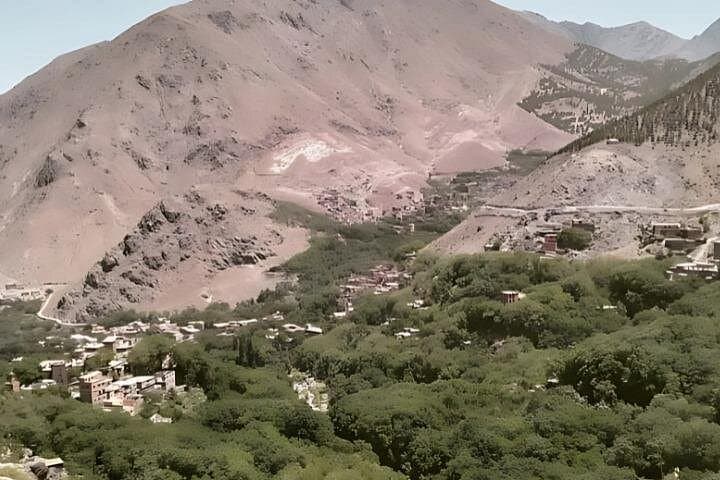
This 2-day, 1-night trek from Marrakech begins in Imlil and climbs the Mizane Valley to the Toubkal Refuge (3,206 m), then makes an early push to Jebel Toubkal (4,165 m). The route threads terraced Berber farms, a sacred spring at Sidi Chamarouch, and the south cirque’s loose scree before giving way to a broad summit plateau with views that sweep from the Marrakech plain to the Sahara’s rim.
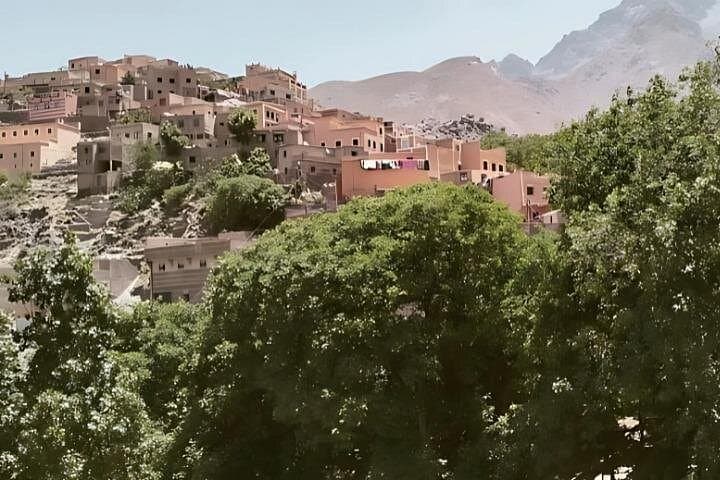
Geology here is stark: folded, uplifted Mesozoic and Precambrian rock scoured into sharp cirques and boulder fields. Culturally, the trail runs through villages where Amazigh (Berber) agriculture and hospitality remain central—shared tea, mountain cuisine and refuge dorms are part of the experience.
Practically, expect steep switchbacks, sections of unstable scree and thin air above 3,000 m; the ascent typically takes 5–6 hours to the refuge and 4–6 hours for the summit day round-trip. Accommodation is basic at the refuge; guides supply route knowledge, language support, and logistics. Hydration, sun protection, sturdy boots and trekking poles materially improve comfort and safety.
Timing matters: start pre-dawn for the summit push, allow minutes for acclimatization, and plan for rapidly changing weather—sun to wind-driven snow can happen in hours. For fit, prepared hikers, the reward is a clear, high-angle panorama and a direct encounter with one of North Africa’s most iconic peaks.
challenging.
2 days (approx. 10–12 hours hiking total).
Good cardiovascular fitness and experience with steep mountain hiking; ability to carry a daypack for long uphill sections.
Summit day is long and exposed to altitude and scree; expect 4–6 hours round-trip from the refuge with sustained uphill and loose footing.
Guides are strongly recommended for safety, route knowledge and logistics; no official permits are required for the standard south cirque route but local regulations and refuge booking apply.
The refuge offers basic shared dorms and communal meals—comfortable for trekkers but not luxury; bring a warm sleeping layer.
Spring to early autumn are the most common; winter requires snow skills and equipment and is only for experienced, well-equipped parties.
The High Atlas has been inhabited and terraced by Amazigh (Berber) communities for centuries; the trail passes villages with longstanding pastoral and agricultural traditions.
Stick to existing trails, carry out all waste, and respect grazing zones—rising visitation stresses fragile alpine soils and water sources.
Sun SKy Camp operates guided outdoor trips and adventures with an emphasis on safety, stewardship, and memorable experiences.
A cold dawn in the High Atlas lifts the world into hard light: mule tracks cut through frost, and guides fall into a steady rhythm as the valley exhales behind them.
A cold dawn in the High Atlas lifts the world into hard light: mule tracks cut through frost, and guides fall into a steady rhythm as the valley exhales behind them.
This 2-day, 1-night trek from Marrakech begins in Imlil and climbs the Mizane Valley to the Toubkal Refuge (3,206 m), then makes an early push to Jebel Toubkal (4,165 m). The route threads terraced Berber farms, a sacred spring at Sidi Chamarouch, and the south cirque’s loose scree before giving way to a broad summit plateau with views that sweep from the Marrakech plain to the Sahara’s rim.
Geology here is stark: folded, uplifted Mesozoic and Precambrian rock scoured into sharp cirques and boulder fields. Culturally, the trail runs through villages where Amazigh (Berber) agriculture and hospitality remain central—shared tea, mountain cuisine and refuge dorms are part of the experience.
Practically, expect steep switchbacks, sections of unstable scree and thin air above 3,000 m; the ascent typically takes 5–6 hours to the refuge and 4–6 hours for the summit day round-trip. Accommodation is basic at the refuge; guides supply route knowledge, language support, and logistics. Hydration, sun protection, sturdy boots and trekking poles materially improve comfort and safety.
Timing matters: start pre-dawn for the summit push, allow minutes for acclimatization, and plan for rapidly changing weather—sun to wind-driven snow can happen in hours. For fit, prepared hikers, the reward is a clear, high-angle panorama and a direct encounter with one of North Africa’s most iconic peaks.