THE ADVENTURE COLLECTIVE® · Independent discovery and booking for outdoor travel

Head out from Tokyo for a private, customizable 2-day trip that drops you at Mt. Fuji’s 5th station for a night ascent to watch sunrise from the summit, then eases into Hakone’s volcanic sights and Lake Ashi. Expect volcanic scree, big elevation gain and an unforgettable dawn.
Head out from Tokyo for a private, customizable 2-day trip that drops you at Mt. Fuji’s 5th station for a night ascent to watch sunrise from the summit, then eases into Hakone’s volcanic sights and Lake Ashi. Expect volcanic scree, big elevation gain and an unforgettable dawn.
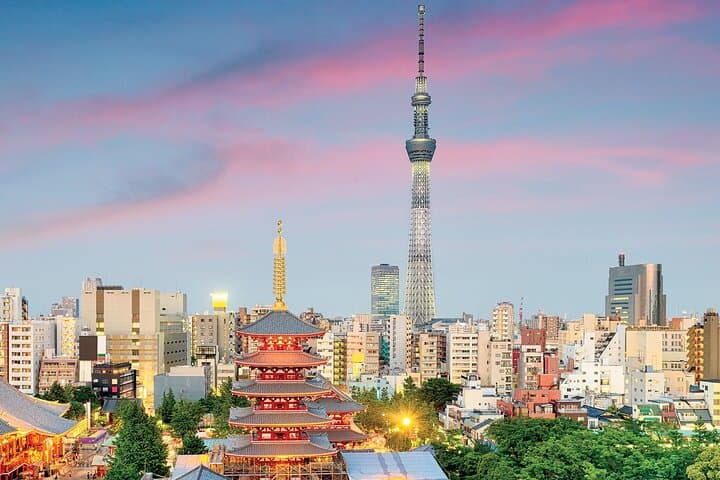
The driver eases out of Tokyo's neon grid before dawn, headlights cutting through the thinning city air. Asphalt gives way to cedar-scented highway and then to the low clouds that cling to Mount Fuji like a loose shroud. You're dropped at a 5th station—roughly 2,300 meters above sea level—with a headlamp and a plan: hike up through volcanic grit and switchbacks in the dark, time your final steps for the sun as it pries the peak out of night, then sleep and return to Hakone for a softer day of hot springs and a pirate-ship cruise on Lake Ashi.
Verified experiences and guided adventures in the surrounding area.
Operated by Live Nippon · Fujinomiya, Shizuoka
The driver eases out of Tokyo's neon grid before dawn, headlights cutting through the thinning city air. Asphalt gives way to cedar-scented highway and then to the low clouds that cling to Mount Fuji like a loose shroud. You're dropped at a 5th station—roughly 2,300 meters above sea level—with a headlamp and a plan: hike up through volcanic grit and switchbacks in the dark, time your final steps for the sun as it pries the peak out of night, then sleep and return to Hakone for a softer day of hot springs and a pirate-ship cruise on Lake Ashi.
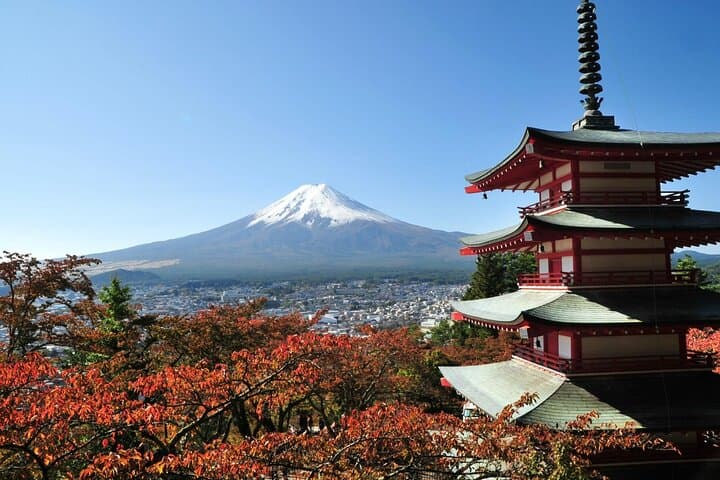
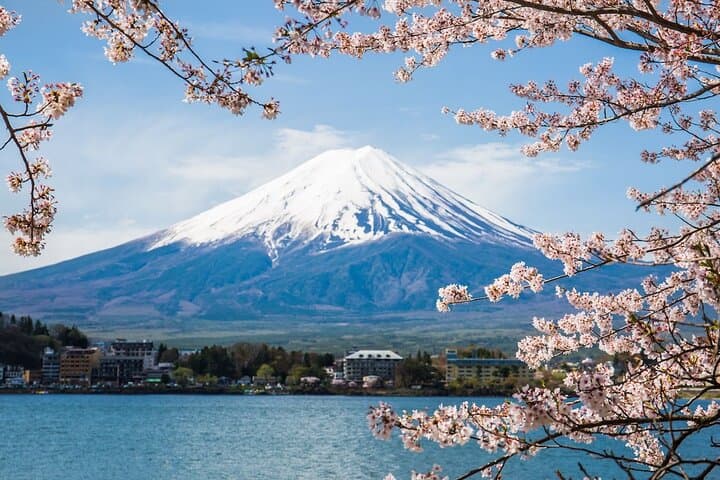
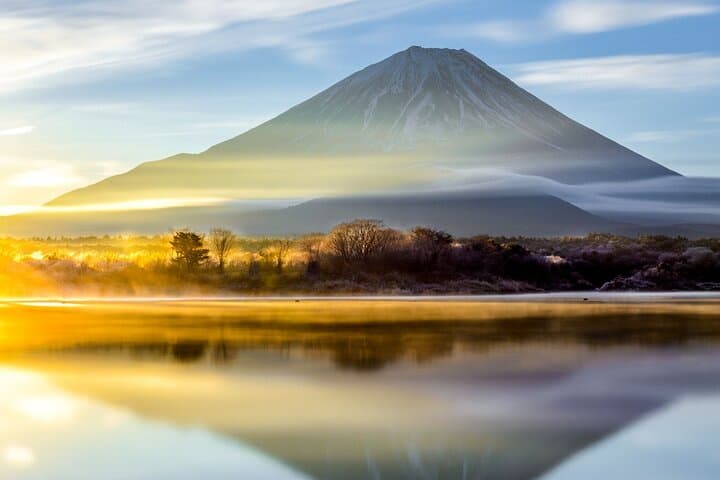
Mount Fuji is not an anonymous peak. Japan's highest mountain (3,776 m) is a young stratovolcano with a cone sharpened by eruptions over the last 10,000 years. The area around Fuji has shaped local culture for centuries: pilgrims made the climb in wooden sandals, artists painted its profile from the lakes, and villages like Oshino Hakkai revere the mountain's filtered springwater. Geologically, the ascent from the 5th station to the summit is a climb over layers of ash, lava, and compacted cinders that give way to loose scree near the crater rim.
Expect a physically straightforward but high-altitude hike: roughly 7–8 km one-way with about 1,400–1,500 meters of elevation gain from the common 5th-station trail to the top. Terrain alternates between stone steps, packed volcanic soil and unstable scree; in the last kilometer the slope steepens and wind often becomes the loudest companion. The itinerary pairs the strenuous night climb and sunrise on the crater with a second-day circuit through Hakone’s volcanic valleys—Owakudani’s sulfurous steam, a panoramic pagoda viewpoint, and a calm cruise on Lake Ashi.
Practical edge: climb during official season (early July–early September) unless you have technical winter gear and local permits—outside that window routes are icy and risky. Plan for altitude: hydrate, sleep well the night before, and carry layers. A typical plan is a 4–7 hour ascent at a steady pace, 2–4 hour descent, then a hotel pick-up the next morning. Footwear with aggressive tread and a sturdy ankle, trekking poles to manage scree, and a reliable headlamp for the night section are non-negotiable.
This trip gives you Tokyo hotel pickup and private transport, letting you trade subway crowds for the contracted quiet of a mountain road. If you want the classic sunrise, aim for a late-evening start from the 5th station and expect cold on the summit even in summer—the mountain keeps its own climate. After the climb, swap crampons for a sweater and enjoy Hakone’s gentler landscapes: steaming vents, lakes, and the chance to look back at the enormous, silent cone you just climbed.
challenging.
2 days (overnight ascent & day 2 sightseeing).
Good aerobic fitness and experience with sustained uphill hiking; comfortable moving 6–8 hours with a pack.
No special permit is required during official climbing season, but follow local rules and trail closures; operator handles drop-off and pickup logistics.
Moderate to high fitness—expect a sustained uphill hike of 4–7 hours with about 1,400–1,500 m gain from the 5th station to the summit.
The operator notes stroller access for some parts but the summit hike is strenuous and not recommended for young children; check with the provider for child policies.
Clear views are most common in early morning and on calm autumn days; weather on Fuji can change rapidly, so plan flexibility.
The cancellation policy allows refunds if the provider cancels (e.g., bad weather); the trip may be rescheduled if possible.
This itinerary typically involves a night ascent from the 5th station to reach the summit for sunrise, then a vehicle pickup and return—overnight camping is not part of the standard plan.
Fuji has been a pilgrimage site since at least the Edo period; wooden votive tablets and historical guideposts mark routes locals used for centuries.
Stick to marked trails to reduce erosion on fragile volcanic soils; local programs limit climbing numbers and support hut waste management during peak season.
Live Nippon operates guided outdoor trips and adventures with an emphasis on safety, stewardship, and memorable experiences.
The driver eases out of Tokyo's neon grid before dawn, headlights cutting through the thinning city air. Asphalt gives way to cedar-scented highway and then to the low clouds that cling to Mount Fuji like a loose shroud. You're dropped at a 5th station—roughly 2,300 meters above sea level—with a headlamp and a plan: hike up through volcanic grit and switchbacks in the dark, time your final steps for the sun as it pries the peak out of night, then sleep and return to Hakone for a softer day of hot springs and a pirate-ship cruise on Lake Ashi.
The driver eases out of Tokyo's neon grid before dawn, headlights cutting through the thinning city air. Asphalt gives way to cedar-scented highway and then to the low clouds that cling to Mount Fuji like a loose shroud. You're dropped at a 5th station—roughly 2,300 meters above sea level—with a headlamp and a plan: hike up through volcanic grit and switchbacks in the dark, time your final steps for the sun as it pries the peak out of night, then sleep and return to Hakone for a softer day of hot springs and a pirate-ship cruise on Lake Ashi.
Mount Fuji is not an anonymous peak. Japan's highest mountain (3,776 m) is a young stratovolcano with a cone sharpened by eruptions over the last 10,000 years. The area around Fuji has shaped local culture for centuries: pilgrims made the climb in wooden sandals, artists painted its profile from the lakes, and villages like Oshino Hakkai revere the mountain's filtered springwater. Geologically, the ascent from the 5th station to the summit is a climb over layers of ash, lava, and compacted cinders that give way to loose scree near the crater rim.
Expect a physically straightforward but high-altitude hike: roughly 7–8 km one-way with about 1,400–1,500 meters of elevation gain from the common 5th-station trail to the top. Terrain alternates between stone steps, packed volcanic soil and unstable scree; in the last kilometer the slope steepens and wind often becomes the loudest companion. The itinerary pairs the strenuous night climb and sunrise on the crater with a second-day circuit through Hakone’s volcanic valleys—Owakudani’s sulfurous steam, a panoramic pagoda viewpoint, and a calm cruise on Lake Ashi.
Practical edge: climb during official season (early July–early September) unless you have technical winter gear and local permits—outside that window routes are icy and risky. Plan for altitude: hydrate, sleep well the night before, and carry layers. A typical plan is a 4–7 hour ascent at a steady pace, 2–4 hour descent, then a hotel pick-up the next morning. Footwear with aggressive tread and a sturdy ankle, trekking poles to manage scree, and a reliable headlamp for the night section are non-negotiable.
This trip gives you Tokyo hotel pickup and private transport, letting you trade subway crowds for the contracted quiet of a mountain road. If you want the classic sunrise, aim for a late-evening start from the 5th station and expect cold on the summit even in summer—the mountain keeps its own climate. After the climb, swap crampons for a sweater and enjoy Hakone’s gentler landscapes: steaming vents, lakes, and the chance to look back at the enormous, silent cone you just climbed.