THE ADVENTURE COLLECTIVE® · Independent discovery and booking for outdoor travel

Take a guided overnight ascent of Mount Fuji from Tokyo, sleeping at a mountain lodge and restarting around 1:00 a.m. to reach the summit for sunrise. This two-day itinerary pairs local guiding with practical logistics to help climbers manage altitude, terrain, and timing.
Take a guided overnight ascent of Mount Fuji from Tokyo, sleeping at a mountain lodge and restarting around 1:00 a.m. to reach the summit for sunrise. This two-day itinerary pairs local guiding with practical logistics to help climbers manage altitude, terrain, and timing.
Fog thins as the bus winds up from Tokyo and a cone of black volcanic rock rises into the sky — Mount Fuji’s profile dominates the horizon, patient and indifferent. At the fifth station, groups tighten packs and lace boots; your guide, local and experienced, outlines the climb before the first steps onto gravel and pumice.
Verified experiences and guided adventures in the surrounding area.
Operated by Shin · Fujiyoshida, Yamanashi
Fog thins as the bus winds up from Tokyo and a cone of black volcanic rock rises into the sky — Mount Fuji’s profile dominates the horizon, patient and indifferent. At the fifth station, groups tighten packs and lace boots; your guide, local and experienced, outlines the climb before the first steps onto gravel and pumice.
Fuji is a young stratovolcano carved by lava flows and ash; its iconic symmetry has been a focus of Shinto reverence and artistic imagination for centuries. The Yoshida Trail used on many guided ascents follows old pilgrimage paths, moving from forested lower slopes into the high alpine zone where scrub gives way to scree and basalt talus.
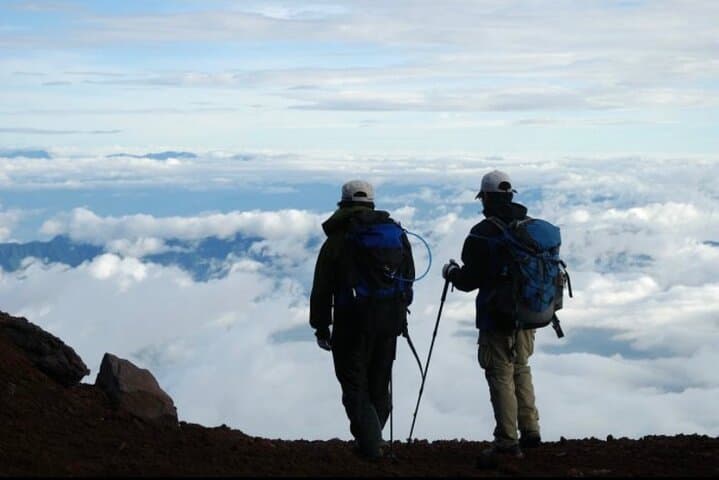
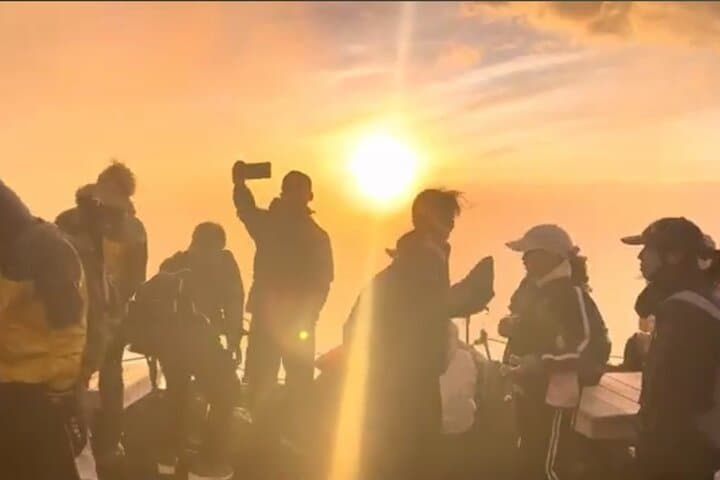
Expect varied terrain: compacted trail, loose volcanic sand that tests footing, and steeper stone steps near the summit. The overnight lodge at the 7th–8th station shortens the final push, enabling a 1:00 a.m. restart to catch sunrise above a rim of cloud. Altitude climbs fast here — at 3,776 m the air is thin and pace, hydration, and resting matter.
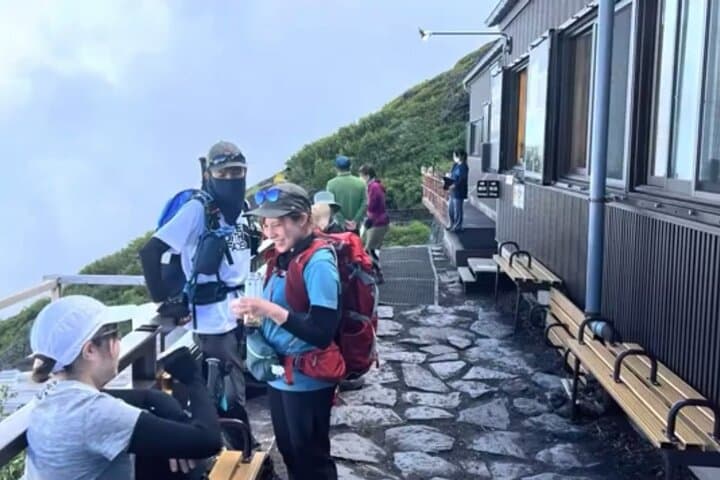
Practically: the tour runs from Shinjuku with bus transfers, included meals at the lodge, and a Japanese mountain guide standing by at the fifth station. Bring a headlamp, layered windproof clothing, sturdy boots, and blister care. There’s a small fee to walk the crater rim with a guide; reserve it if you want the full summit circuit. Timing your ascent to arrive before dawn reduces crowds and rewards a clear, rising sun that spills light across valleys and the Pacific beyond.
challenging.
2 days (climb: ~5–8 hours day 1; 2–4 hours night ascent; 3–4 hours descent).
Suitable for hikers with regular aerobic activity and experience on sustained uphill terrain; be prepared for high-altitude strain.
The official summer season typically runs early July to early September when mountain huts and services operate and trails are safest.
Altitude can affect anyone above ~2,500–3,000 m; symptoms include headache and nausea — slow pacing, hydration, and rest at the lodge help mitigate risk.
No technical climbing experience is required, but you should be comfortable with long uphill hikes and have moderate fitness.
The standard summit includes access, but the guided walk around the crater rim may require an additional fee (approximately 1,000 yen) as noted by the operator.
Mount Fuji has been a sacred site and pilgrimage destination for centuries; the modern trail network follows routes used by Edo-period worshippers.
High-season limits and visitor facilities concentrate impact; stick to marked trails, pack out trash, and use established toilets at stations to protect fragile alpine soils.
Shin operates guided outdoor trips and adventures with an emphasis on safety, stewardship, and memorable experiences.
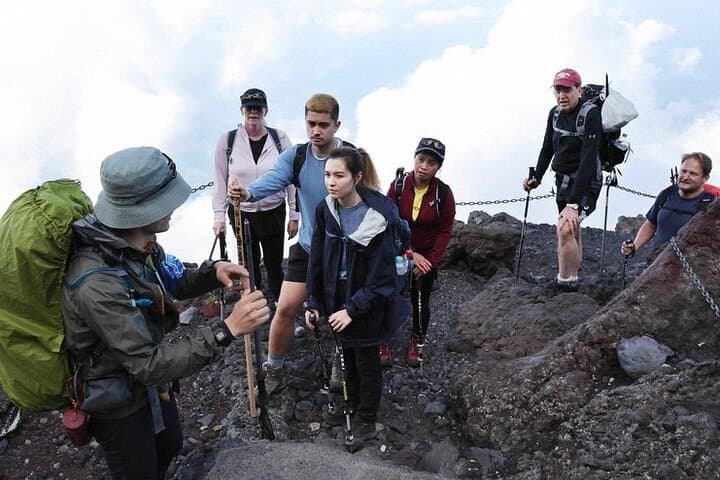
Fog thins as the bus winds up from Tokyo and a cone of black volcanic rock rises into the sky — Mount Fuji’s profile dominates the horizon, patient and indifferent. At the fifth station, groups tighten packs and lace boots; your guide, local and experienced, outlines the climb before the first steps onto gravel and pumice.
Fog thins as the bus winds up from Tokyo and a cone of black volcanic rock rises into the sky — Mount Fuji’s profile dominates the horizon, patient and indifferent. At the fifth station, groups tighten packs and lace boots; your guide, local and experienced, outlines the climb before the first steps onto gravel and pumice.
Fuji is a young stratovolcano carved by lava flows and ash; its iconic symmetry has been a focus of Shinto reverence and artistic imagination for centuries. The Yoshida Trail used on many guided ascents follows old pilgrimage paths, moving from forested lower slopes into the high alpine zone where scrub gives way to scree and basalt talus.
Expect varied terrain: compacted trail, loose volcanic sand that tests footing, and steeper stone steps near the summit. The overnight lodge at the 7th–8th station shortens the final push, enabling a 1:00 a.m. restart to catch sunrise above a rim of cloud. Altitude climbs fast here — at 3,776 m the air is thin and pace, hydration, and resting matter.
Practically: the tour runs from Shinjuku with bus transfers, included meals at the lodge, and a Japanese mountain guide standing by at the fifth station. Bring a headlamp, layered windproof clothing, sturdy boots, and blister care. There’s a small fee to walk the crater rim with a guide; reserve it if you want the full summit circuit. Timing your ascent to arrive before dawn reduces crowds and rewards a clear, rising sun that spills light across valleys and the Pacific beyond.