THE ADVENTURE COLLECTIVE® · Independent discovery and booking for outdoor travel

Two days from Marrakesh brings you to the summit of Jebel Toubkal (4,167 m) via Imlil and the Toubkal Refuge. Expect rocky mule tracks, scree sections, and sunrise summit views stretching from the High Atlas to the Sahara.
Two days from Marrakesh brings you to the summit of Jebel Toubkal (4,167 m) via Imlil and the Toubkal Refuge. Expect rocky mule tracks, scree sections, and sunrise summit views stretching from the High Atlas to the Sahara.
You step out of the minibus as the Marrakech light thins and the road opens into a valley that pulls you toward the mountains. The drive to Imlil takes roughly 1 hour 40 minutes; from the village the trail climbs a mix of mule tracks, rocky steps and open scree. By late afternoon you reach the Toubkal Refuge where conversation fades into the wind and the crags sharpen against the sky.
Verified experiences and guided adventures in the surrounding area.
Operated by Toubkal Tours With Mohamed · Imlil, Marrakesh-Safi
You step out of the minibus as the Marrakech light thins and the road opens into a valley that pulls you toward the mountains. The drive to Imlil takes roughly 1 hour 40 minutes; from the village the trail climbs a mix of mule tracks, rocky steps and open scree. By late afternoon you reach the Toubkal Refuge where conversation fades into the wind and the crags sharpen against the sky.
The High Atlas is geologically young—folded and uplifted by the African and Eurasian plates—so the ridgelines are sharp and the rock is often broken, a landscape shaped by glacier and runoff. Culturally the route threads small Berber villages such as Aremd and the shrine of Sidi Chamarouch, where local agriculture and mountain hospitality have sustained guides and muleteers for generations.
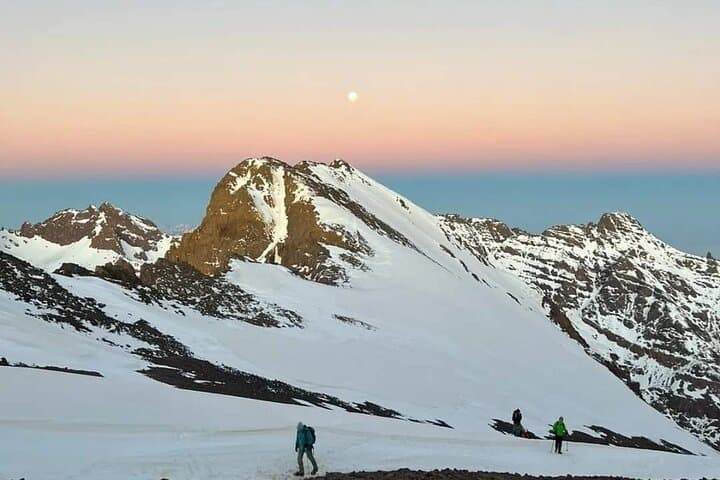
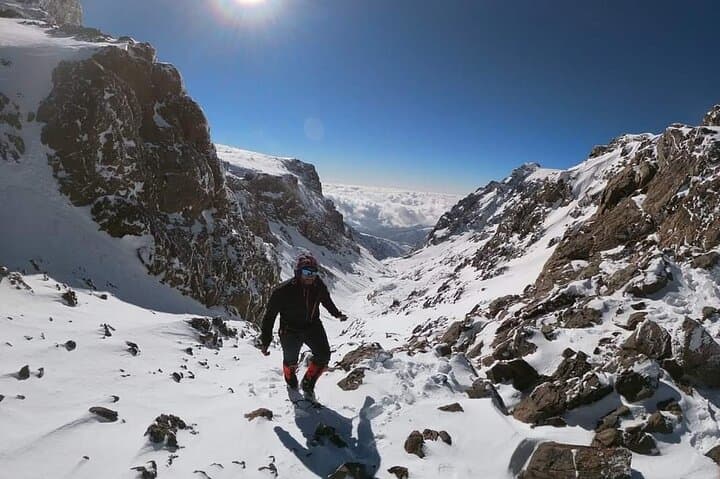
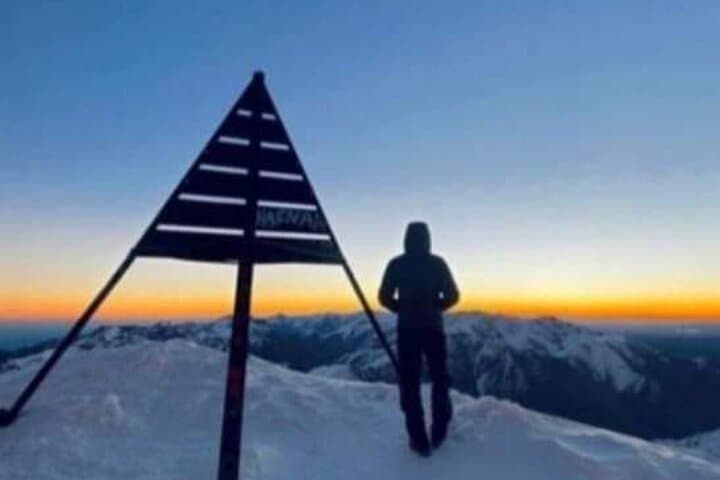
On day two you move before dawn. The summit is 4,167 m; expect roughly 3 hours up from the refuge across loose rock and high ridgelines, with 2 hours to descend. The views are expansive: the Marrakech plain to the north, the Anti-Atlas and desert hints to the south.
Practical guidance: hydrate and pace for altitude; wear sturdy boots with good ankle support and traction for scree; layer for rapid temperature swings—mornings are cold even in summer. Reserve transport and refuge lodging in advance and carry cash for local tips and tea. If you have a moderate to strong level of fitness and some experience on loose alpine terrain, this two-day trek delivers a concentrated, achievable summit with authentic mountain culture and wide, wind-cut views.
challenging.
10–12 hours (hiking spread over 2 days).
Good aerobic fitness with experience on sustained uphill hikes; comfortable on loose, uneven terrain and basic high-altitude exposure.
Day 1 is about 4–6 hours from Imlil to Toubkal Refuge; day 2 is roughly 3 hours up to the summit and 2 hours to descend back to Imlil, depending on pace and conditions.
Yes—local guides are included and recommended for route finding, safety on scree, and cultural context.
The refuge provides basic accommodations and meals; personal gear (boots, layers, poles) is your responsibility.
The summit reaches 4,167 m; symptoms can include headache, nausea, or dizziness — move slowly, hydrate, and communicate any issues to your guide immediately.
Berber communities have used these passes for centuries; the High Atlas route around Toubkal has long connected mountain farms to Marrakech markets.
Stick to established trails to limit erosion on fragile alpine soils; support local guides and refuges who contribute to low-impact tourism and trail maintenance.
Toubkal Tours With Mohamed operates guided outdoor trips and adventures with an emphasis on safety, stewardship, and memorable experiences.
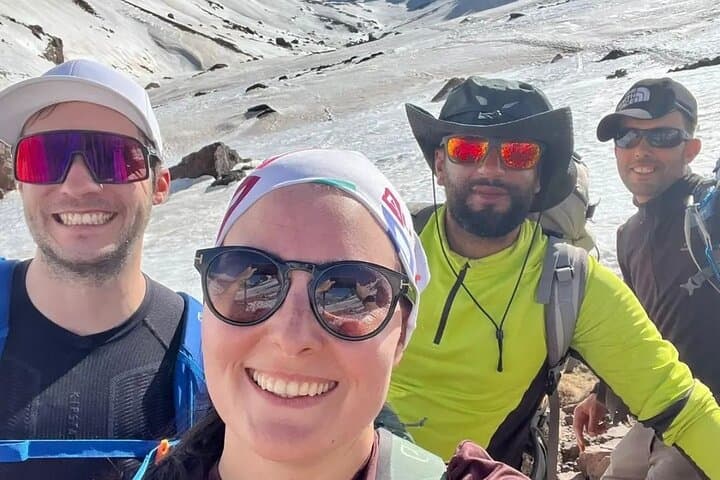
You step out of the minibus as the Marrakech light thins and the road opens into a valley that pulls you toward the mountains. The drive to Imlil takes roughly 1 hour 40 minutes; from the village the trail climbs a mix of mule tracks, rocky steps and open scree. By late afternoon you reach the Toubkal Refuge where conversation fades into the wind and the crags sharpen against the sky.
You step out of the minibus as the Marrakech light thins and the road opens into a valley that pulls you toward the mountains. The drive to Imlil takes roughly 1 hour 40 minutes; from the village the trail climbs a mix of mule tracks, rocky steps and open scree. By late afternoon you reach the Toubkal Refuge where conversation fades into the wind and the crags sharpen against the sky.
The High Atlas is geologically young—folded and uplifted by the African and Eurasian plates—so the ridgelines are sharp and the rock is often broken, a landscape shaped by glacier and runoff. Culturally the route threads small Berber villages such as Aremd and the shrine of Sidi Chamarouch, where local agriculture and mountain hospitality have sustained guides and muleteers for generations.
On day two you move before dawn. The summit is 4,167 m; expect roughly 3 hours up from the refuge across loose rock and high ridgelines, with 2 hours to descend. The views are expansive: the Marrakech plain to the north, the Anti-Atlas and desert hints to the south.
Practical guidance: hydrate and pace for altitude; wear sturdy boots with good ankle support and traction for scree; layer for rapid temperature swings—mornings are cold even in summer. Reserve transport and refuge lodging in advance and carry cash for local tips and tea. If you have a moderate to strong level of fitness and some experience on loose alpine terrain, this two-day trek delivers a concentrated, achievable summit with authentic mountain culture and wide, wind-cut views.