THE ADVENTURE COLLECTIVE® · Independent discovery and booking for outdoor travel

A compact, two-day guided ascent of Jebel Toubkal from Marrakech with an overnight at Neltner Refuge. Expect steep trails, loose scree, alpine weather and panoramic summit views over the High Atlas.
A compact, two-day guided ascent of Jebel Toubkal from Marrakech with an overnight at Neltner Refuge. Expect steep trails, loose scree, alpine weather and panoramic summit views over the High Atlas.
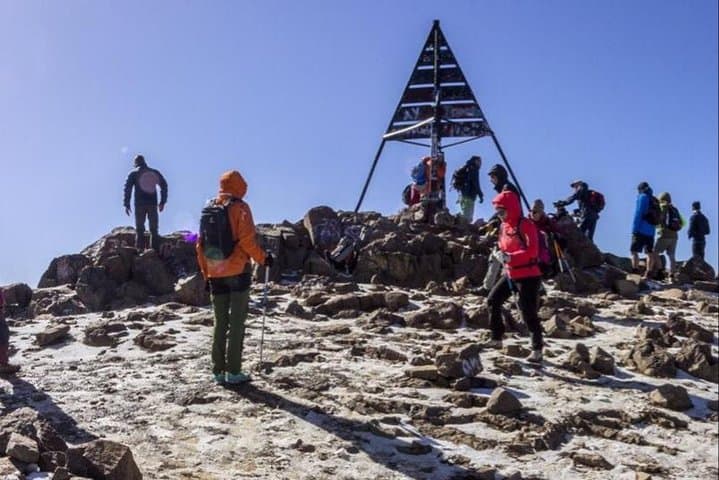
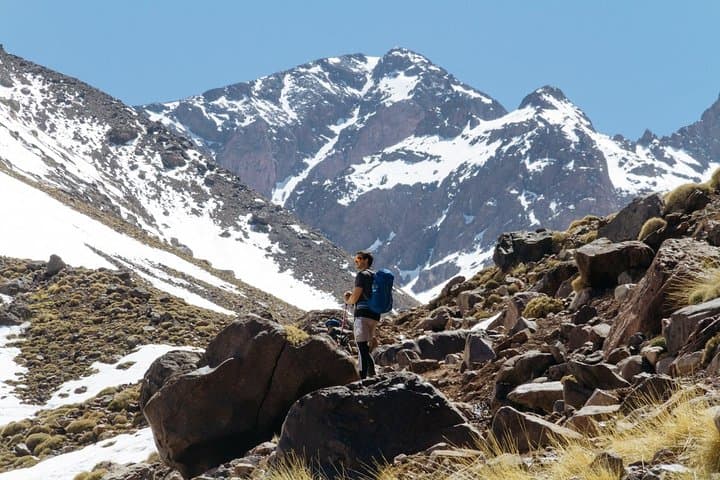
At dawn the High Atlas shows itself in planes of ochre and shale, and the trail from Imlil threads upward under cedar and rock. On this two-day itinerary climbers move from village paths into the alpine gut of the mountains, reaching the Neltner Refuge before an early summit push to Jebel Toubkal (4,167 m). The ridge and final scree test balance and leg strength; weather and altitude shape pace more than distance.
Verified experiences and guided adventures in the surrounding area.
Operated by Imlil Treks Toubkal · Imlil, Marrakech-Safi
At dawn the High Atlas shows itself in planes of ochre and shale, and the trail from Imlil threads upward under cedar and rock. On this two-day itinerary climbers move from village paths into the alpine gut of the mountains, reaching the Neltner Refuge before an early summit push to Jebel Toubkal (4,167 m). The ridge and final scree test balance and leg strength; weather and altitude shape pace more than distance.
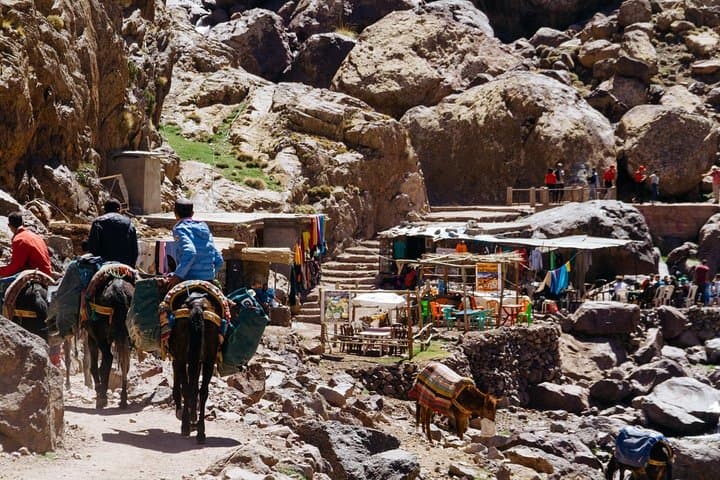
Geologically Toubkal is carved from ancient metamorphic and igneous rock; the massif forms the highest point of North Africa and acts as a climatic divide between the Atlantic-influenced valleys and the drier ranges to the south. Culturally the route climbs through Berber hamlets where terraces and stone houses reflect centuries of mountain life; mules and local guides remain central to moving supplies and knowledge up the slopes.
On the practical side, the first day is a steady 5–6 hour ascent to ~3,200 m to sleep at the refuge; the second day is a 8–9 hour round trip with an alpine dawn start, a summit visit of roughly 20–40 minutes and a descent back to Imlil. Expect loose scree, steep switchbacks and a thin-air finish—altitude acclimatization and good footwear are decisive. Guides manage logistics and arrange mule support for luggage on groups of four or more. Hikers should pack layers, sun protection, and at least 2–3 liters of water, and be prepared for rapidly changing weather on the ridge. The experience rewards effort with broad views over the Atlas, occasional desert glimpses and an encounter with a mountain that demands steady feet and respect.
challenging.
2 days.
Participants should have good cardiovascular fitness and leg strength for long ascents and descents; prior multi-day trekking experience is helpful.
No technical mountaineering is required on the normal route, but hikers should be comfortable with steep, loose terrain and have good endurance for long days at altitude.
Moderate to high fitness: expect 5–9 hours of walking on consecutive days with significant elevation gain; prior multi-day treks help.
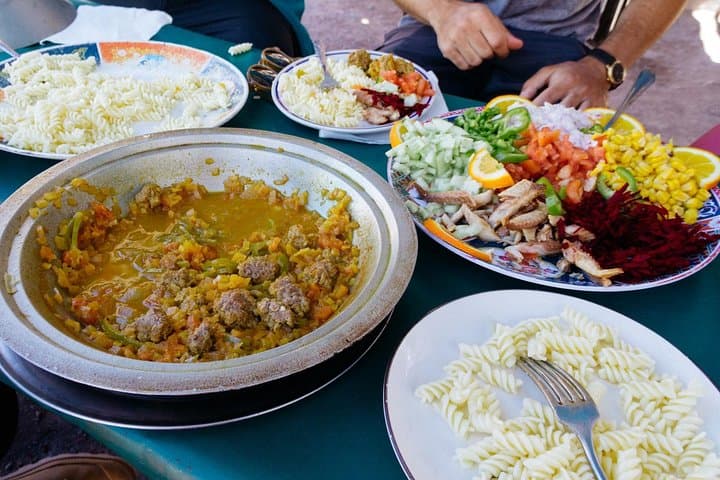
Yes—the Neltner Refuge at about 3,200 m provides basic dormitory accommodation and meals; tents may be used depending on conditions.
High winds, snow or storms can delay summit attempts; guides monitor conditions and may adjust the itinerary for safety.
The High Atlas have been inhabited by Berber communities for millennia; Toubkal has long served as a seasonal grazing boundary and a landmark for trans-Saharan routes.
Toubkal National Park faces pressures from trekking waste and overgrazing; stick to trails, pack out rubbish and support local guides and refuges that practice low-impact tourism.
Imlil Treks Toubkal operates guided outdoor trips and adventures with an emphasis on safety, stewardship, and memorable experiences.
At dawn the High Atlas shows itself in planes of ochre and shale, and the trail from Imlil threads upward under cedar and rock. On this two-day itinerary climbers move from village paths into the alpine gut of the mountains, reaching the Neltner Refuge before an early summit push to Jebel Toubkal (4,167 m). The ridge and final scree test balance and leg strength; weather and altitude shape pace more than distance.
At dawn the High Atlas shows itself in planes of ochre and shale, and the trail from Imlil threads upward under cedar and rock. On this two-day itinerary climbers move from village paths into the alpine gut of the mountains, reaching the Neltner Refuge before an early summit push to Jebel Toubkal (4,167 m). The ridge and final scree test balance and leg strength; weather and altitude shape pace more than distance.
Geologically Toubkal is carved from ancient metamorphic and igneous rock; the massif forms the highest point of North Africa and acts as a climatic divide between the Atlantic-influenced valleys and the drier ranges to the south. Culturally the route climbs through Berber hamlets where terraces and stone houses reflect centuries of mountain life; mules and local guides remain central to moving supplies and knowledge up the slopes.
On the practical side, the first day is a steady 5–6 hour ascent to ~3,200 m to sleep at the refuge; the second day is a 8–9 hour round trip with an alpine dawn start, a summit visit of roughly 20–40 minutes and a descent back to Imlil. Expect loose scree, steep switchbacks and a thin-air finish—altitude acclimatization and good footwear are decisive. Guides manage logistics and arrange mule support for luggage on groups of four or more. Hikers should pack layers, sun protection, and at least 2–3 liters of water, and be prepared for rapidly changing weather on the ridge. The experience rewards effort with broad views over the Atlas, occasional desert glimpses and an encounter with a mountain that demands steady feet and respect.