THE ADVENTURE COLLECTIVE® · Independent discovery and booking for outdoor travel

Climb North Africa’s highest peak on a compact, supported 2-day trek from Marrakech. Expect steep, rocky trails, Berber hospitality at the refuge, and summit views stretching from Marrakech to the edge of the Sahara.
Climb North Africa’s highest peak on a compact, supported 2-day trek from Marrakech. Expect steep, rocky trails, Berber hospitality at the refuge, and summit views stretching from Marrakech to the edge of the Sahara.
A cold dawn in the High Atlas pushes pale light across stony ridgelines as climbers leave the refuge for the final pitch to Toubkal’s summit. The valley of Imlil falls away beneath you; terraces and whitewashed Berber houses shrink into a patchwork. By midmorning, the world opens — sweeping views north toward Marrakech and, on clear days, the distant hint of Sahara to the south.
Verified experiences and guided adventures in the surrounding area.
Operated by Morocco guided trek · Imlil, Marrakech-Safi
A cold dawn in the High Atlas pushes pale light across stony ridgelines as climbers leave the refuge for the final pitch to Toubkal’s summit. The valley of Imlil falls away beneath you; terraces and whitewashed Berber houses shrink into a patchwork. By midmorning, the world opens — sweeping views north toward Marrakech and, on clear days, the distant hint of Sahara to the south.
Geologically, Toubkal is part of the High Atlas uplift — hardened sedimentary and metamorphic rock carved by glacial action in the Pleistocene. The human story here is equally durable: Berber villages have shepherded these slopes for centuries, and mule tracks remain the arteries of travel. Guides on this route combine local knowledge with practical support: muleteers, a cook, and a refuge stay simplify logistics and put culture on the trail.
Practically, the 2-day itinerary covers a long day of ascent to the refuge (5–6 hours) and an early summit push on day two to 4,167 m, followed by descent and transfer back to Marrakech. Terrain is steep, rocky and, in winter, icy — crampons and ice axes may be used. Expect narrow trails, short loose scree sections and easy scrambling near the crest. Hydration, steady pacing and layered clothing matter more than speed. Aim to start early to avoid afternoon wind and to take advantage of stable morning weather.
This is non-technical mountaineering: rewarding, straightforward, and reliant on good planning — a compact high-mountain experience that delivers wide panoramas and an immediate sense of place.
challenging.
2 days.
Good aerobic fitness with prior day-hiking experience; ability to handle long ascents and 4,000+m exposure.
The ascent to Toubkal is non-technical; expect steep trekking with short sections of easy scrambling—no rope work required under normal conditions.
Prior long-day hiking experience is recommended; while not technical, the altitude (4,167 m) and long hours demand good fitness and acclimatization.
Operators may cancel or adjust the itinerary for safety—snow, high winds or poor visibility can delay summit attempts; cancellation policies often allow refunds if made in advance.
Most itineraries depart from Marrakech with a 1.5–2 hour transfer to Imlil; the route returns to Marrakech after descent on day two.
Berber communities have inhabited the High Atlas for centuries; mule tracks used here trace traditional trade routes between mountain villages and Marrakech.
The High Atlas faces pressure from overgrazing and seasonal tourism; stick to established trails, pack out waste, and favor local guides who support community conservation.
Morocco guided trek operates guided outdoor trips and adventures with an emphasis on safety, stewardship, and memorable experiences.
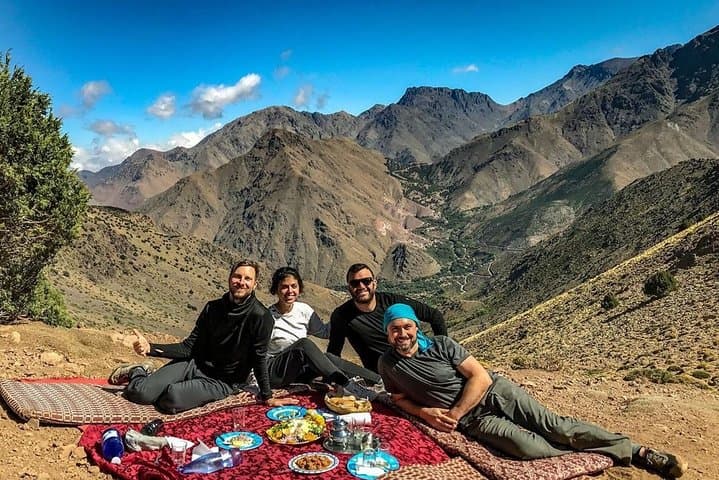
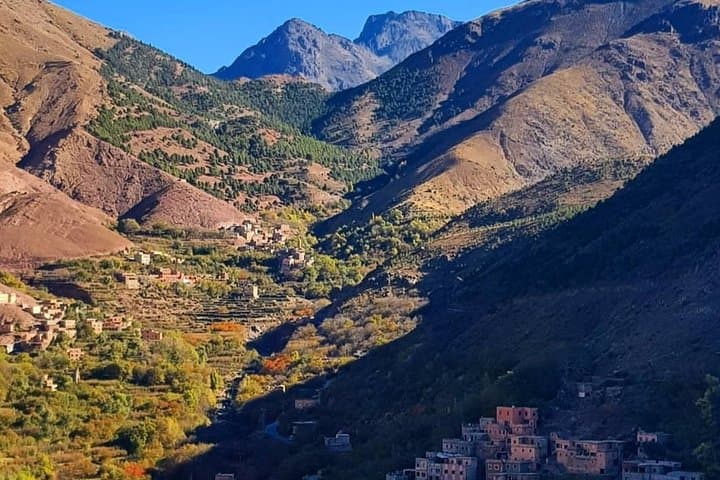
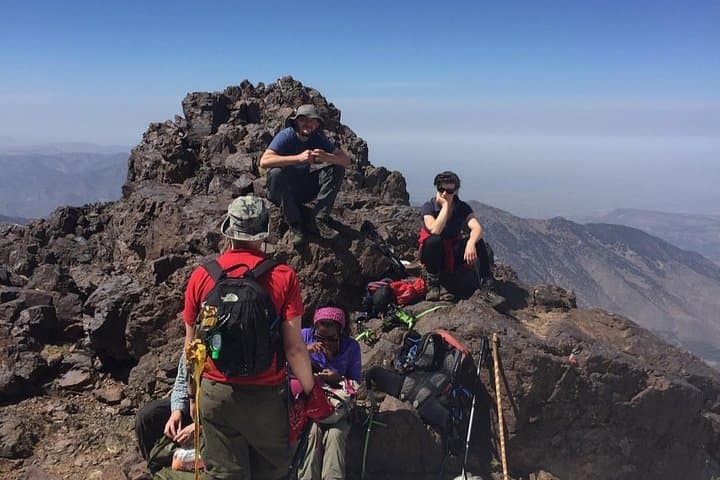
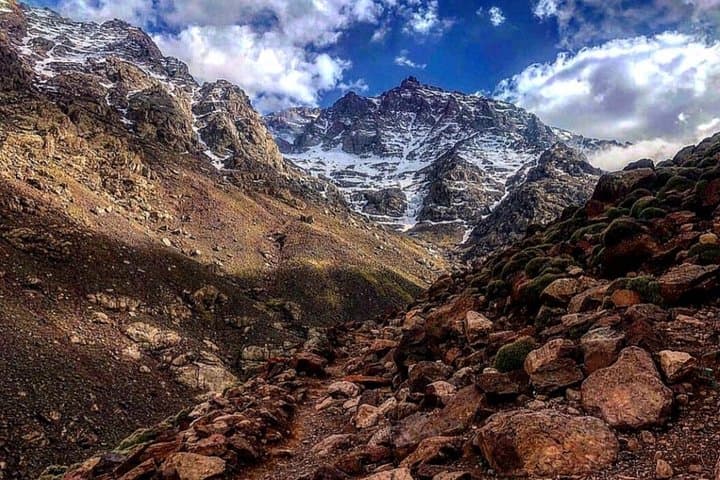
A cold dawn in the High Atlas pushes pale light across stony ridgelines as climbers leave the refuge for the final pitch to Toubkal’s summit. The valley of Imlil falls away beneath you; terraces and whitewashed Berber houses shrink into a patchwork. By midmorning, the world opens — sweeping views north toward Marrakech and, on clear days, the distant hint of Sahara to the south.
A cold dawn in the High Atlas pushes pale light across stony ridgelines as climbers leave the refuge for the final pitch to Toubkal’s summit. The valley of Imlil falls away beneath you; terraces and whitewashed Berber houses shrink into a patchwork. By midmorning, the world opens — sweeping views north toward Marrakech and, on clear days, the distant hint of Sahara to the south.
Geologically, Toubkal is part of the High Atlas uplift — hardened sedimentary and metamorphic rock carved by glacial action in the Pleistocene. The human story here is equally durable: Berber villages have shepherded these slopes for centuries, and mule tracks remain the arteries of travel. Guides on this route combine local knowledge with practical support: muleteers, a cook, and a refuge stay simplify logistics and put culture on the trail.
Practically, the 2-day itinerary covers a long day of ascent to the refuge (5–6 hours) and an early summit push on day two to 4,167 m, followed by descent and transfer back to Marrakech. Terrain is steep, rocky and, in winter, icy — crampons and ice axes may be used. Expect narrow trails, short loose scree sections and easy scrambling near the crest. Hydration, steady pacing and layered clothing matter more than speed. Aim to start early to avoid afternoon wind and to take advantage of stable morning weather.
This is non-technical mountaineering: rewarding, straightforward, and reliant on good planning — a compact high-mountain experience that delivers wide panoramas and an immediate sense of place.