THE ADVENTURE COLLECTIVE® · Independent discovery and booking for outdoor travel

A two-day, ranger-led trek to the 4,507 m summit of Mount Karisimbi through montane forest and alpine heath. Overnight camping, high-altitude conditions and sweeping Virunga views reward fit hikers.
A two-day, ranger-led trek to the 4,507 m summit of Mount Karisimbi through montane forest and alpine heath. Overnight camping, high-altitude conditions and sweeping Virunga views reward fit hikers.
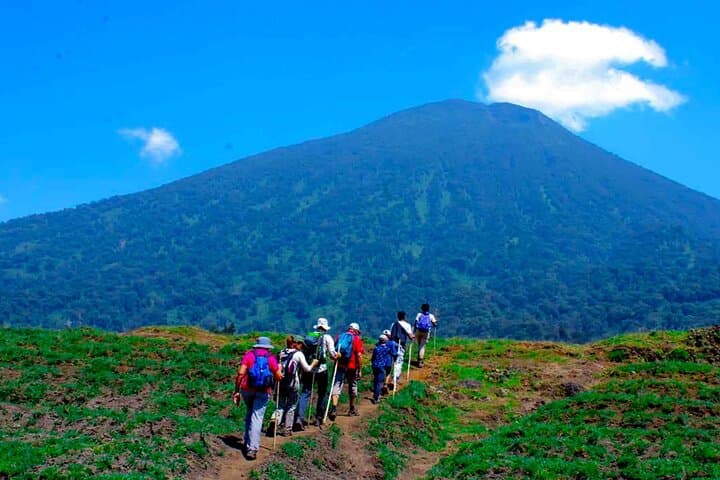
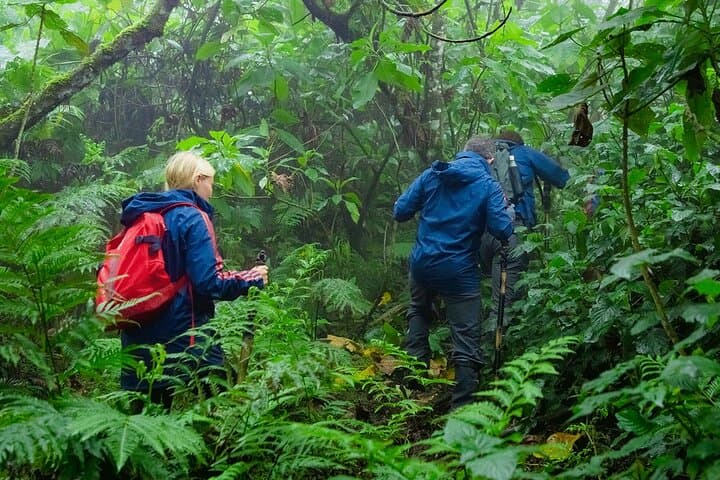
Dawn breaks over the Virunga ridgeline as the convoy slides away from Musanze and the trailhead. Cool air bites at your cheeks and the forest opens into steep switchbacks; the volcano rises, a dark shoulder against the waking sky, daring you upward.
Verified experiences and guided adventures in the surrounding area.
Operated by Silverbird Tours Agency · Musanze, Northern Province
Dawn breaks over the Virunga ridgeline as the convoy slides away from Musanze and the trailhead. Cool air bites at your cheeks and the forest opens into steep switchbacks; the volcano rises, a dark shoulder against the waking sky, daring you upward.
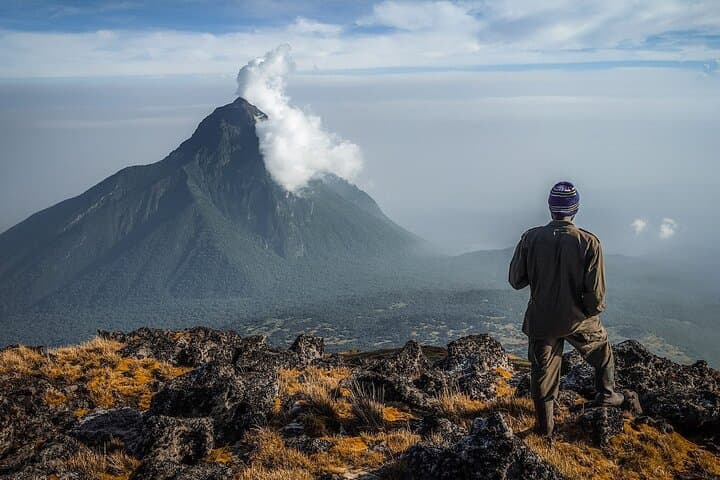
Karisimbi stands at 4,507 m — the tallest of the eight major Virunga volcanoes — a product of the East African Rift's restless geology. The route climbs through montane forest, giving way to heathland and tussock as altitude robs the air of warmth. The park has cultural ties to local communities in Musanze and to the long history of rangers who protect the slopes of these cross-border volcanoes.
Expect two days: a measured ascent of 6–8 hours to a campsite at roughly 3,700 m, an overnight under highland stars, then the final push to the summit amid wind and fog before a day-long descent. Flora shifts from giant lobelia and heather to sparse grasses; on clear days the summit looks out toward Nyiragongo and Muhabura, the other Virungas peering like hulks across the border.
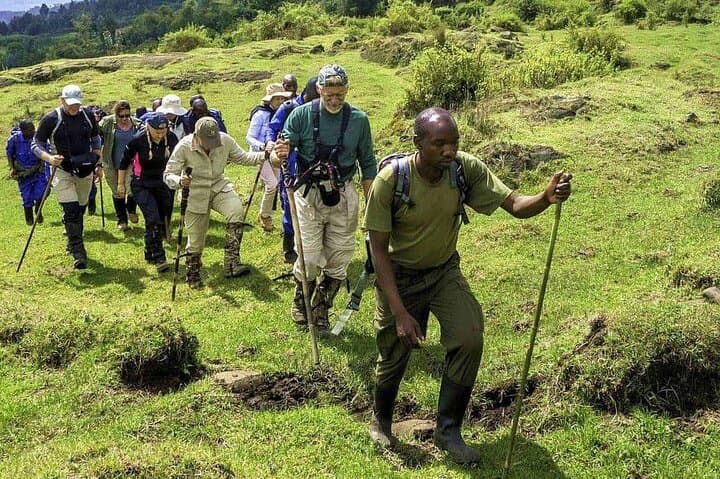
Practical guidance: travel is park-guided and best attempted with high fitness and layered clothing for rapid weather swings. Hydrate early and often, pace on the steep sections, and expect temperatures to drop well below freezing at the campsite. Tents and basic meals are provided on this itinerary, but personal sleeping insulation and trekking poles make the climb far more manageable.
Leave no trace: this fragile alpine zone recovers slowly, so pack out waste and follow ranger instructions to minimize impact.
challenging.
2 days (6–8 hours ascent day 1; 7–9 hours day 2 including descent).
Require high aerobic fitness and experience with multi-hour uphill trekking at altitude
It’s a challenging, high-altitude trek: long ascents, steep sections and cold nights—good fitness and prior multi-day trekking experience are advised.
Yes; the itinerary includes campsite accommodation at ~3,700 m with basic tents and meals provided by the operator.
Park rangers lead the hike and registration at Volcanoes National Park is required—this is a guided, permit-managed route.
Expect birdlife and small mammals in the montane forest; mountain gorillas are in the park but not on Karisimbi’s ascent routes.
Mount Karisimbi is part of the Virunga volcanic chain shaped by rifting; the park and surrounding communities have long histories of conservation and ranger stewardship.
Volcanoes National Park manages visitor numbers and route use to protect fragile alpine vegetation—pack out waste and follow ranger directions to minimize impact.
Silverbird Tours Agency operates guided outdoor trips and adventures with an emphasis on safety, stewardship, and memorable experiences.
Dawn breaks over the Virunga ridgeline as the convoy slides away from Musanze and the trailhead. Cool air bites at your cheeks and the forest opens into steep switchbacks; the volcano rises, a dark shoulder against the waking sky, daring you upward.
Dawn breaks over the Virunga ridgeline as the convoy slides away from Musanze and the trailhead. Cool air bites at your cheeks and the forest opens into steep switchbacks; the volcano rises, a dark shoulder against the waking sky, daring you upward.
Karisimbi stands at 4,507 m — the tallest of the eight major Virunga volcanoes — a product of the East African Rift's restless geology. The route climbs through montane forest, giving way to heathland and tussock as altitude robs the air of warmth. The park has cultural ties to local communities in Musanze and to the long history of rangers who protect the slopes of these cross-border volcanoes.
Expect two days: a measured ascent of 6–8 hours to a campsite at roughly 3,700 m, an overnight under highland stars, then the final push to the summit amid wind and fog before a day-long descent. Flora shifts from giant lobelia and heather to sparse grasses; on clear days the summit looks out toward Nyiragongo and Muhabura, the other Virungas peering like hulks across the border.
Practical guidance: travel is park-guided and best attempted with high fitness and layered clothing for rapid weather swings. Hydrate early and often, pace on the steep sections, and expect temperatures to drop well below freezing at the campsite. Tents and basic meals are provided on this itinerary, but personal sleeping insulation and trekking poles make the climb far more manageable.
Leave no trace: this fragile alpine zone recovers slowly, so pack out waste and follow ranger instructions to minimize impact.