THE ADVENTURE COLLECTIVE® · Independent discovery and booking for outdoor travel

Watch Bromo’s caldera unfold at sunrise and return at night to witness Ijen’s blue fire and crater lake on this two-day guided tour from Malang or Surabaya. Early starts, 4WD transfers, and short steep treks deliver two of East Java’s most dramatic volcanic sights.
Watch Bromo’s caldera unfold at sunrise and return at night to witness Ijen’s blue fire and crater lake on this two-day guided tour from Malang or Surabaya. Early starts, 4WD transfers, and short steep treks deliver two of East Java’s most dramatic volcanic sights.
You step out of the jeep before dawn and the air is thin, salty with volcanic sulfur and cold enough to make your breath visible. On Penanjakan the horizon splits open—black caldera rims giving way to an inland sea of sand while Bromo’s plume knifes the sky. Later that night, a different darkness awaits at Ijen where the crater’s turquoise lake reflects the first light and the fabled blue fire flickers like living coal.
Verified experiences and guided adventures in the surrounding area.
Operated by Landscape Bromo · Malang, East Java
You step out of the jeep before dawn and the air is thin, salty with volcanic sulfur and cold enough to make your breath visible. On Penanjakan the horizon splits open—black caldera rims giving way to an inland sea of sand while Bromo’s plume knifes the sky. Later that night, a different darkness awaits at Ijen where the crater’s turquoise lake reflects the first light and the fabled blue fire flickers like living coal.
These two sites sit on Java’s eastern volcanic spine. Bromo occupies the Tengger Caldera, a broad collapsed basin formed by repeated eruptions; Ijen is a stratovolcanic complex whose acidic crater lake and sulfur vents support a centuries-old mining culture. Local Tengger and Madurese communities maintain distinct ritual calendars and pastoral grazing on the caldera floor—culture and geology overlap here in practical ways: trails, jeep tracks, and mining roads trace both natural forces and human needs.
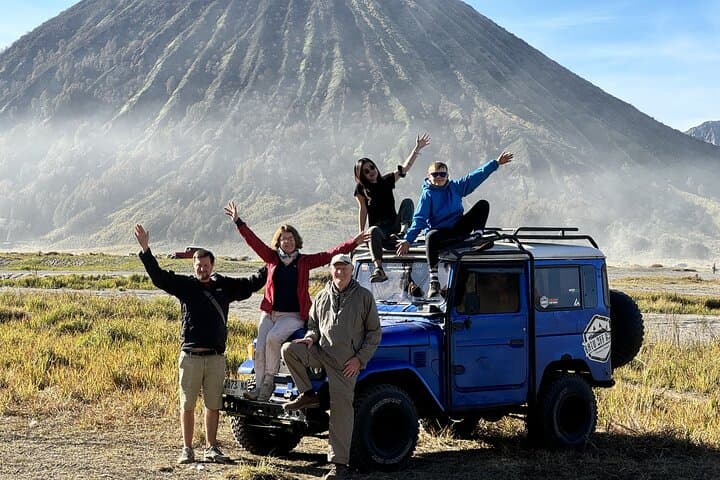
Expect early starts, bumpy 4WD transfers across sand seas, short steep climbs (Bromo’s crater rim ~200–300 m ascent from the sea of sand; Ijen trek roughly 2–3 km with 300–400 m elevation gain), and pungent sulfur at the Ijen rim. Wear closed shoes with good traction, bring layers for cold dawns, and a respirator or surgical mask for sulfur fumes. Time sunrises carefully—weather and cloud inversion dictate the best views. Guides handle permits and parking; carry cash for small fees, tips, and snacks. The route rewards those who tolerate early hours: two contrasting volcanic spectacles—the wide, wind-swept Bromo dawn and the intimate, eerie glow of Ijen’s blue fire—make for a compact, unforgettable 48-hour expedition.
moderate.
2 days.
Moderate fitness recommended: able to manage 2–3 hour uphill walks with short steeper sections and stand in cold conditions.
Pickups typically begin around 23:00–00:30 to reach Bromo’s Penanjakan before sunrise and later Paltuding for the Ijen night trek.
Most tours include park entrance and jeep fees for Bromo and Ijen, but carry cash for any additional local fees or porter services.
Blue fire is weather- and condition-dependent; clear nights with low wind and limited smoke yield the best visibility, but it cannot be guaranteed.
Not recommended for pregnant travelers or those with serious spinal/heart conditions; children can join if physically able to handle early starts and steep sections.
The Tengger people trace their ancestry to Majapahit-era refugees and maintain Hindu-influenced rituals; sulfur mining at Ijen has sustained local economies for generations.
Both parks regulate visitor numbers and enforce trail use to limit erosion; pack out waste, avoid disturbing miners, and stay on marked paths to reduce impact.
Landscape Bromo operates guided outdoor trips and adventures with an emphasis on safety, stewardship, and memorable experiences.
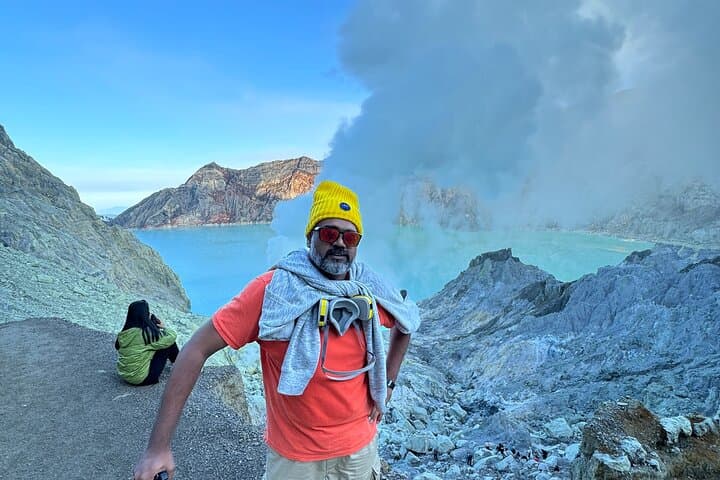
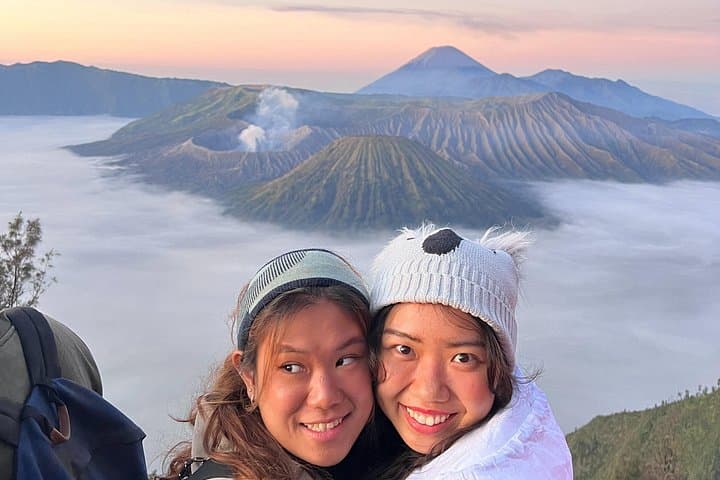
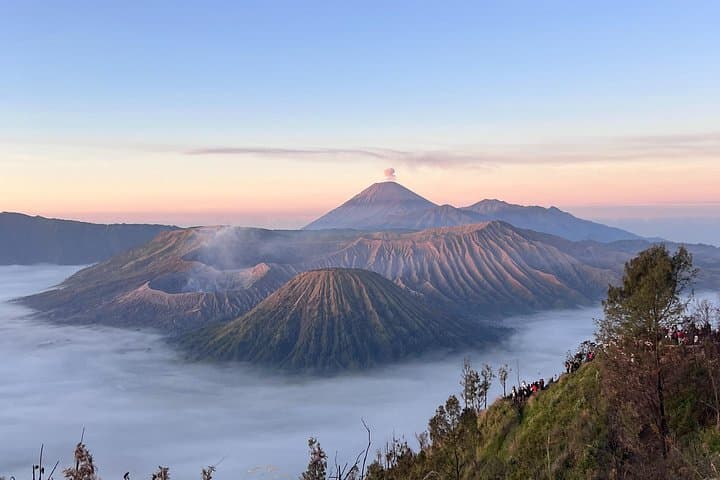
You step out of the jeep before dawn and the air is thin, salty with volcanic sulfur and cold enough to make your breath visible. On Penanjakan the horizon splits open—black caldera rims giving way to an inland sea of sand while Bromo’s plume knifes the sky. Later that night, a different darkness awaits at Ijen where the crater’s turquoise lake reflects the first light and the fabled blue fire flickers like living coal.
You step out of the jeep before dawn and the air is thin, salty with volcanic sulfur and cold enough to make your breath visible. On Penanjakan the horizon splits open—black caldera rims giving way to an inland sea of sand while Bromo’s plume knifes the sky. Later that night, a different darkness awaits at Ijen where the crater’s turquoise lake reflects the first light and the fabled blue fire flickers like living coal.
These two sites sit on Java’s eastern volcanic spine. Bromo occupies the Tengger Caldera, a broad collapsed basin formed by repeated eruptions; Ijen is a stratovolcanic complex whose acidic crater lake and sulfur vents support a centuries-old mining culture. Local Tengger and Madurese communities maintain distinct ritual calendars and pastoral grazing on the caldera floor—culture and geology overlap here in practical ways: trails, jeep tracks, and mining roads trace both natural forces and human needs.
Expect early starts, bumpy 4WD transfers across sand seas, short steep climbs (Bromo’s crater rim ~200–300 m ascent from the sea of sand; Ijen trek roughly 2–3 km with 300–400 m elevation gain), and pungent sulfur at the Ijen rim. Wear closed shoes with good traction, bring layers for cold dawns, and a respirator or surgical mask for sulfur fumes. Time sunrises carefully—weather and cloud inversion dictate the best views. Guides handle permits and parking; carry cash for small fees, tips, and snacks. The route rewards those who tolerate early hours: two contrasting volcanic spectacles—the wide, wind-swept Bromo dawn and the intimate, eerie glow of Ijen’s blue fire—make for a compact, unforgettable 48-hour expedition.